
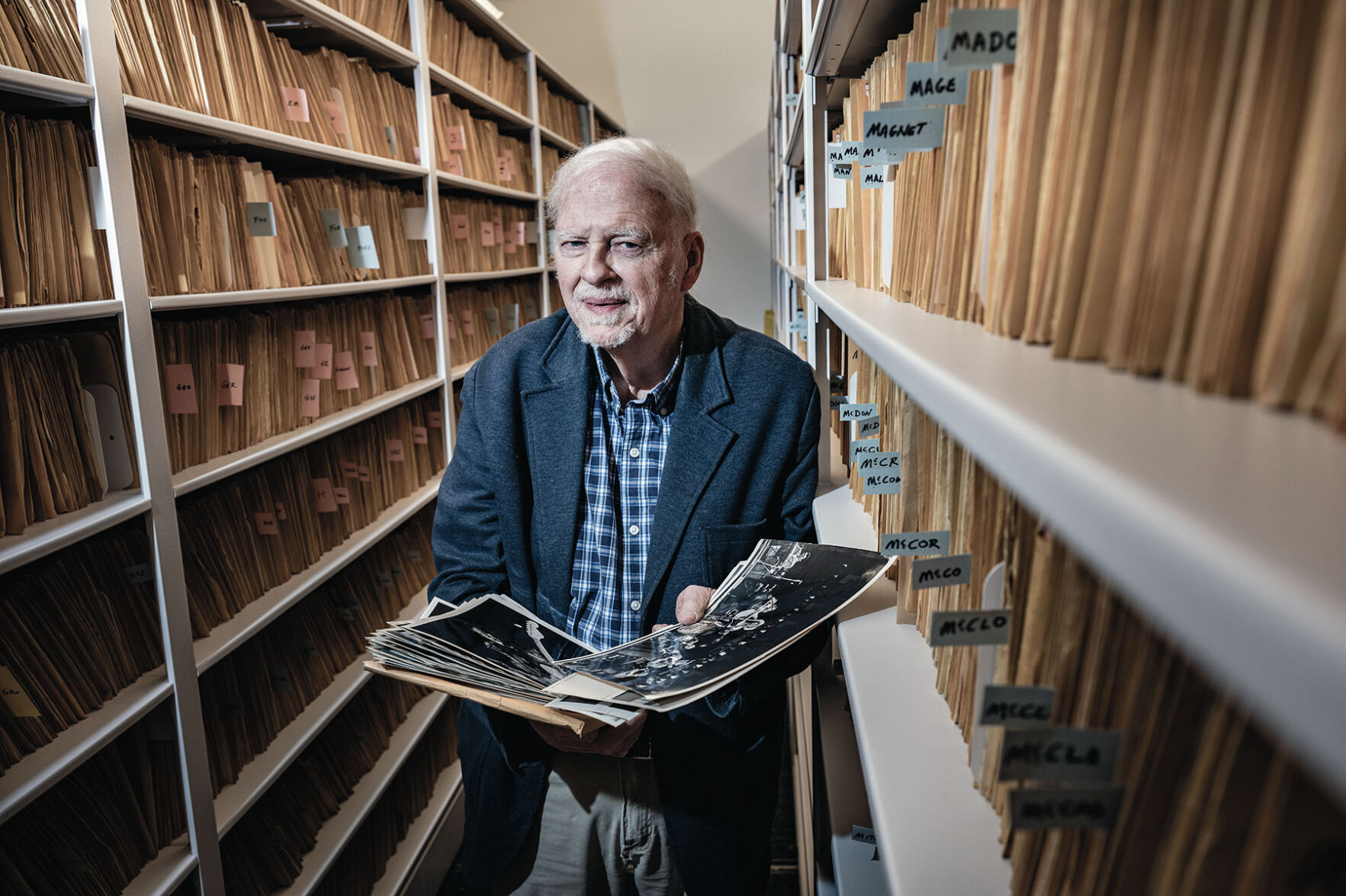
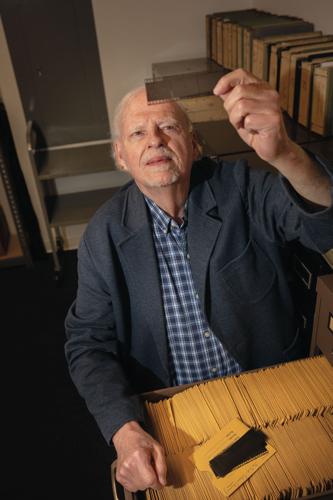


No one is better equipped to illustrate Nashville’s recent history than Ricky Rogers. As the photo archivist at The Tennessean, Rogers combs the paper’s century-old library of photos to create galleries of “Nashville Then.” The galleries are available on the paper’s website and on criminally under-followed social media pages like the @nashville_then Instagram page.
The city’s history since the Tennessean edition in 1907 is represented, from photos from the civil rights movement to the 2010 flood and early shots of country music royalty. But a daily newspaper by nature covers the day-to-day issues of a city, and some of the most affecting images Rogers republishes capture beautiful, nostalgic mundanity. By seeing candid shots of shoppers at long-defunct stores, the construction of Nashville’s skyline, worshippers dressed in their 1960s Sunday best or kids goofing around at a playground 25 years ago, you can see the evolution of a city.
“Basically, we just cover it as it goes along, right?” Rogers says. “Photographers are shooting as things develop, and then somebody else goes back 60 years and says, ‘Oh, here’s what happened.’”
Rogers is speaking from experience. He started as an employee in The Tennessean’s photo lab in 1978 and cut his teeth as a news photographer. His own photos pop up in the galleries from time to time, with standouts including a 1984 photo of “the world’s most controversial band,” The Clash, in front of Tootsie’s Orchid Lounge and an iconic 1985 shot of John Prine at a Big Boy restaurant.
“It’s funny, I really wasn’t big into country music when I first came here,” Rogers says. “And some of the people were just incredibly nice. Most of the country music people were, back then. They’d talk to you, and you just kind of talk back and forth. With some of the artists now, it’s like, ‘Let’s get this done.’”
A disclosure: I worked with Rogers as a reporter at The Tennessean from 2020 to 2022. By that point, he’d already been doing his archival work for around 30 years. It started in earnest when the paper launched its website in 1994. Very quickly, Rogers saw the internet as an exciting way to show off a treasure trove of forgotten or unseen photos that he knew from his time in the paper’s photo lab.

Ricky Rogers, photo archivist at The Tennessean
“When you shot an assignment, you got one or two pictures in the paper, but you’ve got all this other great stuff that never saw the light of day,” he says. “Right off the bat, I saw that [the internet] could be great for photography.”
Rogers’ workspace is a deceptively large storeroom located at The Tennessean’s office in Midtown. It contains not only copies of the photos that made it into the paper, but also outtakes, daily work logs from photographers and microfilm copies of old papers. He’s part historian, part librarian, part detective — he doesn’t just have to find pictures but also sift through records and old papers to figure out who took them, who’s in them and other information.
“It was awful when I first started doing it,” Rogers says. “We had a microfilm viewer that was in bad, bad shape. ... The printout didn’t work half the time. Sometimes I had to actually write down the [photo captions] in my notebook.”
Rogers holds an obvious respect for old photojournalists — even putting aside the fact he worked with some of them. To a photojournalist, he says, the job isn’t usually about taking an iconic, enduring photograph. It’s just about helping folks see what’s going on in a city each day.
“Now that I do Nashville Then, I wish my old self would have been more aware of covering everything more completely for future generations,” he says. “I didn’t think much about the history of what I was doing.”
“Even the photographers that covered the civil rights movement, they were just basically, this was going on, so they assigned photographers to shoot it,” Rogers says. “Nobody really thought, ‘Oh, this is going to be the pivotal moment.’”
Whether the photos show “pivotal moments” or everyday nostalgia, Rogers says they provide an important link to the past. Commenters on his galleries agree.
“When you get an old picture, [the comments are] amazing,” Rogers says. “‘That’s the old Nashville that I love.’ You get a lot of that. I think that’s what’s so good about it, you remember how things used to be. I think that’s kind of important. People always say, ‘You’ve got to remember where you came from.’”

Our profiles of some of Nashville’s most interesting people, from a queen of Appalachian character comedy to a Vanderbilt football star, a 'Survivor' runner-up and more






Post a comment as anonymous
Report
Watch this discussion.
(0) comments
Welcome to the discussion.
Log In
Welcome to the discussion.
Keep it clean. Please avoid obscene, vulgar, lewd, racist or otherwise abusive language. Comments featuring hate speech or threatening or violent content will not be tolerated.
PLEASE TURN OFF YOUR CAPS LOCK.
Be truthful. Don't knowingly lie or mislead.
Be proactive. Use the “report” link on any comment that violates our comment policy.
Share with us. We'd love to hear your feedback.