
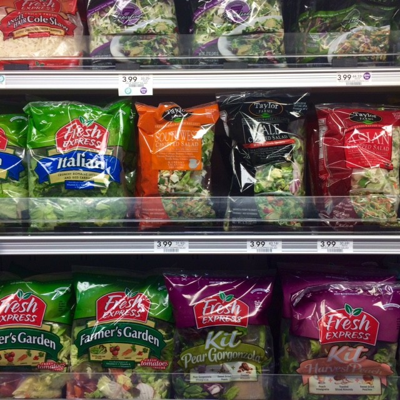

I have a confession: I buy bagged salad. As much as I would love to support local farmers, I don't like getting a head of dirty lettuce or a bag of mixed greens that require washing. Once washed — unless thoroughly dried — greens tend to rot very quickly (except kale; that stuff is sturdy). So I buy the triple-washed organic lettuce in a bag. Open the bag, pour it in a bowl, et voila, salad. I also like buying a bag of romaine hearts so I don't have to feel guilty about tossing out all the leaves that I don't want to eat. I don't buy the salad kits, though because I mostly just eat the lettuce with dressing. I can certainly appreciate their convenience, though.
I thought about my buying habits recently after listening to a discussion on NPR about bagged salad. The hosts also confessed to loving bagged lettuce for its convenience and shelf life, thanks in large part to bag technology that allows the greens "breathe." And after investigating, reporters found that there is little lost in the way of vitamins, though there is some evidence of loss of antioxidants over time. Producers are have also put in additional steps to ensure the safety of bagged greens after issues with e. Coli a few years ago.
The disadvantage of bagged salad, I would say, though is taste. Fresh from the farm lettuces are much more flavorful. But if I'm covering them up with my French vinaigrette, it doesn't really matter. I will certainly splurge on a local, organic lettuce for the right salad.
Another point in the bagged salad column: American lettuce consumption has risen since its advent. As the NPR story notes, "Since 1985, our consumption of leaf and Romaine lettuce has more than tripled (from about 3 pounds per person per year, to more than 11 pounds per person), according to data from the U.S. Department of Agriculture." That's great news, considering our overall vegetable intake is much lower than it should be.
So, fellow bagged salad consumers: There's no good reason to be ashamed of your bag.



