
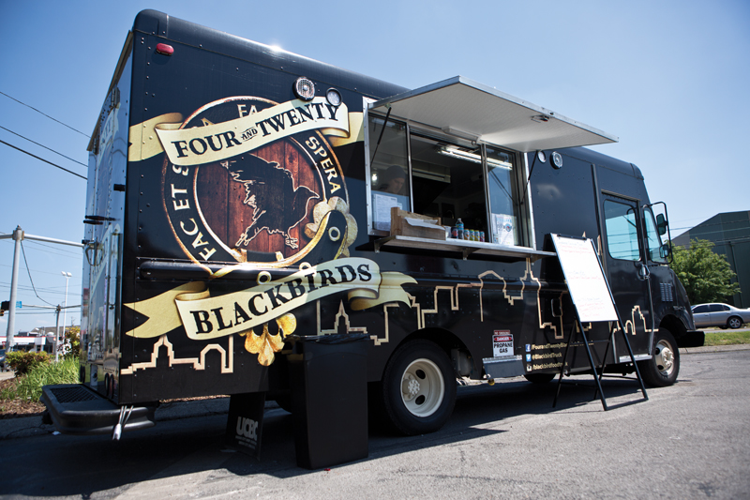
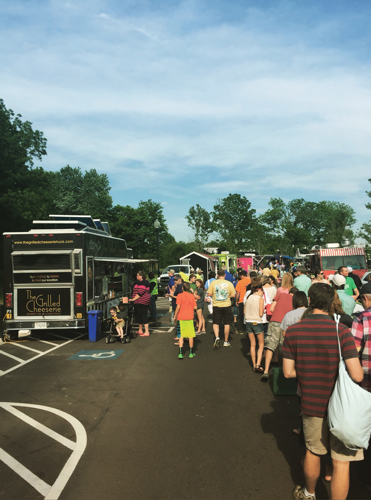

Winding down Third Avenue alongside Bicentennial Park in Franklin on Friday, it was easy to see what it looks like when a fad has matured into something lasting. More than 40 food trucks decamped from Nashville and drew approximately 10,000 people to the fourth annual Eat the Street event, an altogether amazing number of patrons.
Food Truck Month is alive and well in Nashville. But four years ago, its success didn't look so guaranteed.
Food trucks had been taking off around the country, a combination of ingenuity, desperation and technology rolled into one. In cities like New York, Austin and L.A., recession-strapped culinary types — some refugees from kitchens, others straight out of school — found the entry price for a truck to be 5 to 10 times cheaper than opening a brick-and-mortar restaurant. They built loyal customer bases through social media and hustle and, unconstrained by the risk of high overhead, often took bigger risks on styles of food.
By 2011, the trend had made its way to Nashville, with trucks such as Mas Tacos, Riffs and Jonbalaya finding hungry audiences for their food. But they also were starting to find resistance in the form of traditional restaurants.
"We got word that the Traffic and Parking Commission was going to put some regulations on food trucks," says B.J. Lofback, owner of Riffs Fine Street Foods. "In reality, what I suspect is that a group of brick-and-mortar owners were trying to do a pre-emptive strike on food trucks."
After a bunch of food truck owners showed up at a commission meeting, they decided to start working together. On Nov. 9 of that year, they formed the Nashville Food Truck Association with eight trucks: Riffs, Love Shack, Moovers and Shakers, Dixie Belle's Cupcakes, Jonbalaya, Mere Bulles, Hoss' Loaded Burgers and Hot Off the Gribble. Within six months they had 18 members, including Smoke Et Al, Bradley's Curbside Creamery and Deg Thai.
They eventually found allies in the commercial real estate industry and in Metro's public works department and hammered out regulations, including designated food truck zones that both restaurants and food trucks could accept. For eaters, the results have been excellent — and there are four big changes the trucks have brought to Nashville's culinary scene.
First, there's no denying the variety. I've been singing Riffs' praises for years for their Korea-meets-Mexico tacos and Asian-inspired flavors. But there are a half-dozen other trucks that are doing delicious, hard-to-find things: French street food (Crepe a Diem), Southwestern Sonora dogs (Rolling Feast), chicken shawarma (King Tut's), Chinese bao (Bao Down), Filipino pork sliders (Music City Rice and Roll), consistently good brisket (Smoke Et Al).
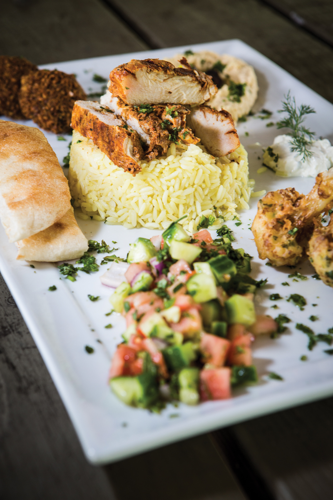
The Grilled Cheeserie, arguably the most popular truck in town, gives me the option of a gruyere-and-Benton's-bacon grilled cheese on sourdough with caramelized onions. There might not be a better sandwich in the city. The shawarma plate at King Tut's? Outstanding. When someone can park falafel outside your office, that is a clear victory for good sense.
Second, the trucks are bringing food to different areas of town. Take Deg Thai's schedule this week, for example. On Tuesday and Wednesday, they set up in office parks near Opryland and Cool Springs, respectively. On Thursday night, the truck is scheduled for its weekly Thai Thursdays at Tobacco Road Smoke Shop off Trousdale Drive. Friday, the truck is in Midtown at the Methodist Higher Education Board.
Nashville simply doesn't have the population density of New York or L.A., where you can set up on the street and expect to sell out. Deg Thai is indicative of many trucks that have built regular clientele by going where the restaurants aren't — in many cases, office parks. The trucks fill an interesting niche at Tobacco Road in particular, providing food service for a bar and cigar hangout but also reaching hungry residents at the entrance to Crieve Hall, a very residential area with no real eating options. On a typical Thursday, Deg Thai will get as many customers driving up as they will from inside Tobacco Road.
Businesses reach out to different trucks to offer something different for employees on corporate campuses. Those regular spots are vital for the trucks, maybe more so than just parking downtown.
"I do every other Wednesday on Deaderick," says Hoss' Loaded Burgers owner Dallas Shaw, current president of the Nashville Food Truck Association. "I have a very limited amount of new customers coming by, so I rely on regulars that are expecting me to be there. It would be nice to be like New York or Austin or Portland, where you have so many new people that you can pick a spot and sell out. In Nashville, unless you park on Broadway, there's not a place you're going to get that."
Third, successful trucks have created chances to move into a brick-and-mortar restaurant, if that's what they want. Mas Tacos in East Nashville? Started on a truck. Smokin' Thighs in Wedgewood-Houston? Started on a truck. Biscuit Love in the Gulch? Started on a truck. There's real value to trying out new dishes and tweaking recipes on a truck, and owners across the board say the feedback is immediate.
It also gives them a chance to prove themselves as proprietors. Karl and Sarah Worley both have culinary degrees and have spent time in fine-dining kitchens. But Karl says two years' worth of building the Biscuit Love truck gave him the experience — and the receipts — necessary to get backing for their restaurant concept.
But not everyone is looking to move on from a truck. A couple of folks bristled when I floated the idea that owners automatically looked to "graduate" into a restaurant. And that's the fourth takeaway: Food trucks have kept some really talented chefs in the Nashville dining scene.
Lofback has opened two different brick-and-mortar places on the east side of town, closing one and scaling back the other. For him, the thought of being tied down in a kitchen every day is a little "soul-crushing." He likes the interactivity with customers and the challenge of the rolling kitchen.
For Crystal De Luna-Bogan of The Grilled Cheeserie, it's a lifestyle choice.
"For us, we wanted the freedom of being really busy and then close. We didn't want to have to work 12-hour days all the time," she says. "As somebody who has worked in restaurants my whole life, I didn't want that. Otherwise, I would probably still be in Los Angeles, getting experience. I thought a food truck would be great to restrict our hours, and it's been great. We're super-busy and we don't work more than eight hours on a regular day. We don't have crazy-long days like most chefs do. It's a great way to avoid getting burned out."
To be sure, there are criticisms to be made of our crop of trucks. Like the brick-and-mortar scene, some styles are overrepresented — barbecue, Southern food — and there are a lot of sweets-only operations. (Does the world really need more cupcake outlets? I digress.) But on balance, they add so much to the city's culinary life.
At some point, food trucks graduated from trend to fixture. And Nashville eats better because of them.
Email arts@nashvillescene.com



