

Of course you're celebrating Moldovan Independence today, right? I rarely even thought of the Eastern European country until Will Motley at
Woodland Wine Merchantintroduced me to some of the great inexpensive wines produced in the small country tucked between Romania and Ukraine. Given Russian boycotting of Moldovan wines, the country is looking to accelerate exports to the United States, and we can definitely be the beneficiaries.
After checking out some of the facts, it shouldn't be surprising that viniculture in Moldova is a big deal. The country actually has the densest concentration of vineyard lands in the world, with over 7 percent of all arable land planted with grapes. The indigenous varietals include Feteasca Alba, Feteasca Neagra, Rara Neagra, Traminer and Saperavi, but Cabernet Sauvignon, Merlot and Sauvignon Blanc also grow well in the rolling hills and centuries-old vineyards.
Almost 25 percent of the country’s workforce is employed by the wine industry in one form or another, and Moldova’s wine industry accounts for 3.2 percent of the gross domestic product and 7.5 percent of its total exports, so that shows some real commitment. But most importantly, how are the wines?
In a word, excellent. In another word, affordable. Those two factors alone make it worth asking your local merchant for some Moldovans to try, and the sheer breadth of their offerings means you might encounter a fruity sparkler like Cricova Grand Vintage or a dry white Riesling de Rhein from Fautor that could easily fool you into thinking you're drinking some of Germany's finest.
An interesting experiment is to try a standard grape varietal like Cab Sauv or Chardonnay and compare it to a French counterpart to see which you prefer, especially for the money.
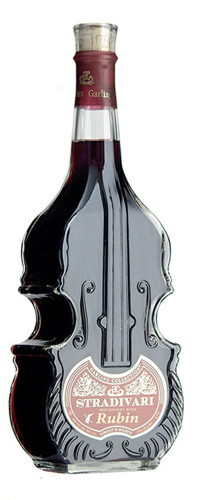
Another category where Moldovan wines stand out is with dessert wines. These late-harvest wines are often quite pricey from other European and American wineries, but the range of Moldovan options available for less than $20 means you can start experimenting with serving wine after the meal instead of just before and during. Plus, they sometimes have really cool bottles like the Stradivari pictured with this post.
Even though I've tried quite a few Moldovan wines in the past, I received two new bottles to sample lately, and I thought I'd pass along my notes. Chateau Vartely makes a Traminer, a close relative of the savagnin blanc grape (not sauvignon blanc, by the way) that has been cultivated for wine for over a thousand years. Chateau Vartely's take on this grape is an inexpensive dry white wine made from grapes grown in the southern part of the country. It's a very fresh crisp wine with just a hint of acidity to make it a little more complex, and if you find it on your wine store shelves, it should be a fine wine to complement fish or late summer vegetables.
The second Moldovan wine I sampled was Golden Lion Dry Red Wine. Yeah, I know it's not a sexy name, but it was a unique product. Made with a blend of Merlot, Cabernet Sauvignon, Pinot Noir and Saperavi grapes, Golden Lion is like Moldova's take on a Bordeaux blend, with the native Spaeravi grape subbing in for Cabernet Franc and a dash of Pinot Noir added in for good measure. The result is a dark-ruby wine that demonstrates a surprising amount of rounded oak for such an inexpensive bottle. Not especially fruit-forward, Golden Lion depends more on the finishing techniques over the grapes themselves. It wasn't quite strong enough to hold up to a peppery steak, but would go nicely with short ribs or pork. I haven't seen this one in liquor stores yet, but if I do, I'll certainly pick up another bottle as a nice change of pace to the bargain Chilean reds that frequently fill my wine fridge.
Moldovan wines are becoming much more readily available at better wine merchants around town, so don't be afraid to ask you favorite wine seller for some advice.



