
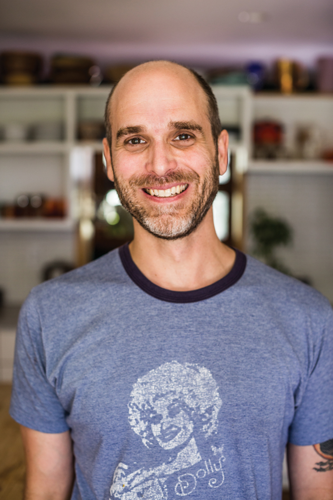


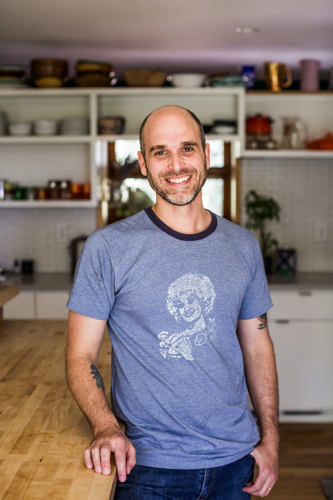


It’s been more than a decade since Tandy Wilson opened City House, the acclaimed Germantown restaurant that quickly became a Nashville favorite. Wilson’s success eventually earned him a James Beard Award and recognition as one of the best chefs in the country.
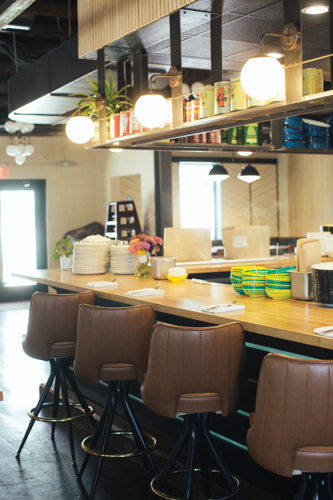
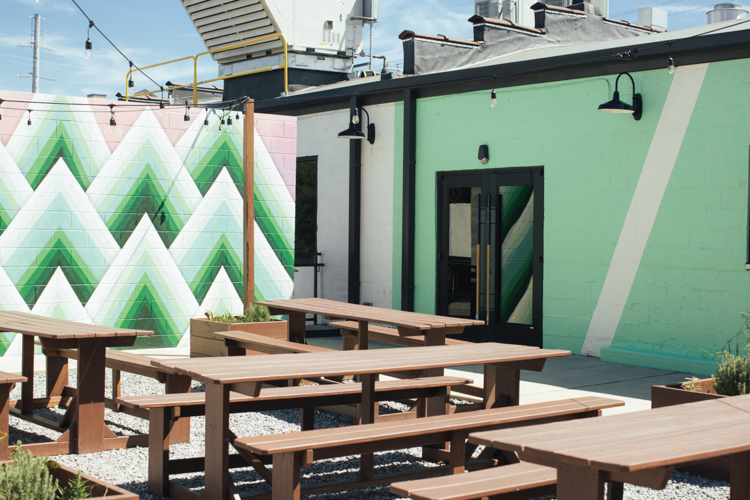
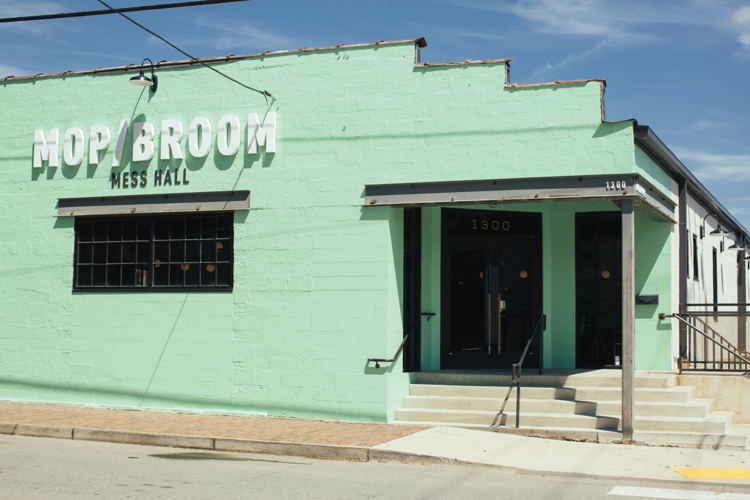
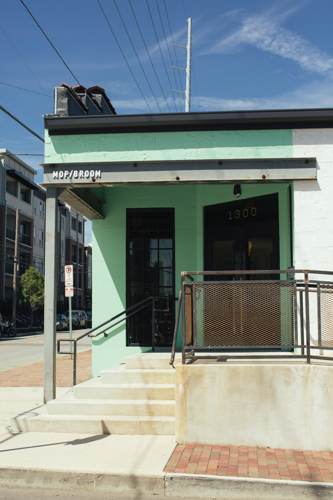
But unlike a lot of chefs, Wilson waited a long time before opening a second restaurant. Mop/Broom Mess Hall recently opened just a couple blocks away from City House. The building, the former home of the Southern Broom & Mop Co., was rehabbed last year by Wilson’s longtime lieutenant, Aaron Clemins, who turned it into Kuchnia & Keller. But the Eastern European-inspired restaurant lasted only nine months before closing, and Wilson, who was a partner in the K&K venture, took over the space. Mop/Broom’s menu may be more Americana and Southern than City House’s Italian-influenced dishes — think barbecue chicken and a burger instead of pizza and pasta — but Wilson fans will recognize the same adherence to seasonality and quality ingredients.
Wilson recently sat down with the Scene to talk about his new project.

Ten years, essentially, between places. What made you finally decide, “All right, I’ve got to do a second”? I know you’ve done the pizza places like Collo Rosso, but as a full-blown, your-head-in-a-different-kitchen sort of place?
Yeah, I was getting antsy. I still have a lot left in me, I think.
I would hope.
Yeah, and I mean next door, it’s in that kind of groove at City House where even over the past few years, I’m there creatively and a part of the process and thread. But if you come and eat with us regularly, you don’t see me much, other than Sunday night. So that’s part of it. This is a great building here in Germantown, so [it’s] an opportunity. I would have to say this building has been in the corner of my eye for a very long time. They say never fall in love with a building in the restaurant business, but whoops.
Could this space have succeeded 10 years ago? Not concept-wise, but in regard to the way Germantown has shifted.
No, I don’t think it could have. Germantown is funny in the way … it all starts on Fifth, right? And that’s the heartbeat in Germantown, and at least as long as I’ve been around here, that’s the center, right?
And when City House opened, you would think we were asking people to walk a couple miles of bad city streets to come all the way over to Fourth. And it just is that way, but now the neighborhood has really exploded.
Did you learn anything from what Kuchnia & Keller did in terms of the space or menu?
Absolutely did. A lot. I think you learn from things like that, and I think that I myself wasn’t looking at what the people are into, and I’m one of the people, so I’m into it too. So talk about turning a blind eye, right? And I’m more into what I was doing culinarily and things like that, and it’s like, “Wait a second, I think people are into what we eat at home.” Talking to my wife, it’s like, “Steph, I think this is what people are into.” We have people over all the time, and they’re into this kind of different cooking vibe at home. So here we are.
Is that how you ended up building a menu around barbecue chicken?
That’s a little bit of it, yeah.

Have you been making it for awhile?
Yes, and I’ve always loved it. I think I started cooking in high school at home … so I was vastly more experienced than anyone else by the time I got to college, and then I started working in kitchens. But barbecue chicken started happening when I was in college. And yeah, I like to cook on my own birthday a lot. That’s usually the meals. So yeah, I love it. And I think that’s part of it, is when you can show that genuine love of something good, it’s pretty easy then to share that, I feel like, all the way through the restaurant.
What kind of food did you grow up on?
Southern food. My mom cooked six to seven nights a week at home. Going out to eat meant we went to Shoney’s.
Did your mom have a rotation?
Yes. She had different recipes, and Mom also tried new things, in the days of grocery-store magazines. That was my childhood. Those were huge, and you’d pick stuff up and different items from the store to try something new. But cornbread was a passed-down thing. Mom learned from Nana Crick, and she taught me, and grits-and-cheese and all these family recipes that I say [about], “Oh this is my family recipe,” but as you grow up you learn that that’s what the people next door were cooking too.
There are a few things on the menu, particularly the small plates, that I could see being served at City House. How do you differentiate between what’s a dish here versus what’s a dish over there?
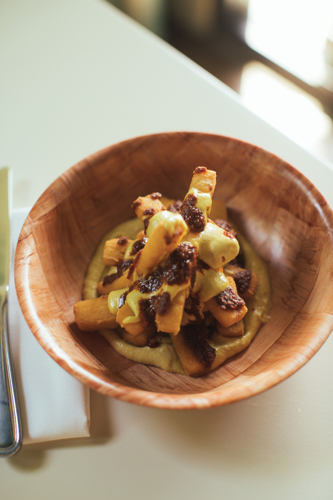
I think some of the similarities come from the fact that when City House opened, the salad was still chopped lettuce of some sort, and now we call things that are vegetable dishes a salad a lot. And I think getting out of that groove that we were in and finding interesting ways to present vegetables that are delicious and fun and people are into, this is the evolution. So I can’t really take where I am right now and fast-forward it five years, but that certainly is where we’re driving it in different directions.
So actually, when I get done with you, I’ll go sit down with my [chefs de cuisine at City House], and I’ll bring my menu over, and we’ll talk about what they’re doing. And we know the farmers, who has what, and who’s going where. So we’re creating differentiation there right now, and then in some of the products that we’re using here. We try to stay relatively Italian and regional at City House. We’re using a little off-the-wall and different stuff here.
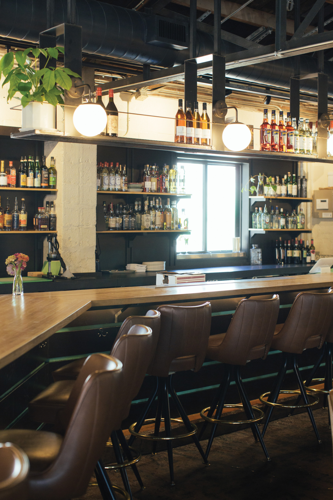
Are there any challenges to the space? It’s a big, wide-open space.
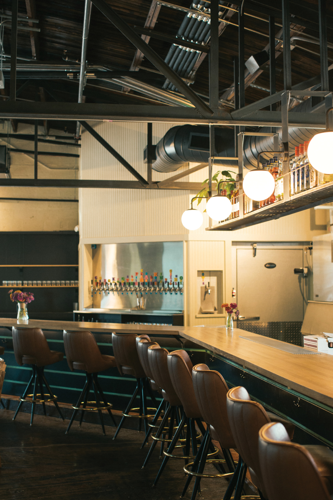
Yeah, I think it’s a lot of people, it’s a lot of cleaning. That’s one thing we definitely know. I like to keep things clean, and ... there’s a lot more floor drains and a lot more floor space, and so that’s all good, though. We can handle that. As far as the little things, I’m not sure yet. I tell you, it’s a whole new set of toys to play with though, like a charcoal grill. And I haven’t worked with fryers in 10 years, and I’ve never had a flattop. This is the first place I’ve ever worked that serves a burger and fries. So I knew all that stuff, but I didn’t know. ... I didn’t think about rethinking what to do with 21 taps.
Not that City House is the most sort of sit-up-straight-in-your-chair kind of place, but this is more casual. It’s a very comfortable place.
Right. And I love that. If you see me go out to dinner, you see me going to a place like that. Or I like to go places where no one will know who I am. I don’t think that good food should come with some kind of a stigma. I think it should be available to anybody who wants it. I think that it doesn’t have to be produced in some kind of factory and then just heated up on site to be simple. Simple can have all the care and all the love of a meal you might have in what people would think is a fancier restaurant.
Does it help to have these two places walking distance from each other?
For me, absolutely. Yeah. I like that a lot. I’m not as good at computer-generated reports and meetings. I’m better at getting into the place and working with people and seeing how things are going. So yeah, it’s crucial that they’re so close.


.

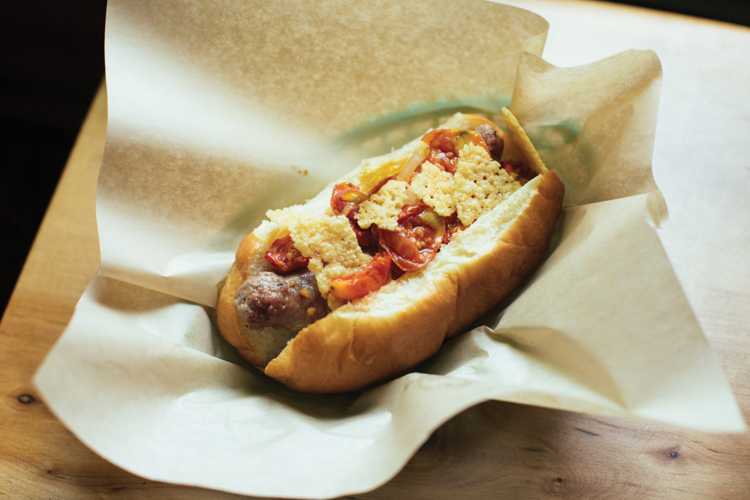
Pork sausage





