
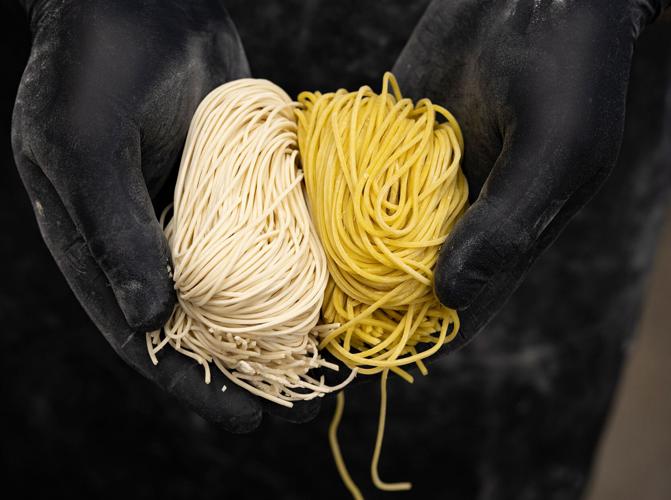

Sarah Gavigan readily admits that, when it comes to ramen, she’s an otaku — the Japanese term for someone obsessed with something, usually technology, music or anime. The author of the book Ramen Otaku: Mastering Ramen at Home, Gavigan has evangelized about her favorite subject and opened several restaurants in Nashville, sharing the joys of perfect noodles and an umami-rich broth. But she’s also closed restaurants, pivoted to carryout models during the pandemic and changed her business several times over the course of more than a decade since her first ramen pop-ups.
Although her POP, Bar Otaku and Little Octopus concepts fell by the wayside, Gavigan and her husband Brad soldiered on, operating Otaku Ramen restaurants in the Gulch and at Sylvan Supply in West Nashville — to be joined by a new East Nashville flagship location at Highland Yards and her first location outside of Davidson County at the Factory at Franklin later this year.
Gavigan also has her eye on opportunities to diversify her business. “After we sold Bar Otaku, we decided to focus on expanding Otaku Ramen,” she says. “We worked with a business adviser who helped us professionalize different departments and see a much bigger future.”
At the same time, the Gavigans encountered a potential existential threat to their business. “I’d been following wheat futures, and it was pretty dire,” Gavigan says. “At the end of the day, I’m in the wheat business, and a lot of countries have stopped exporting wheat since the start of the war in Ukraine. We have to go to Canada for ramen flour milling, and Canada has been going through a three-year drought, producing one-third as much wheat as they used to. So I looked for a way to bring the supply chain closer.”
Otaku began working on a partial wheat noodle they jokingly called a “crisis noodle,” but more impactful was the idea of producing their own noodles in house. Gavigan has always worked closely with Sun Noodle, the producer of artisan noodles for her bowls, stretching back to those kitchen pop-ups a decade ago. She used to FedEx samples of her broth to the New Jersey company to match them with the proper noodles, so it’s a big deal to upend that relationship.
“We’re still going to be a partner with Sun,” Gavigan explains. “We’re buying our flour from them and now making all our noodles in house.”
When the Gavigans made the choice to start making noodles, there was another decision to make. “My first thought was about Tillman,” she says.

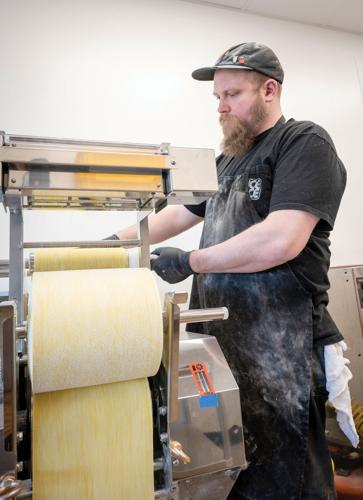
Tillman Gressit making noodles
The Tillman in question is Tillman Gressitt, a young man who shares Gavigan’s zeal for ramen. “When I was very young, I got interested in Japanese culture — anime and food,” Gressitt says. “There was a small izakaya on the street where I lived in Encinitas, Calif., and that’s where I really developed my passion for the culture and started learning Japanese.”
Gressitt moved to Nashville in 2015 and got his first kitchen experience flipping burgers. A job opening at Bar Otaku offered his first connection with Gavigan. “That’s where I got really passionate about learning to make noodles,” he recalls. “I started out using two cheap pasta makers that I broke and then a tiny Chinese noodle machine. I was practicing at home every day. Making noodles is incredibly therapeutic — all about science and a repeatable methodology.”
Gressitt began selling bowls of his ramen at his Fox Den pop-ups when Sarah gave him a call. “She approached me in May 2022, and one thing led to another and we were all on a plane to visit the Yamato factory,” he shares. Yamato, which is in Japan, manufactures the highest-quality ramen manufacturing equipment. Gressitt and the Gavigans toured the facility, eating in the company cafeteria and meeting some of their ramen idols.
After a high-five-figure investment in a new mixer and a sheeter/cutter, the Gavigans were ready to launch their new noodle-making subsidiary, Super Happy Noodle LLC. “It mitigated the risk by having a built-in customer in Otaku Ramen,” says Gavigan. “Tillman was excited to move out of the pop-up into business mode. Our next move is to get into the CPG [consumer packaged goods] market starting in April selling noodles from Highland Yards after we move the commissary kitchen there.”
Super Happy Noodle plans to make their retail debut at the Nashville Cherry Blossom Festival on Saturday, April 15, at Public Square Park. The fresh noodles they will be selling should last for at least five weeks in the fridge and need less than a minute or two in hot water before you can put them in a stir-fry or a bowl of Thai soup or pair them with your favorite broth — including those you can find in Gavigan’s cookbook or the SHN website, superhappynoodle.com.
The increase in productivity provided by these new heavy-duty machines is significant. Working out of a small space on Gallatin Avenue, Gressitt can produce 190 portions of noodles in two hours. (“In my pop-up days it took me all day to make 80 portions,” he says.) Working an 11-hour shift, Gressitt can produce five or six batches a day, and Gavigan says the machine has a capacity of 10,000 portions per week.
In addition to learning the mechanics of the operation, Gressitt took a deep dive into wheat. “Rogers Foods mills the flour for Sun, and they’re very particular about their wheat,” he says. “We use hard or soft red wheat, and they offer four different milling qualities versus two in the U.S. They can mill it finer, which affects the hydration and the ash content and exposes more of the endosperm to allow less graininess.”
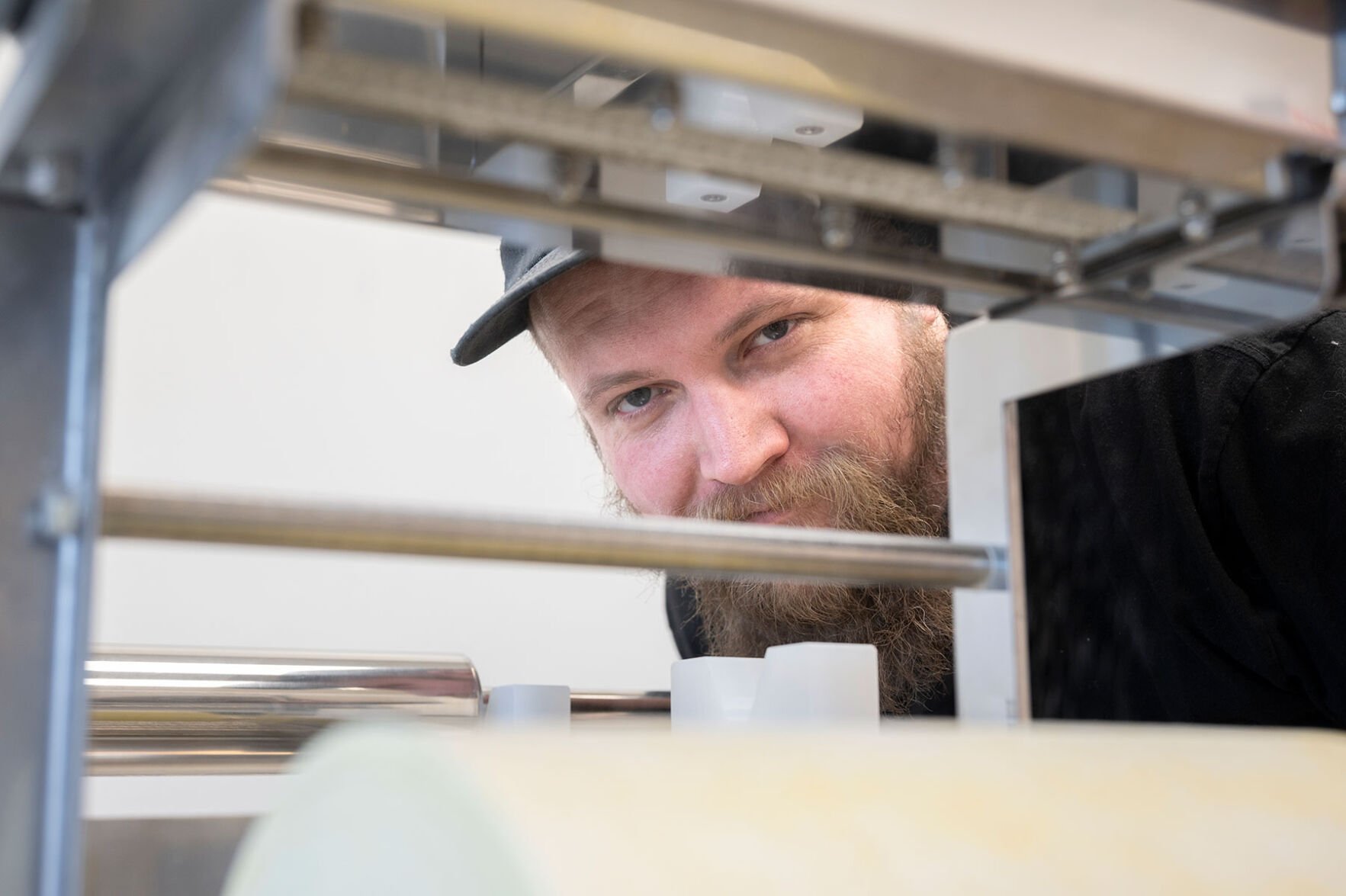
Tillman Gressit making noodles
Otaku Ramen began using the house-made noodles in the restaurants earlier this year while they worked through the last of their Sun supplies, but it wasn’t without trepidation.
“You feel a little more vulnerable when you can’t blame anyone but yourself,” says Gavigan. “One of our vegetable bowls wasn’t tasting right, and we realized it was our noodle that we’d built the bowl around. There’s definitely been some adjustment, but I believe in, ‘Fuck up fast!’ People are very emotional about their ramen, and they don’t want it to change.”
“It’s like tacos and coffee,” Gressitt adds. “You have your favorites, and they don’t ever have to change. When they do, you notice!”
“We know that new competition is descending on Nashville soon, and that we’re a volume ramen shop,” says Gavigan. “We have to remember that we have a responsibility to give people something special when they’re trying ramen for the first time, so we’re going to try to continue to achieve a level of craftsmanship. We can’t step backwards.”



