




This survey started with a question: What do the people responsible for Nashville’s booming dining scene really think?
We’ve always been fans of the way Sports Illustrated polls general managers in different sports about trends they see and people they like (and don’t like). These are the people running the clubs, making the tough decisions and who know the inside scoop. But as an inducement to do the poll, participants are granted anonymity, because it’s not always in their best interest to speak candidly.
So we decided to take the same approach. We made a list of chefs, general managers and owners at many of the best restaurants in town and made the same deal — we will give you a list of questions, and all that we ask is that you respond with honesty. The participants run the gamut from experienced veterans with decades in town to talented newcomers, including a cross section of ages, sexes, races and genders. There are representatives from some of the city’s highest-rated places as well as favorite neighborhood joints.
We asked almost 50 people to participate and roughly 30 responded. By agreeing to withhold their identities, we got a look at Nashville’s dining scene through the eyes of those most responsible for its current success. The results are fascinating.

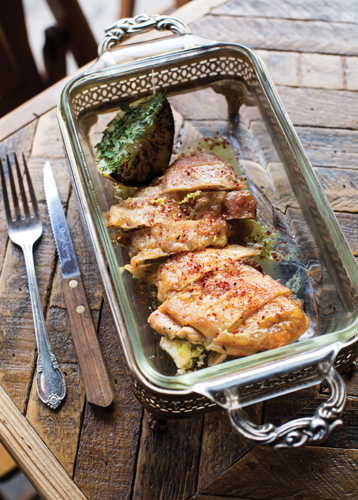
Pan roasted chicken at The Public House
1. What’s the best local dish you ate in the past year?
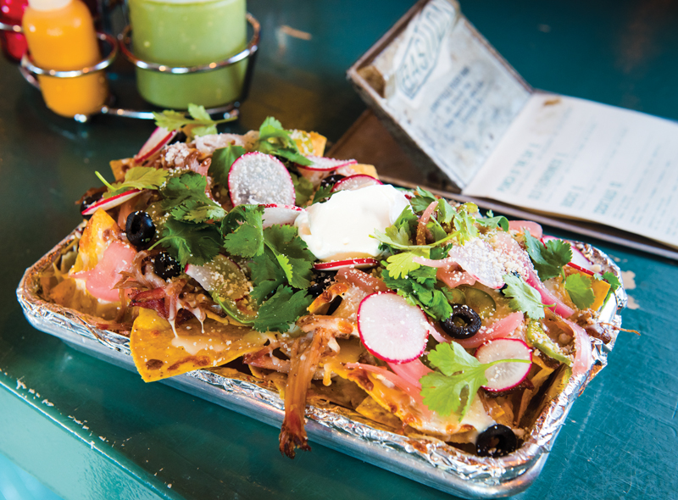
Nashville’s culinary set isn’t afraid to play favorites with each other’s restaurants, and if you’re looking to rub elbows with a few chefs outside of their own kitchens, The Public House at Urban Cowboy is where you’re likely to find them after their shifts or on their day off. Two chefs specifically pointed to the pan-roasted chicken presentation at Urban Cowboy, one complimenting it as “simple, rustic, elegant.” Another called “a random lettuce and vegetable salad” a standout. Josh Habiger’s Bastion was another popular choice, with credit going to the exemplary nachos and the peanut ice cream with frozen and toasted honey. Another chef recalled the full experience of ordering “The Feast,” commenting, “Nothing was disappointing.”

Bastion nachos
Several suggested dishes came from one indecisive chef who loved: “garganelli verde from Rolf and Daughters, rabbit from Josephine, smoked cabbage from City House, the Cuban from Prima brunch, tortilla soup from Mas Tacos, hamachi from Little Octopus.” Exotic items that might not be on your radar unless you are eating with a chef include the kouign-amann pastry from Dozen, sunflower seed risotto with porcini at The Catbird Seat, and the seafood pancake at Tofu House. Two plates at Butcher & Bee also ranked among chefs’ favorites — the octopus poke and the popular whipped feta. Add these to your to-eat list.

Bajo Sexto
2. Who is the most underrated chef?
This was one of the most wide-open categories. It’s funny that someone could consider Margot McCormack to be underrated, but in a city of constantly opening restaurants, the woman who opened the door for chef-driven cuisine in East Nashville just might be. Edgar Pendley of Urban Grub (“What he has done with his USDA kitchen, cured meats, packed restaurant every night, 500 covers, pretty impressive”) got a couple of votes, as did Two Ten Jack’s Jessica Benefield. “Any Woman” got one vote, which speaks to just how male-dominated our dining scene is. Sal Avila, who recently left Prima and is planning his own place, got support, too. The two most inspired votes came from some humble places: one for “Big Al” Anderson of Big Al’s Deli in Salemtown, and one for “the grill guy at Brown’s Diner.” Amen.
But far and away the winner — and it wasn’t even close — was Kaelin Ulrich Trilling of Bajo Sexto. Why is he underrated? Part of it may have to do with his style of restaurant. In the Scene’s review last fall, we noted that the dishes were pretty amazing once you got past the place’s “taco lounge” vibe: “It’s enough to make you wonder how Trilling and his staff would do if they weren’t obliged to serve half a menu of tacos and were instead freed to roll out a full range of Oaxacan favorites.” Maybe 2017 is the year that happens.

The jet-setting Jonathan Waxman
3. Who is the most overrated chef?
If there was a theme here, it’s that the so-called “celebrity chefs” did not fare well with their counterparts. It should be noted that several respondents in the survey declined to vote for anyone as overrated, but as one chef and restaurateur put it, “I can’t think of any that are overrated, but I can think of a couple of recent arrivals to town the past couple of years that think a lot of themselves.” Oof. But there were votes for “the celeb chefs” and “insert nonresident celebrity chef,” so we see the mood of the survey. Sean Brock got a few votes, which is not surprising given the level of success he’s had in Nashville and Charleston, S.C. But lapping the field was Jonathan Waxman, the name behind Adele’s. “Does Waxman count, since he’s never in Nashville?” one chef wondered. “Not that he’s here,” lamented another. (Ironically, Trilling, acclaimed as an underrated chef, is his protégé.) Adele’s has Waxman’s signature dishes on the menu, but a rotation of executive chefs has not done much to burnish his image here. He won a Beard Award in 2016 for … Best Chef: New York. That didn’t impress the voters in Nashville all that much.

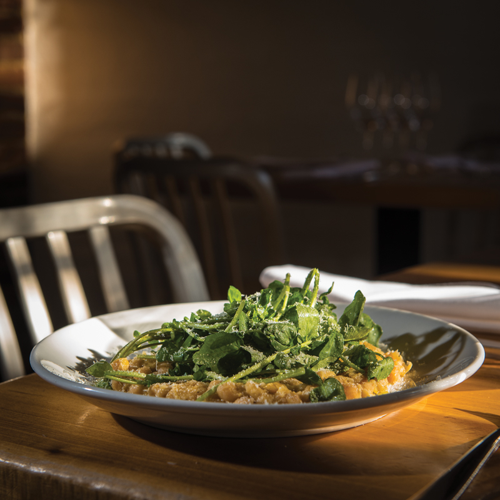
Watercress, smashed chickpeas, lemon, pecorino at City House
4. Where do you go on date night?

Nicky’s Coal Fired
One of the biggest reasons to do this survey anonymously was to find out some chef preferences when they’re actually paying. There were some old-line choices (Sperry’s, Tofu House, Woodland Indian Vegetarian) and some new favorites (Butcher & Bee, Nicky’s Coal Fired). Husk, Virago and Rolf & Daughters got two votes, while the runners-up — Lockeland Table and Josephine — both got three votes. But the most votes (nine) went to City House, home of reigning James Beard Award winner for Best Chef: Southeast, Tandy Wilson.

Bey Swizzle at L.A. Jackson
5. If you’re going out to drink, where do you go?

Old Glory
Nashville is certainly gaining a reputation as a good cocktail town, and industry professionals noted a few watering holes that rise above the crowd. Of course, many of the responses were based around location, with Edgefield and Dino’s representing reliable East Nashville haunts. On the mainland, chefs preferred Husk, Old Glory and The Thompson Hotel’s L.A. Jackson. Max and Ben Goldberg’s Strategic Hospitality properties attract a dedicated following, with Bastion, Patterson House and Pinewood Social all receiving kudos for their cocktail programs. One chef summarized his preference as “basically anywhere the Goldbergs and Matt Tocco make drinks.”
A few responses were short, but spoke volumes in between the lines. “I quit drinking,” shared one chef, while another admitted that his favorite (and pretty much only) place to drink was “the 200 square feet of space between the restaurant dumpster and the kitchen’s back door.”

6. Which Nashville chef should win a Beard Award next?
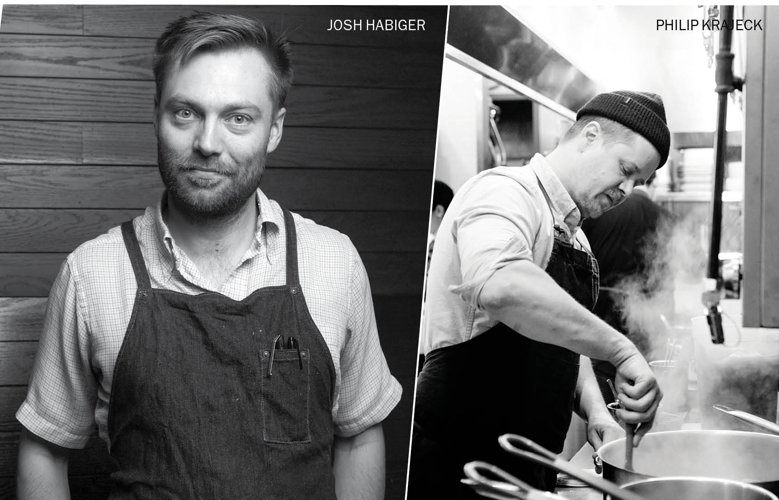
You can love or hate the James Beard Awards — there are good reasons to do either — but the organization does ultimately recognize many of the best chefs in the country. Tandy Wilson remains the only Nashville chef to win the Best Chef: Southeast Award, although several have made the so-called “long list” of semifinalists in recent years: Lockeland Table’s Hal Holden-Bache, Margot’s Margot McCormack, Tyler Brown when he was at Capitol Grille and, this year, Josephine’s Andy Little. Who’s the survey’s favorite? There were some votes for Little, The 404 Kitchen’s Matt Bolus, The Catbird Seat’s Ryan Poli and Butcher & Bee’s Bryan Weaver. The Treehouse’s Jason Zygmont and Etch’s Deb Paquette got multiple votes, but the real race was between two chefs. Rolf & Daughters’ Philip Krajeck got six votes, and Bastion’s Josh Habiger received eight, an indication of just how well those restaurants and the chefs running them have been received by their peers (and diners).
7. What kind of food is Nashville missing?
We may be “It City,” with new restaurant concepts popping up all over town like mushrooms after a spring rain, but that doesn’t mean Nashville has every type of restaurant covered. As you might expect, the most frequent request is for Chinese food in all of its iterations. Several chefs long for better versions of the familiar sort of Chinese-American delivery that comes in those precious cardboard containers, but others are hoping for more high-end regional options. “Sichuan!” writes one, while another is looking for “Dim sum/Chinese in all its regions.”
Chinese isn’t the only Asian food that is apparently missing, as one chef bemoans the paucity of “THAI FOOD. REAL THAI FOOD,” adding, “Please don’t tell me again about King Market. If [Los Angeles Thai street food emporium] Night + Market could go ahead and open here, that’d be great.”
The other popular choice was classic cuisine Française: “Fine French … not bistro … the fussy stuff.” Another chef concurred: “Sometimes I want to go to Bouchon or Bistro Jeanty.”
8. What trend do you wish would go away?
Is it possible to have too much fried or hot chicken? “Our version of ‘hot chicken’ ” is what many of those surveyed wish would die off, as six different chefs and GMs listed the dish. And they had a lot to say about “elevated Southern” and “farm-to-table” menus and claims.
“I still hate when people ask me if we are farm-to-table,” says one chef. “I find that the patrons who ask that usually follow it up with how they watch Food Network all day, or that their son is a ‘master chef’ at the biggest country club in all of Arkansas.” Another chef echoed that feeling, declaring that the use of fresh local ingredients should simply be a given: “Everybody saying they are farm-to-table — it’s the way, not a trend.” Another thinks it’s time to get rid of “mashing up Southern food with something else: i.e., Chauhan, TKO, etc. It doesn’t work.”
A few are tired of the aesthetic that comes with new Southern restaurants, too. Says one general manager, “Anything that has to do with reclaimed barn wood, exposed industrial anything, too-crowded and noisy environment, and the same rehashed pseudo-charcuterie: house-smoked everything with half-assed pickled stuff.”
There were other dislikes: “Truffle oil,” from a restaurant owner, “precious food” from one chef. And from another chef, maybe our favorite complaint of the survey: “Coffee so fancy that you have to wait 30 minutes for a latte.” Oui, chef. Death to that trend.

9 & 10. How many dishwashers have you hired in the past year? How many line cooks?
Clearly, staffing is an issue to Nashville’s restaurant professionals, and when asked how many dishwashers and line cooks had been through their kitchens in the past year, many of the chefs and GMs reached for hyperbole. “What comes after a trillion?” joked one. “I don’t have that many fingers and toes.” Another woefully shared, “One every fortnight. You decide the length of your year, then do the math. If you suck at math, call me.”
But some more literal responses demonstrated alarming numbers, ranging as high as 25 dishwashers and 60 line cooks in a high-volume/high-turnover restaurant. Even the kitchens with more stable workforces had issues. “Luckily, only three,” one chef said. “Now, how long did it take me to find three mediocre line cooks? Eight to 10 ads, at least a year.”
And clearly this question hit a nerve with one chef, who ranted: “Kids nowadays don’t want to work! They don’t make them like they used to. Fucking millennials are big babies! Everybody wants to be a sous chef. Back in my day, we worked half the day for free, and it was fun!” We suggest you stay off of his lawn.
One of the most important reasons we kept this survey anonymous was so nobody steals a certain chef’s most valuable employee, their dishwasher: “I have the best dishwasher in the world and intend on keeping her for as long as she is working, no matter what it costs me!” If she happens to read this, somebody might be up for a raise.
11. What restaurant can you not believe is still open?
While one restaurant owner had a funny take — “all of mine” — several went for a much lower-brow target: McDonald’s. “It’s not food they serve,” says one chef. “It’s bodily and environmental harm.” There were some other chain answers (O’Charley’s and Red Lobster) as well as some locals (including Tartufo, which made a splash with a $500 chef’s table offering when it opened last summer), but the consensus landed on Watermark, with 20 percent of respondents naming the Gulch restaurant, which is moving to the new Bridgestone Americas headquarters downtown when the building is completed. Given the way Watermark has burned through chefs over the years, it’s not a surprising top answer.
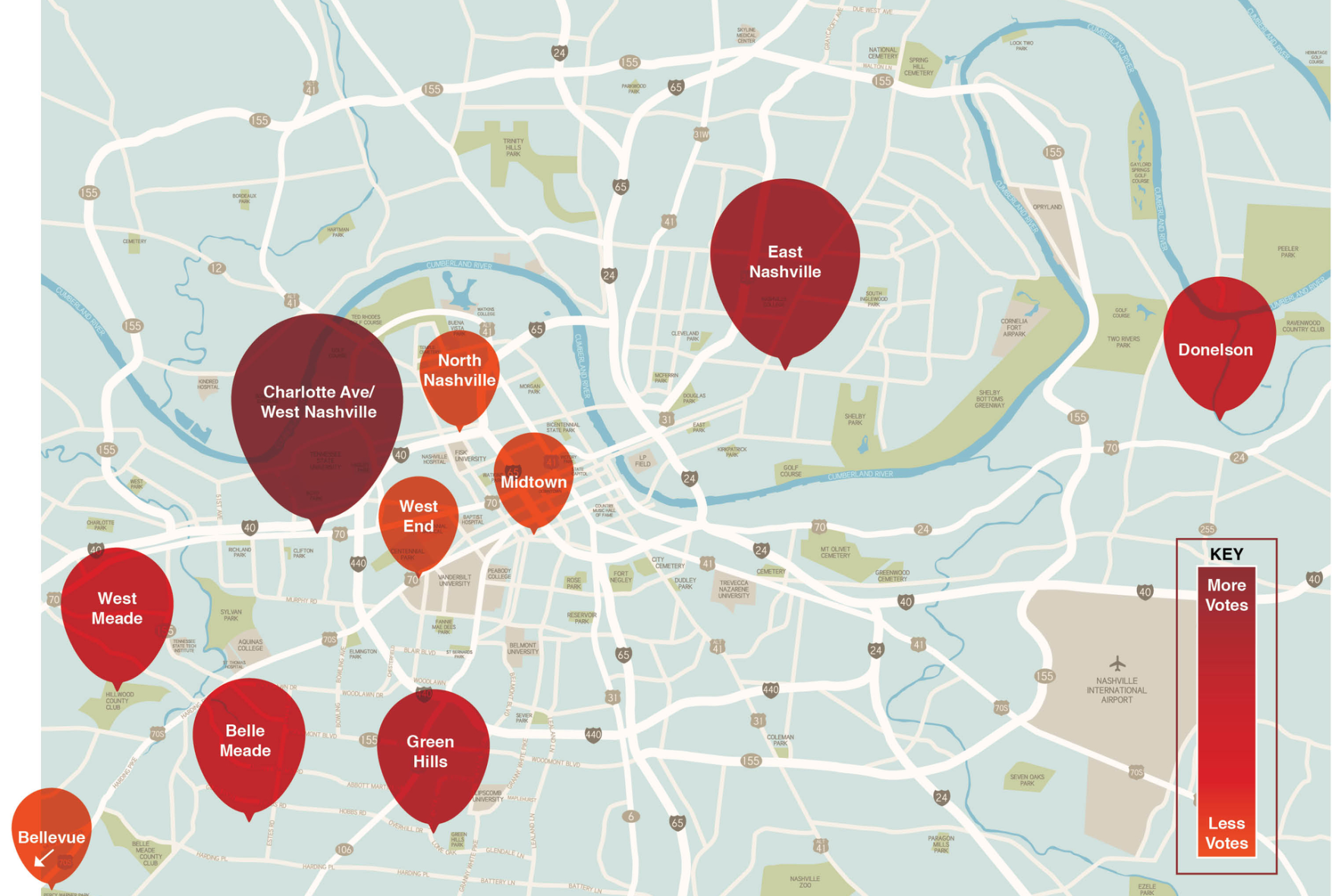
12. What neighborhood is most underserved for fine dining?

Trevor Moran at the Catbird Seat
13. What local chef would you most like to see open a restaurant in Nashville?
The two top vote-getters are two chefs currently without restaurants, whom their peers have been wondering aloud about to Scene staff for a few months. Sal Avila, who left Prima when Community Hospitality added the Gulch restaurant to chef Andy Little’s portfolio, has been mum about his next project. For those of us who felt like he was hamstrung by what Prima was trying to be, his future endeavor is an exciting prospect. Meanwhile, Trevor Moran, formerly at The Catbird Seat, had been expected to return to Noma in Copenhagen, but decided to stay in Nashville. A lot of folks are anxious to see where he cooks next (besides showing up at The Urban Cowboy occasionally).
Others getting interest in the survey included John Stephenson, formerly of Fido and The Family Wash, who is working on a place on Charlotte Avenue in Sylvan Park; Colby Landis, previously a sous chef at Rolf & Daughters and The Catbird Seat, who’s now at Urban Cowboy; Hrant Arakelian of Holland House; Aaron Clemins, longtime sous at City House who actually is opening his own place, Kuchina & Keller, in the next few months; and Kaelin Ulrich Trilling of Bajo Sexto (see the “most underrated” question).

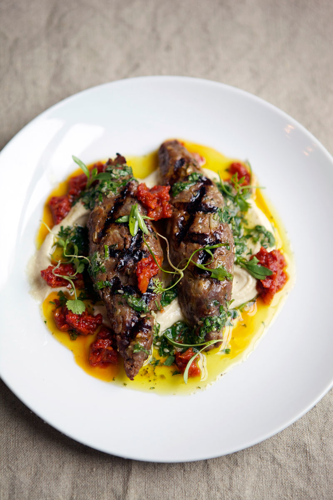
Lamb kabobs at Shaya in New Orleans
14. What out-of-town chef would you most like to see open a restaurant in Nashville?
Not every chef or restaurateur would encourage any more incursions into our culinary scene. “We have a great base of solid people right here in town. The out-of-town chef thing hasn’t exactly been overly successful,” warns one chef. Another opines, “I think chefs should stay put in their own towns.” Another points to the fact that Nashville has “too many chain chef restaurants here already.”
Other chefs are a little more open-minded, and would welcome “anybody that embraces Nashville as their own and appreciates how wonderful the city is as a whole.” Another pointedly warns that the only outsider chef who might succeed here is “the one who is going to move here and be a part of their restaurant.”
Not everyone is so isolationist, though. Plenty think that more folks should jump on in — the water’s fine! The most popular suggestion for a chef that should come here and open a new outpost was Alon Shaya, whose eponymous New Orleans restaurant was named Best New Restaurant at the 2016 James Beard Awards, thanks to Shaya’s take on modern Israeli food.
Other chefs admit that their wishes might be a bit farfetched. “In my dreams, Chad Robertson and Elisabeth Prueitt open Tartine two blocks from my house,” fantasizes one. Another chef would love to see “Thomas Keller or Frank Stitt. They are my heroes and are super-talented. They are still in their kitchens every day.” An unexpected choice comes from the world of television in the form of “Alton Brown (but he won’t open a restaurant).”
While we’re dreaming, here’s the list of some other successful chefs/restaurateurs who locals would be happy to see join our community: Meherwan Irani, David Chang, Colby Landis, Stephanie Izard, Mario Batali, George Mendes, Billy Durney, Mashama Bailey, Mike Lata and Paul Kahan. From their lips to God’s ears …
15. What’s your most interesting celebrity sighting?
Several of those surveyed left this blank, which we can respect. “Silence is golden,” says one longtime restaurateur, while another had this perspective: “I think it’s interesting how little of a deal this is, and that’s one of the best things about Nashville. We have had everyone from major politicians to the most famous rock stars in the world dine with us, and it’s just another guest that we need to take care of. I think most of the restaurants in town do a really good job of that.” It even brought out the all-caps from one respondent: “WE ALL EAT OUR MEAL, OUR STOMACH DIGESTS OUR MEAL, WE DRINK OUR COFFEE, WE TAKE A DUMP, WE FOLD THE TOILET PAPER, WE WIPE OUR OWN ASS.” Touché.
Others related stories about how some of the uber-famous were low-key. Emmitt Smith was “super cool man,” says one chef. Said another: “Brock Lesnar is a connoisseur of fine wine. Don’t underestimate his wine knowledge, because he will school you on proper service technique.” Tom Hanks and Mick Jagger showed up at one place, while Robert Plant “could not have been nicer,” says one chef. “Hearing him tell stories about a life as a rock god was awesome.” A restaurant owner says, “Stephen Colbert came into a restaurant one night and the entire place just stopped and stared. They were in awe. That was pretty cool. I have seen lots of celebrities, but I had never seen an entire room just come to a complete stop the way it did when he walked in!” It’s nice to see chefs have good taste in music, too, as one notes that “Margo Price being a regular is pretty great.” We would agree.
And one chef passed along this cryptic reference: “Mario Batali’s visit that ended up in a book. I was not the woman that went home with his sous chef, Frank.”
But our favorite story had to be this, from a chef who’s had a fair share of famous folks pass through: “I would have to say it was when a guest told me that we were out of paper towels in the bathroom. Without looking up to see who it was, I gave him the standard reply of thank you and that the towels may be stuck in the top of the dispenser if they were still needed. I turned around, still not seeing who I was talking to, went into the restroom to check the towels, which admittedly were out. As I was leaned down, precariously looking up into the towel dispenser, I looked to my right only to find Bill Murray in the exact same position looking up into the dispenser asking me if the towels were hiding.”

16. What’s your biggest complaint about the city?
In short? Infrastructure. At least half of the answers to this question touched on this one issue.
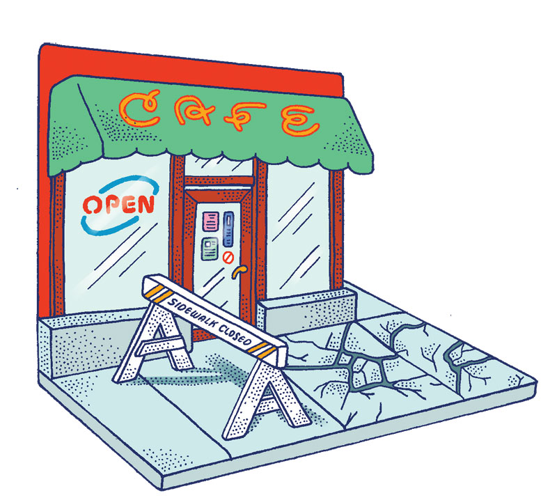
The city’s dining scene is going through the same problems with growth that the rest of us are. Since almost every person surveyed is either an entrepreneur or works for one, they’ve got a ground-level view of the downside of It City. “Rent and the cost/lack of parking is outpacing the growth of the city,” says one owner. “And the city is woefully behind on having a fluid way to get through permitting and codes. It is a combination of [the codes and planning departments] being understaffed and the left-hand-doesn’t-talk-to-the-right-hand, and this is causing major delays for smaller operators, which can be crushing. It would also be nice if the city did not arbitrarily close streets for weeks/months at a time. This has also damaged, if not closed, several indie restaurants.”
Another downtown chef echoed this: “First, the construction; second, allowing all the contractors to block every road around their site with no repercussions for the damages they cause small businesses.” It’s a problem, but at least one owner notes that it’s also the reason for the current boom: “I miss the days of open streets and free and easy driving, but as a business owner, how could I complain about a market growing at this rate?”
Not far behind was the city’s lack of adequate public transportation. As rents keep rising — something noted by more than a couple of chefs — the city needs a better way for its workforce to get from affordable places to live to the restaurants that keep opening. “The public transportation here is pathetic,” says one chef.
And, like everyone else, they hate the traffic — and the drivers.
“Nashville has the worst drivers on the planet,” says one chef, adding sardonically, “I’m convinced there are countries in this world that you can get exiled from because of your driving. When this happens, these people seek asylum in the United States, and our government conveniently places them in Nashville.”

17. What do you think about the trend toward no tipping? Good or bad, and why?
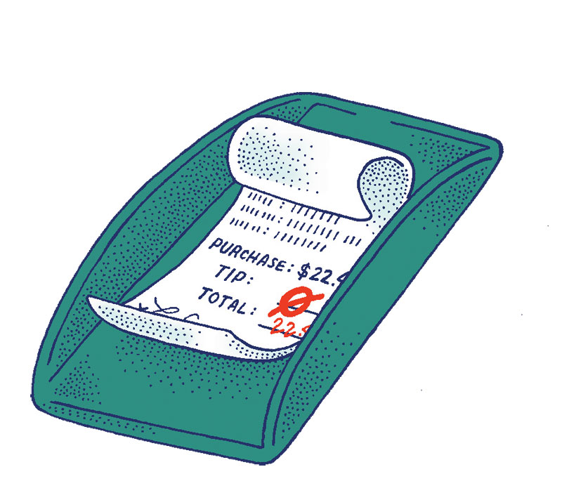
The concept of tipping vs. no tipping/service charge has been a subject of national debate for a few years now, but when TKO opened in Inglewood as Nashville’s first avowed non-tipping establishment, it put the spotlight on the issue locally. The crux of the argument is that since it is currently illegal to split servers’ tips with back-of-house employees, it would make more sense to raise prices or add a service charge that could be used to raise all wages. Opinions about the problem and potential solutions were all over the board.
Quite a few surveyed, notably the younger respondents in general, were excited with the prospect of shaking up the traditional system in the name of paying their staffs a more equitable living wage. But they recognize there could be some real growing pains. One chef comments, “I think it’s an education for the consumer but puts the responsibility on the ownership. I haven’t met a server yet who thinks it’s a good idea. It’s an interesting idea that requires a lot in execution. It is a very unfair system that the customer rewards the server, while the cooks rarely receive proper compensation.”
Another chef speaks from personal experience: “It’s hard to make a living as a cook. Most have to have two jobs. Two jobs means no time for life. It drains us. Burns us out. No time for brainstorming and finding ways to be inspired. Or time to go pull some onions out of the ground for free for your favorite farmer. Every minute of your day you’re thinking about how to make money. My concern is that the majority of Nashville is so stuck in the past that they won’t understand the transition.”
One chef points to successful New York restaurateur Danny Meyer as a leader in this effort, expressing the wish that someone with his sort of financial backing would step up to the plate. “Danny Meyer has been a pioneer in thinking outside the hospitality box for decades. He has implemented hospitality-included in all his restaurants. The motivation behind it, to provide more consistent wages between front of house and back of house, is something I strongly support. The psychological sticker shock of increasing menu item prices 20-30 percent is hard for folks to embrace, even though they are not leaving a tip. It is up to the restaurant to cope with growing pains during the transition, and that equates to dollars. Most independent restaurants don’t have the financial cushion to absorb the time it takes to give folks a chance to embrace something this new. Hopefully, someone in Nashville will eventually take the leap and give it a try. I see that someone having a corporate umbrella to financially support the what-if’s of implementation.”
However, some of Nashville’s, ahem, more mature restaurant owners and chefs are not as enthusiastic, and one says that New York City is not necessarily a restaurant scene we should model ourselves after. He says of the no-tip system: “Fraudulent! Some NYC owners started trying to find a way to fund higher pay for culinary employees, not from their business pocketbooks, but by shifting the cost to the customers and taking money away from their front-of-the house staff with self-serving rationalizations. [They] will not survive long in the marketplace as service will suffer, as great servers, bartenders, hosts, etc., will leave for greener pastures.”
Another owner also doesn’t pull any punches with his opinion. “Dumb. Good servers wait tables for two reasons: flexibility of schedule and the cash. You take away the cash, and you will not have servers that are willing/able to provide high-end service. Is it fair that a server makes three times an hour what a cook does? Probably not. But the ‘no tipping’ thing has pretty much not worked out nationwide. One notable thing about Nashville is that because there is so much competition for back-of-the-house staff, we are all paying cooks well above even the $15-an-hour wage that a lot of cities are going to. That has helped balance out some, but certainly not all, of the disparity.”
There were also some pragmatic concerns about the policy. “I don’t believe in it,” said one restaurateur. “I think it demotivates servers to work harder to raise check averages.” Several other respondents pointed to the danger of taking away the motivation of money. “Work ethic for many millennials is iffy at best,” said one, while another noted, “I think it might work well in larger international cities, where the larger and diverse workforce allows you to be selective in who you hire. Here in Nashville, I think most places are desperate for just breathing bodies.”
Still, some chefs think they are going to have to figure out this wage inequality eventually, one way or another. “In the long term, I think it’s more an inevitability than an experiment.” But the onus of explaining the new concept will fall on the restaurant. “I think the trick is getting people to understand that at the end of the day, the cost of the experience in total is the same, just broken up differently. I think the concept of no tipping can be done a couple of different ways: One is the price of food has the gratuity cost built in, thus raising the price of the item, or you can add a mandatory service charge. I think that anything can work, you just have to be 100 percent open and honest with the guest, so they completely understand what you are doing. Also, you have to make sure you answer any questions that could arise, as quickly as you can.”
18. How accommodating should a restaurant be to the ever-increasing special requests of customers, such as offering dairy-free and gluten-free options?
No set of responses set off use of all-caps more than the question of how accommodating restaurants should be to the special requests of their customers. While most respondents recognize the need to be sensitive to the dietary needs of their customers, not everyone is buying a newfound aversion to wheat.
“DAIRY MAYBE,” said one adamant restaurant owner, but he does draw a line. “GLUTEN IS B.S.! I DON’T REMEMBER ONE KID GROWING UP HAVING A ‘GLUTEN’ ALLERGY. EVER. ITS AN INTERESTING CORRELATION THAT ‘GLUTEN’ ALLERGIES AND RELATED ISSUES BECAME A TOPIC OF DISCUSSION AROUND THE SAME TIME WE STARTED GIVING PARTICIPATION TROPHIES TO ALL THE KIDS FOR SIMPLY SIGNING UP FOR SPORTS.”
You can sense the frustration in this chef’s response: “Oh, I’m accommodating, but it is hard. THERE IS A DIFFERENCE BETWEEN NOT WANTING TO EAT THESE ITEMS AND AN ALLERGY. If we could get this through people’s heads, it would make these requests so much easier to handle. I can easily prepare a dish without said items, but when it’s an allergy, we are dealing with people’s lives, and it’s a totally different cooking procedure.”
Chefs are a suspicious lot, and they are secretly judging you when they see your order come in. “You can’t be allergic to sea salt and then order raw oysters,” explains one chef. Another is not going to take your crap anymore: “Most importantly, customers need to be HONEST! Don’t tell us you’re a vegan but OK eating lamb! What that says is you’re simply an asshole and being difficult to deal with.”
These fed-up chefs do have some questions and some advice for their needier patrons. “I’ve often wondered if I called a vegetarian restaurant and said I would like to make a reservation for eight guests, but one of them only eats meat, how would they accommodate me?” With regard to some special requests, a chef says, “A guest should not ask for a special dish to be made. Modifications to accommodate for medical reasons, absolutely. But it’s a menu, not a grocery store, and I am not your personal chef.”
Other chefs had much more measured reactions. “[Big sigh] Someone wise once told me I couldn’t make everyone happy — they called it the pursuit of the bookends. However, with our community demographic broadening by the day, I’d say it’s important to recognize the new patron mix of our establishments. This doesn’t mean we have to sacrifice the integrity of a concept or a thoughtful menu. I’m merely talking inclusivity of an ever-evolving Nashville community. So do what makes sense for your concept/menu. Some folks simply cannot be made happy, no matter what.”
Others say that above all, restaurants are in the hospitality business and need to keep service at the front of mind. “Ignore customer preferences to suit your chef’s ego at your business’s peril.” Another old-school restaurateur reminds the community that “restaurants should be as accommodating as they can be without compromising the experience of other diners. We are called the service industry for a reason.”
Finally, one chef reminds us that it’s a two-way street. “With enough notice, restaurants can do just about anything if they want to. However, if you sit down at 8 p.m. on a Saturday and hand your waiter a card with 12 things you can’t eat, well, you get what you get.”
19. Is Nashville oversaturated with restaurants? Why or why not?
This is the $100 million question: How many more restaurants can Nashville absorb? The field was pretty evenly split.
“HELL YES!” said one owner of several restaurants. “I think there are too many at the moment,” said another chef and owner. But even among those who think we’re at critical mass, some wiggle room is noted. “It appears that it will soon be oversaturated,” said one chef, “and at the same time somehow not oversaturated with quality.”
And one chef thinks the problem might be in the labor pool, not the number of restaurants. “I say yes to this. But follow with, it wouldn’t be if we had the staff to run these restaurants. This city needs hospitality pros. Lifers. Not musicians waiting for their break. Not career changers. Not people buying time. People that have hospitality in their blood. People that are proud to be line cooks and busboys. ... And we need chefs and GMs that are willing to put in the work to make young professionals better, so that they stick it out. I don’t want to have to tell my cooks that they need to get to Europe or New York to get the experience they need. They can do it here. And to let them know that they won’t be making $12 an hour for long if they work their asses off.”
Even a chef who thinks the market is keeping some places alive — “restaurants that I thought should have closed years ago are still open because people are still eating there” — notes that the pressure on labor means that “places that are great may close because they can’t afford to pay their staff.”
But there was some pushback on the idea that the city has too many places to eat.
“Oversaturation happens when supply outpaces demand,” one sharp observer said. “I don’t think demand in this town is going down anytime soon. And there is a lot of market space available for food entrepreneurs with new and different concepts to come and provide Nashville with new dining experiences.”
Several respondents said we may be saturated — but by quantity, not quality.
“There is so much room for better and better restaurants,” stated one chef, echoing a few others. “The level of service and hospitality is lacking at many places I have been to. I think there is a lack of creativity in some of these spots that are opening. Why do we need another place doing mediocre tacos? Why do we need another bad Americanized Thai restaurant? Why can’t more people cook food from their home or childhoods? Food that is personal and means something to whoever is making it is always going to be better. So, no, we do not need another burger place, or $4 tacos from a Cincinnati restaurant group. We need food that is special to somebody who wants to share what they love.”

20. What are your fears for the industry?
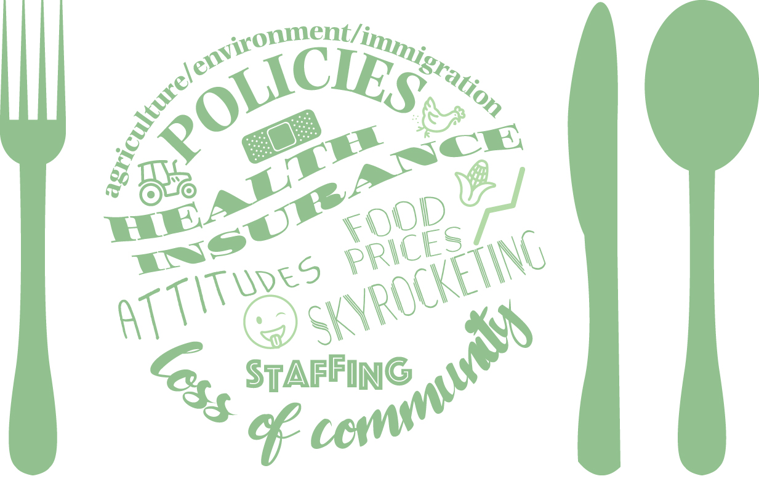
If you don’t think the restaurant industry pays attention to politics, you’ll be surprised to hear that many local chefs and restaurateurs are keeping a close eye on Washington, particularly when it comes to the economy and immigration policies. One noted chef is pointed in his concern about “the impact of our new president’s policies on immigration, agriculture and the environment.”
Another laments the lack of good health insurance: “There is not much attractive about kitchen life in regard to basic survival. We are missing out on potentially good workers for that reason.” And several are quite sensitive to an economic downturn. One fears there will be “a big shakeout coming when an economic slowdown returns after the longest bull market in history,” which another refers to as a concern that “the bottom is going to drop out.”
Other fears included “food prices skyrocketing because of ridiculous policies” and “small farms dying off.” There was a pointed comment that “Donald Trump is awful for the future of this industry.”
Outside of the economy, staffing was the other chief fear among survey respondents. “Hourly and lower-salary workers cannot afford to move here and find affordable living in Metro, resulting in steady wage inflation in many industries, not just hospitality.” One describes the basic economics of the situation this way: “Cost of living in this city is too much for line cooks and dishwashers. With the lack of public transportation from the less-expensive areas, we have to pay them more to make it worth it for them. Then it becomes harder to manage the overhead.”
Another thinks the odds are stacked against young culinary grads as soon as they finish school. “All these restaurants are opening, but where are all the cooks? The cost of culinary school is outrageous and unnecessary. You come out of school with $80,000 in debt and then get a job that might pay $12-$14 per hour. Then these young cooks are wanting to become a sous chef or executive chef right out the gate. But what do they know? They know what a chinois is, but they don’t know how to boil out a fryer. So what happens? They quit the industry and go into a different line of work because they can’t pay their bills and feel unappreciated. Then we have one less cook, and we need those cooks.”
Finally, a few of the chefs worry that the attitudes of chefs and the atmosphere in their kitchens are starting to change for the worse. One is concerned that “chefs will lose sight of why they started cooking in the first place. What I mean by that is that they focus more on social media than their restaurant/staff, who they need to know to get to the top, throw their colleagues under the bus for their own personal gain, get consumed by the politics, say what people want to hear, and blind media by the person/chef they truly are. This business is about the food, farmers and consumers, not social media, being a celebrity and politics.”
Another shares that he “came to Nashville for many reasons, but one of the major factors was the restaurant community culture. It really felt like a ‘rising tide raises all ships’ mentality. Everyone was in this together. It scares me that we may be losing that culture. There’s nothing to be gained and nothing special having a backbiting, dysfunctional restaurant community culture. We are all very much in this together; we should act that way.”
Email editor@nashvillescene.com




