
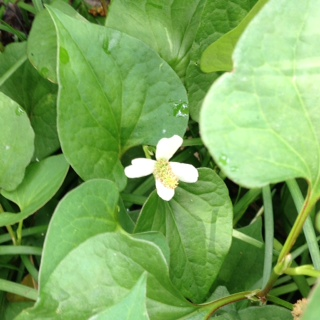
Houttuynia cordata in my yard.
Several years ago, a friend let me dig up some select plants at her house to fill out my newly acquired landscape. Among them, was a pretty little thing with heart-shaped leaves and white blooms. The plant has thrived (but not gone out of control) in an area of deep shade with absolutely no attention paid to it. It dies out during the winter, and I look forward to its return every spring because it’s so pretty.
But I couldn’t remember the name of it, so I asked about it recently. “Oh, that’s Houttuynia cordata, or chameleon plant. It’s edible!” Something edible growing in my yard that the squirrels have not decimated? How exciting! I transplanted some to another area, looking forward to a bounty of homegrown greens. That is, until I looked it up online in hopes of figuring out just how it should be prepared.
There were many garden forum posts about it. The words “alien” and “invasive” were used frequently. “It wraps around the bulbs and roots of other plants and laughs at Round-Up.” And my favorite, “Pretty, but evil; kinda like the head cheerleader in a bad teen movie.”
Aside from being a non-native and invasive plant, it’s been described as having a fishy smell to it (a nickname is “fishmint”) or as one gardener so eloquently put it, with an aroma like a “petroleum and beef stew smell from a bad cafeteria.” I suppose I am fortunate; the plants in my yard don’t have a particularly strong smell. And it’s maybe vaguely fishy, but also a bit citrus. Not unpleasant, but not pleasant, either. In the clump, there’s a distinct smell, but it’s no worse than the nearby black walnut.
However, houttuynia is a popular ingredient in many Asian cuisines — both the leaves and roots.
I decided to try a bite of raw leaf to see what it was like, since some sites had indicated its use in salads and fresh spring rolls. Frankly, it just tasted like a plant. There was no flavor I could identify as being similar to anything else I've eaten, though it was a bit spicy, like ginger. It’s said that when cooked, the plant can give a fishy flavor to vegetarian dishes that would otherwise require a fish stock.
I decided to try some of the leaves julienned over some sesame ginger tofu noodle salad this past weekend. As I was cutting the leaves, the smell got more intense, almost overpowering. There it was: that fishy citrusy scent. This time, when I ate it, I didn't like it at all. My husband said it tasted like orangey cilantro, and it was so strong it overpowered even the Sriracha sauce. He ate a little more, but I tossed the rest in the compost.
This old post from a since-abandoned local blog has some interesting additional information about the plant, including usage as an herbal remedy and availability in local Asian markets. Have any of you ever eaten it — that you know of? For culinary or herbal purposes? Any other suggested methods for preparing it that might be more palatable? More importantly, would anyone like to have some? I have plenty to share; free to a good (or even not-good) home.



