


Back in 2014, the whiskey world was shaken up by a major acquisition — Jim Beam was purchased by Suntory, the Japanese corporation that is best known for Japanese whiskeys like Yamazaki, and Scotch whiskeys such as Ardmore and Laphroaig. Industry insiders wondered how an ultimate good old boy Kentucky company like Jim Beam would get along with the more staid ownership under the new Beam Suntory combination.
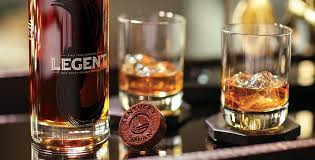
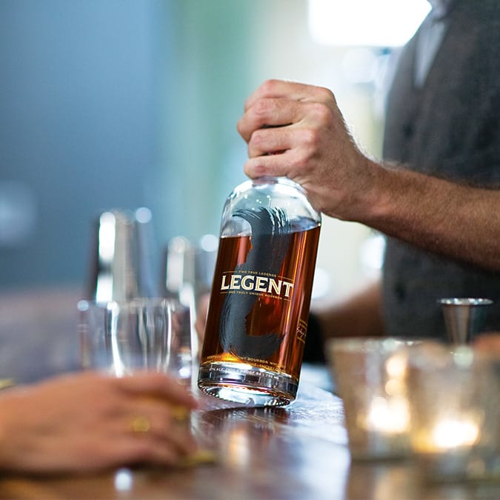
Well, $16 billion will force some collaboration pretty quickly, and it turns out that the new team has invested plenty of money into the Beam operation to expand the distillery’s capacity. But we were all waiting for the first true sign of a new direction for Beam. It has come in the form of a new bourbon named Legent, which has fairly recently entered the Middle Tennessee market.
Beam — and Kentucky in general — is well known for its bourbon, of course, utilizing sweet corn to create a distillate that offers up the essences of grain and barrel that have come to characterize American whiskey. The Japanese also produce some remarkable whiskeys, but skew more toward the maltier and softer flavor profiles of Scotland. With Legent, the two countries and companies have come together to create their first true combination of whiskey-making cultures.
Legent reflects the generations of family distilling history of the Jim Beam family, specifically the efforts of legendary master distiller Fred Noe. Beam Suntory entrusted Noe with creating the mash bill for the new product and overseeing the initial barrel aging of Legent. After four years in charred new oak barrels, the juice was turned over to Suntory’s master blender Shinji Fukuyo and his talented palate to complete the finishing process.
With years of experience blending distillates from Suntory facilities all over the world, Fukuyo was up to the task, taking the aged bourbon out of its original barrels and finishing it in a combination of casks which had previously help sherry and red wine. The sherry casks contribute a nice layer of extra fruit and spice overtones to the traditional sweetness of Kentucky bourbon while the wine barrels add a bit of tannic dark fruit notes to the party. Fukuyo then created a blending recipe that combined all these elements into a brand new product.
The result is remarkably affordable whiskey that retails in the mid-$30 range, far cheaper than most secondarily aged whiskeys. While some might argue over whether the final product still falls under the technical definition of bourbon, since it has been aged in barrels which are not new, I’m not one to quibble because the final product has quickly become one of my favorite sippers. Bottled at 94 proof, there’s plenty of backbone to Legent without paralyzing the palate at barrel strength. That ABV is actually a fine proof level for cocktails, too, and the price is reasonable enough to not worry about only drinking it straight.
The dark raisin notes and spice make Legent an excellent choice for pumping up an Old Fashioned or for using as a base for a Manhattan, a cocktail that I usually only make with rye whiskey because of the inherent spiciness of that spirit. Look for Legent on the shelves at your local spirits shop and give it a try.
Two other whiskeys that have come across my desk lately are also affordable options, but without the complicated parentage of Legent. However, Riverset and Blue Note do have a Tennessee connection thanks to their Memphis headquarters, and both have a lot to offer.
Riverset Rye is a product from (but not necessarily of) B.R. Distilling Co., the oldest craft distilling company in Memphis. While the company says that their rye whiskey is made in Tennessee, the label only indicates that it is “bottled by B.R. Distilling Co.” The 95/5 barley/mash ratio is typical of MGP products out of Indiana, but there are several Tennessee facilities who could make that recipe for them if they didn’t make this in-house. Regardless of provenance, Riverset is a really nice and spicy small batch rye that retails in the low $30s. Very peppery on the nose with lots of baking spices and dark fruits on the palate, Riverset is an easy sipping choice for your house rye, good enough to drink straight, but also bold enough at 93 proof to play well in cocktails.

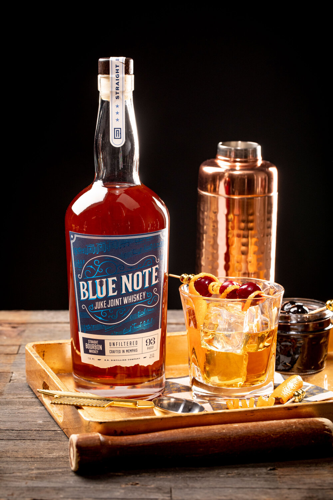
B.R.’s Blue Note Juke Joint Whiskey is definitely not made on premise, staging clearly on the label that it is distilled in Kentucky. At the same proof and price level as Riverset, Blue Note lives at the low end of the craft whiskey pricing spectrum, right about where it belongs. The mashbill hints at O.Z. Tyler as being the source of the juice, but don’t obsess over where the chemical reaction took place. B.R. is responsible for the aging and blending of this product, and they don’t charge much of a proof premium for their perfectly acceptable bourbon.
Fruity on the front end followed by a wash of vanilla from the oak, this is a really good affordable whiskey, although not nearly as complex as products that age more than the 3-4 years that Blue Note claims. Sure it’s a one-note juke joint, but it’s a pretty enjoyable note. Heck, The Beatles wrote a pretty good song called “The Word” that was basically one note, so it can be done! If you’re looking for something different to try as an everyday cocktail base, Blue Note is worth checking out.



