
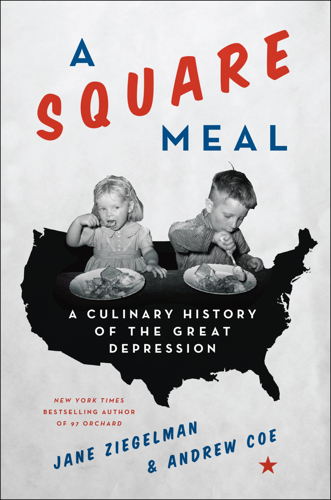

A Square Meal: A Culinary History of The Great Depression is not a new book (it was released last summer), but with the interest in both the obesity epidemic in this country as well as food waste, I felt like this book was a good one to read (and share). Author Jane Ziegelman not only documents food attitudes and policies leading up to and during The Great Depression, but indicates how it affected attitudes and policies going forward to the present day.
I read the book with the stories of my grandmothers in the back of my mind. According to my mother, her mother told stories of having no food in their house at all, despite the fact that my great-grandfather was employed and they lived in West Tennessee, surrounded by farms that grew food (as opposed to cotton or tobacco). She also relayed to me my father’s mother’s stories of scavenging for food in rural Eastern Arkansas, one of four children of a widow.
The book starts in the World War I era, when Herbert Hoover (then head of the Food Administration) began Meatless Mondays (on Tuesdays, actually) and Wheatless Wednesdays to encourage restraint in food consumption to aid the war effort. Then, as the Depression begins, the book documents tales of breadlines run by charities, local food relief organizations and finally federal relief efforts to feed the increasing numbers of starving people in the U.S.
The book delves into the issues that exacerbated the problems (unemployment along with droughts) and how very conservative government leaders were reluctant to give food to the needy, even as farmers in some areas of the country let food rot in the fields because it cost more to harvest it than they could make from selling it. Years passed before the federal government recognized that it could use farm subsidies to redistribute food to those who needed it.
It also details the role of home economists during this time who wrote government-issued pamphlets with recipes and instructions on how to live on what the government provided to eat, which was often still very lacking, nutritionally speaking. With mostly just wheat flour and potatoes as a base, and white Anglo-Saxon women writing instructions, the government programs threatened to wipe out regional specialties.
Overall, I found the book interesting, though the focus of the food history was primarily on what the very poor ate, those who were at the mercy of local and federal aid, such as the migrants from the Great Plains. Perhaps there was a lack of resource material, but I would have liked to see more about what it was like for middle class and employed people, and the challenges they faced, and whether the upper classes suffered at all.
But I was interested to read how the time period set the stage for the onslaught of packaged and processed foods and also an early interest in locally sourced and regional food specialties, even before the recent revival. It was also interesting to read about the earliest dietary guidelines and how far (and yet how little) we’ve progressed.



