
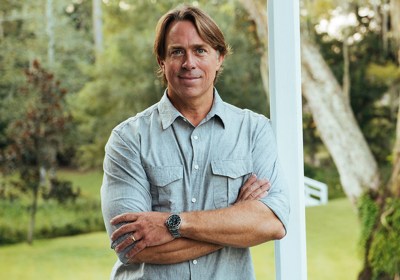

Chef John Besh
John Besh is one charming guy, that's for sure.
He was in town last week to open the restaurants he’s developing for the newly opened Thompson Hotel in the Gulch, a trio of places that he’s very careful to say will be the domain of the chefs on the ground here in Nashville.
Marsh House will be the signature restaurant, with an emphasis on seafood from Southern shores; L.A. Jackson will be a rooftop bar and eatery designed to showcase the spectacular view from the top of the hotel; and Killebrew will be a coffeehouse featuring Birmingham’s Revelator Coffee and breakfast and lunch bites. Marsh House opens today for breakfast, lunch and dinner (here's the opening dinner menu), while the other two will follow this week. Justin Cameron will serve as chef de cuisine for Marsh House, while executive chef Nathan Duensing, previously at Gaylord Hotels, will have responsibility for the food for the whole property.
Walking Bites through the hotel, Besh talked about the styles of the new places and what he expects of the staff, including how they should handle his mother’s gumbo recipe.
How’d you end up partnering with Thompson?
Everything’s about relationships with us. I’ve known the Berger family my entire life, and they are partners here. Worked with AJ Capital. We just renovated this really cool, old hotel in New Orleans called The Pontchartrain, which had been this iconic, uptown New Orleans institution that shuttered for about 30 to 35 years.
Ouch. 30 years? What kind of shape was it in?
Wretched. So we brought that back with AJ and those guys. That just formed all these great relationships. They said, “We’re working on something really cool here.” And I had a couple people on the team with ties to Nashville, some people who had been to Vandy. So it just made a lot of sense. We came to look at it and everybody’s like, “Hell yeah! This is great.” We love the Gulch. So many chefs are moving here from other towns, and I didn’t want to be just another. The way that I’ve grown has really been organic food relationships, using August as my incubator for talented chefs percolating up.
Well you’ve got a lot of talent coming through there.
There have been a lot of guys. Even looking at what Alon is doing — Alon Shaya with Domenica. You see all these talented people come up. We had Justin Cameron, affectionately known as “Cam,” who’s our chef here of the Marsh House. He had past ties to Nashville and wanted to come here. So his wife and their brand-new baby uprooted and moved here to do this. Ultimately, what I will do is support him in creating a Southern seafood restaurant. Brian Landry, who’s my partner, Cam and I all grew up hunting and fishing in the South, in the marsh. We’d come back to the marsh house at fishing camp and cook with each other and with our friends. We want that to be the style and the deal of the food. Whether it’s the Florida cedar clams to stone crabs or Louisiana oysters.
It gives you license to do a lot of things.
Yeah. We don’t always have that license in New Orleans. It’s not as if I feel stifled by any means. It would be heresy to serve any other oyster besides a Louisiana oyster in New Orleans. I’d be kicked out. What I love is that we do have that creative license to borrow from all these Southern traditions, whether it be the Low Country to Louisiana to the Florida Gulf Coast. Bringing all that up here. The spirit of hospitality is the underlying theme of what we’re all about.
I talked to a couple of people who have worked for you, and they said that you have a justified reputation for supporting people.
I would like to think it’s my charm that’s attracted all the talent [laughs]. My whole mission is to see potential in the people around me and support them to achieve their fullest potential. It’s not as if I’m running some pyramid scheme. But it was really hard for me to come up as a cook at a time when families that owned these restaurants in New Orleans were these institutions. Cooks weren’t really part of that equation. Emeril kind of changed all of that and allowed the cook to be the entrepreneur. What I love is that I get to help cultivate talent and then support them so they can achieve their goals. We do it together. I’m not wearing my chef’s jacket because I don’t want to parade around as if I’m the chef here. Cam’s the man, and I’m here to make sure he has everything that he needs. That means my feedback, that means training. They’ve been cooking for the past three days gumbo with everybody, to make sure we are all up to the standard of, “This is what I want. This is how we do things.” It’s all about lending support. We’ve collectively done a great job of recognizing the support that certain people within our group need to rise to the top. That’s what it’s all about.
What’s the menu going to be like?
Oysters, shrimp, crabs, fin fish. That’s the focus of the menu. It isn’t to recreate Louisiana but definitely being a Louisiana low-country influence. Speaking of that license that we’re given, that we’re not creating here, but recreating a creole place here. But there will be some things that I grew up with that I will want on the menu. My mother’s gumbo will be on the menu. I’ve been making it every day with the staff, like, “This is exactly how you do it.” See the opening menu here (PDF).
Is there a little extra pressure for them?
I hope so. My mom, who’s very formal, never to be called “Mama,” always “Mother.” She does not like the fact that I named it “Mama’s Gumbo.” Every time I write down “Mama’s Gumbo”... “John Besh! I am not your mama. I’m your mother.” We’ve been making Mama’s Gumbo every day. Everything’s an evolution. You want it to evolve. I want the people of Nashville to help it evolve into what it needs to be.
How do you approach sourcing for places this far inland?
That’s one reason why we hired Nate; he’s from here. He’s done a great job of working with various farmers and the Porter Road Butcher guys. Just tremendous people. We now have all these different resources. We have our resources from Mobile Bay area that we’re buying a lot of shrimp from. Our low reds are coming from there, crab meat. Now Inland Seafood is here. We’ve worked with them for 20 years. So the foodways have arranged themselves in ways that we have really good access to Carolina and Georgia seafood, as well as the Gulf Coast.
That’s interesting, because that hasn’t always been the case. The sourcing here particularly. You go back 15 or 20 years, you’re kind of catch-as-catch can. Somebody had a personal connection to a boat ...
Our carrot farmer was here last night. There’s one dish we want to do upstairs, a big pot of wood-roasted carrots with local honey and peppers. I just dream of that dish. In New Orleans, we started years ago at Domenica serving the whole roasted head of cauliflower that you just break of and you dip. So we always have these vegetable-driven sharable dishes. I’ve been dreaming of these carrots. Met the carrot farmer last night. “Your carrots are incredible!” And he’s a hippie songwriter, farmer. It’s interesting meeting people. It’s through our efforts and the relationships we’ve made through the Southern Foodways Alliance that we’re able to have a Southern ham plate upstairs or down here for breakfast. Let’s taste hams across the South. Let’s source the best Southern cheeses. Twenty years ago we didn’t have the option of Southern cheeses that we have now. It’s about honoring those food ways and sources and I don’t think I could do this without having my relationships that were born through SFA.
What’s success look like here?
Happy guests. Like honestly, all I give a shit about is that each person sitting in there walks away feeling like we cared about them. If we just do that, and we keep it focused on that and allowing people to celebrate — people come to our restaurants to celebrate life’s biggest occasions. Our job is to help them do that. If we do that well, we will be very successful. I always believe in managing labor costs and food costs and all these variables after we see to the guests’ happiness.



Post a comment as anonymous
Report
Watch this discussion.
(0) comments
Welcome to the discussion.
Log In
Welcome to the discussion.
Keep it clean. Please avoid obscene, vulgar, lewd, racist or otherwise abusive language. Comments featuring hate speech or threatening or violent content will not be tolerated.
PLEASE TURN OFF YOUR CAPS LOCK.
Be truthful. Don't knowingly lie or mislead.
Be proactive. Use the “report” link on any comment that violates our comment policy.
Share with us. We'd love to hear your feedback.