
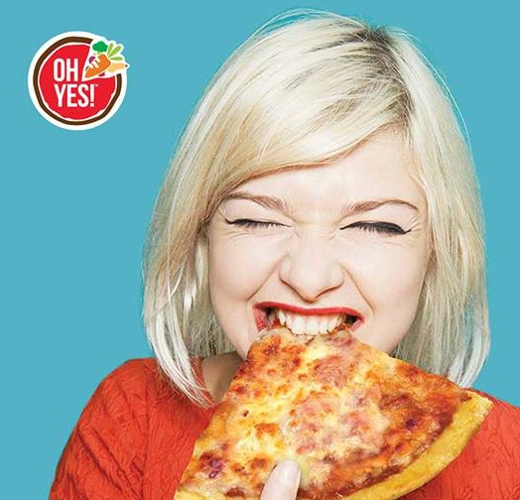
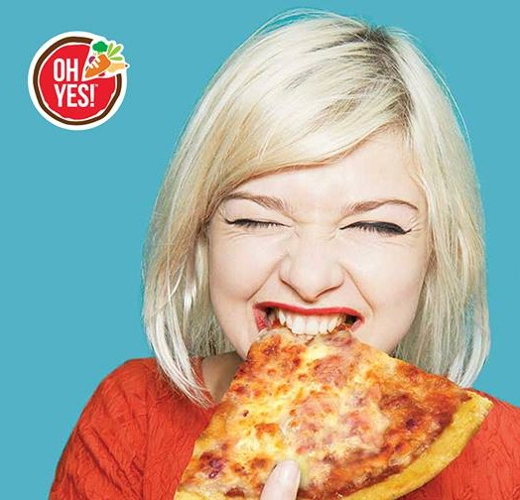

Oh Yes pizzas contain powders of dried fruits and vegetables, which the company claims boosts nutritional value.
In The New York Times this week, Bettina Elias Siegel of The Lunch Tray asks, "Should the Food Industry Sneak Vegetables Into Foods?" It's about efforts to help parents of picky eaters get their kids to eat vegetables (and other healthy foods). This has been a popular topic for a while and has resulted in cookbooks and blogs offering tips on how to sneak healthy food into the foods that kids like to eat. Siegel writes of efforts to trick kids into eating healthier food, as well as opposition from experts and others who don’t believe it’s the right approach to encouraging healthy eating.
My kid is a picky eater (so am I, for that matter). My tiny tyrant and I are in constant negotiation over food, which often turns into battles of will. She’s pretty good about trying things (as long as they don’t look “spicy”), but rarely likes anything she has tasted. So her diet is not particularly varied. There are a lot of bean burritos with lettuce and tomato, lots of baby carrots, lots of sweet potato fries and roasted seaweed (incredibly), along with breads and cheese (she loves cheese). But not a lot of broccoli, kale, cabbage, squash or just about anything else. It’s frustrating, and I do want to prepare foods in a way that she will like them, but “sneaking” them into foods sort of defeats the purpose, I think. I’ll add them to foods — for example, black bean brownies or butternut squash in macaroni-and-cheese — but I tell her exactly what’s in them so she knows why she’s eating them.
But one of the companies marketing “healthy” foods for picky eaters is simply selling frozen pizzas fortified with dehydrated powders of what used to be food. I’m not sure what the advantage of this is over merely crumbling a multivitamin over a regular pizza. The other is mixing in puree of one vegetable into pasta sauces or coating fish sticks with whole-grain breading. While it may not be as bad as the conventional foods, I certainly wouldn’t call it healthy.
Siegel talks to experts who note that not only are these sneaky foods not helping to encourage healthy eating behaviors, but these foods also lack the water and fiber that are essential components of fresh fruits and vegetables. It may be difficult (or impossible) to get your kids to like vegetables, but it’s imperative that they learn to eat them. And that requires things that the sneaky food manufacturers know many parents lack: time, persistence and perseverance.



