


Yesterday, I told you about experiencing Japanese black wagyu — often considered the finest of all beef — but there is another option closer to home if you’re interested. Black Hawk Farms is located outside of Princeton, Ky., between Bowling Green and Paducah. This family-run operation has farmed its land for more than 40 years, and its defining difference is that its American wagyu cattle live their entire lives on the farm, raised on grain that is grown on the property.
That explanation raises a few questions, like what’s so special about that? Most beef cattle is trucked away to massive feedlots in the Midwest for the last months of their growth, fattened up on grain to add weight since you purchase beef by the pound. No matter how well these cattle were treated in their time on the farm where they were raised, once they reach these lots, the ranchers lose control of their diet. At Black Hawk Farms, they are fully committed to creating a sustainable system — using recycled sawdust from a nearby sawmill as bedding in their calf barns, composting the bedding as fertilizer for their crops, and growing the grain that they use to finish their cattle, which never travel more than 25 miles from the farm between calving and processing. This makes for happier cows, and isn’t very different from the process of raising Japanese wagyu.
Speaking of which, another question might be what the heck is an American wagyu? This is a trickier proposition, akin to calling something “American Champagne,” because the name reflects both the provenance and treatment of the product. The American wagyu raised at Black Hawk Farms are what is called an F1 cross of Japanese black wagyu and American black Angus cattle. For those of you who didn’t take AP Bio in high school, or who might have forgotten your Mendelian gamete Punnett squares, that means that each animal is a direct descendant of one purebred example of each species. If you then breed two of those descendants together, you no longer have an F1, so the genetic characteristics of the parents begin to become diluted.
So while American wagyu isn’t exactly the same as the Japanese variety, a first-generation hybrid is about as close as you can get, and it’s a whole lot cheaper! Black Hawk Farms sells much of their meat to restaurants in the area, but they also have an online store where you can purchase cuts directly from the farm for home delivery. Regular readers know that I’m a big fan of the practices and products from another nearby supplier, Porter Road Butcher, and the two operations offer similar prices. If you’re a fan of beefier beef, PRB is the smart choice, but Black Hawk Farms offers a nice alternative with their buttery, umami-rich tender beef. There’s definitely room for both suppliers in my life. (And in my freezer!)
Another nice recent development is that Black Hawk Farms has started setting up retail stands at the 12South Farmers Market on Tuesdays and the Richland Park Farmers Market on Saturdays, so you can actually meet the operators while you choose your cuts. You might also recognize a tall redhead behind the mask working at the Black Hawk booth. That would be Andrew Whitney, the former executive chef at the M Street group of restaurants. Whitney has moved down a peg in the food chain to work with the third generation of the Cook family farming their land. Whitney serves as a liaison to their restaurant partners and has developed some helpful info sheets for consumers offering the best techniques to cook specific cuts and recipes for appropriate accompaniments. Feel free to ask for his sage advice while you’re shopping.
I especially like how Black Hawk Farms, similarly to PRB, offers some less traditional cuts that you might not find at the meat counter of your local supermarket. In addition to the standard filets, ribeyes and strips, Black Hawk Farms lists more flavorful, rarer cuts, like a baseball sirloin, Coulotte and Denver steak on their website. They also sell a fantastic ground beef product made using luxurious cuts like skirt, hanger and short rib along with the usual chuck and round.
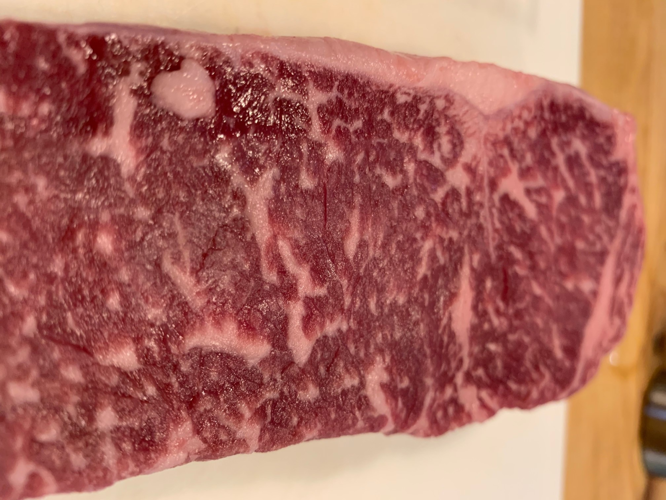
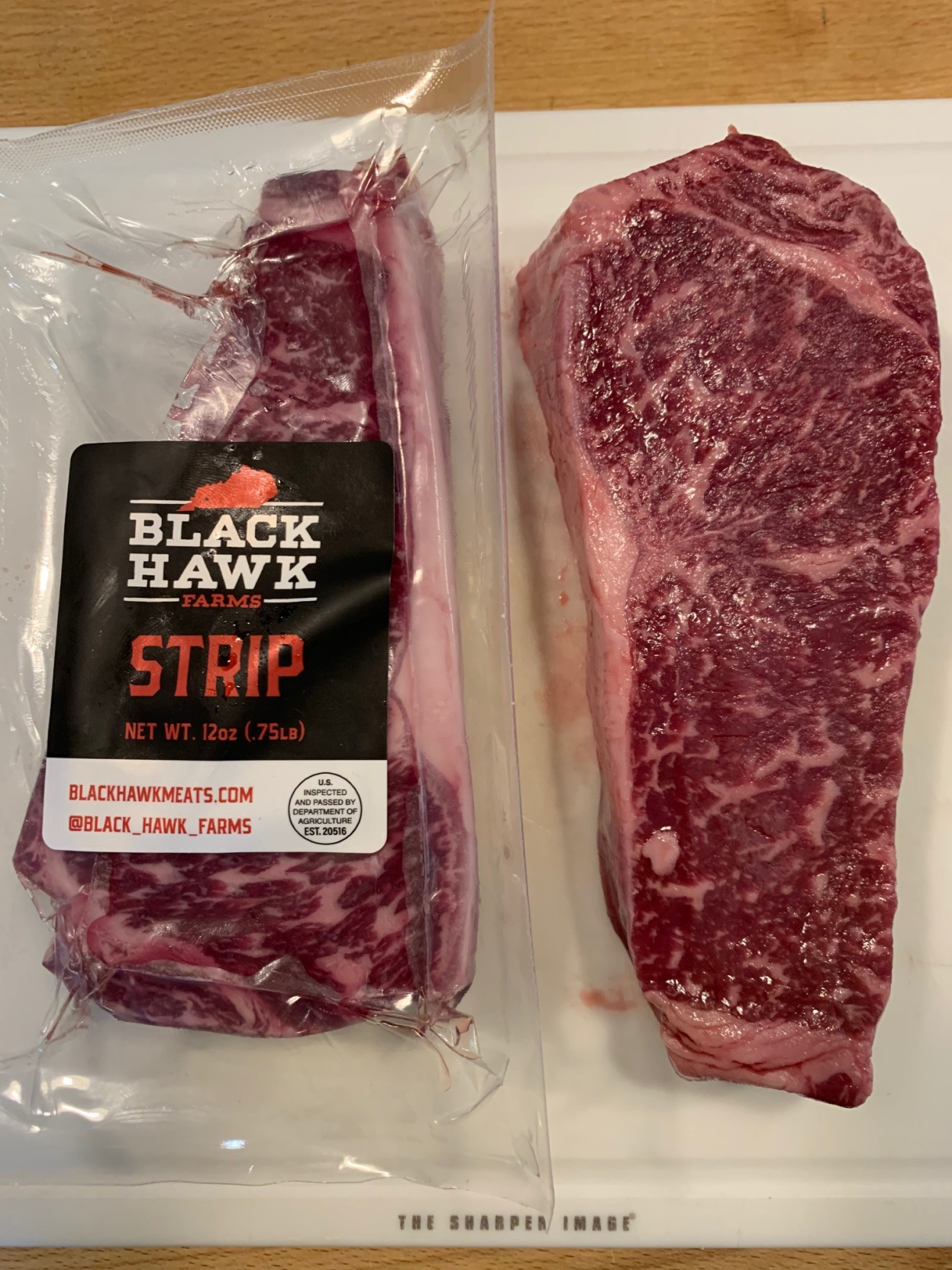
Just to brag on myself a little bit, I took a couple of Black Hawk Farms strip steaks home to cook and prepared what might be the greatest beef I’ve ever served in my household. While American wagyu is not as intensely marbled with intramuscular fat as its Japanese progenitor, it is certainly a beautiful piece of meat. I simply seasoned it with salt and pepper, and my secret ingredient, Adobo powder. (But not this one!) and let it air-dry in the fridge for about a half-hour before vacuum sealing it in a bag with a few sprigs of thyme and giving it a sous vide bath at 122 degrees for two hours. If you think sous vide is all hoity-toity and too expensive for home use, my whole set-up cost less than a hundred bucks for a cheap immersion circulator wand, a plastic tub and some vac bags. And if you ever tried cooking steak or salmon or veggies or reheated yesterday’s barbecue using sous vide, you’d want to join the team. But that’s a longer story for another day.
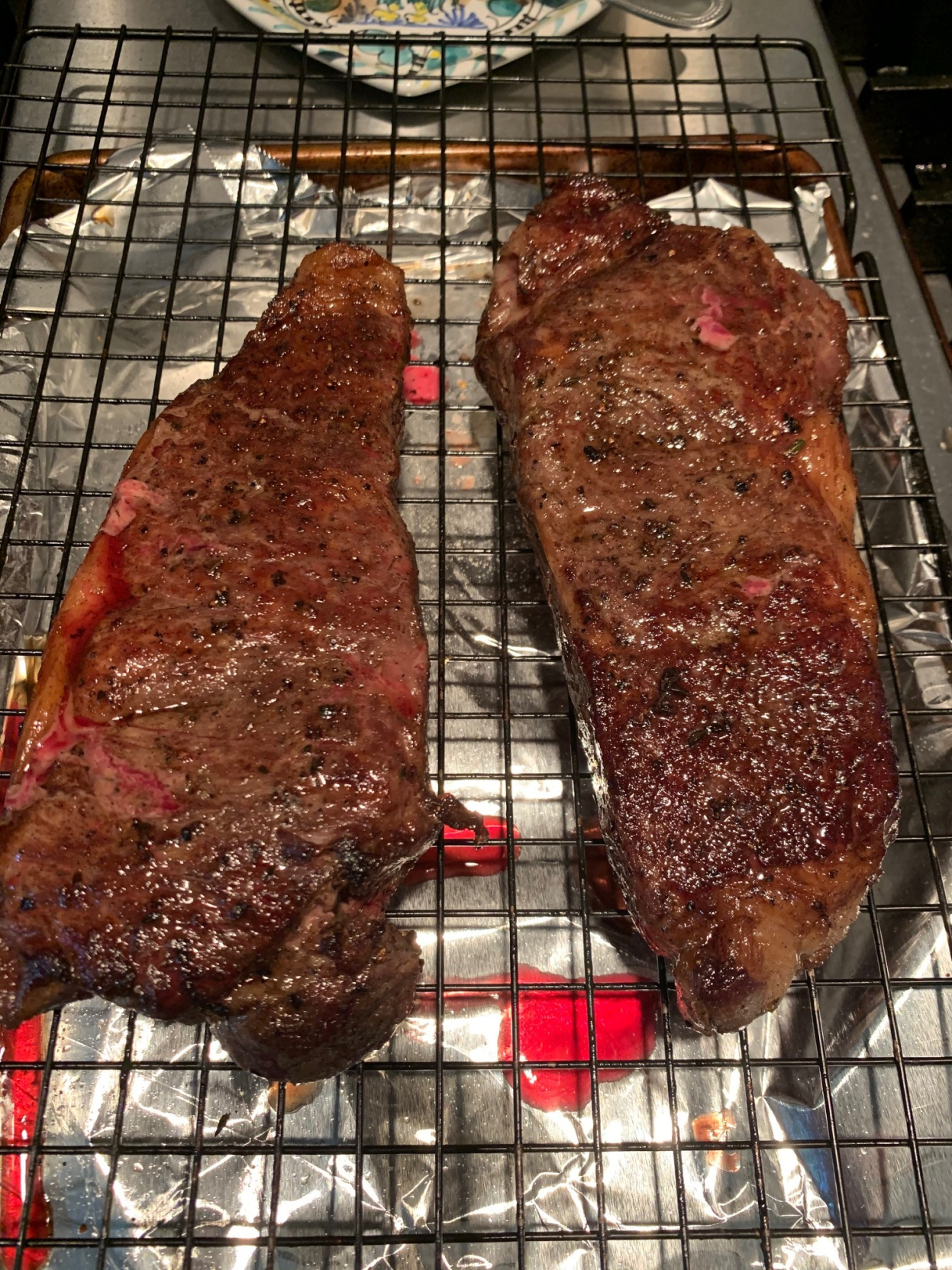
After removing the steaks from the bath and the bag, I heated up a skillet to screaming hot, dropped in a few pats of butter and more thyme, and seared both sides of the steak for a couple minutes per side, constantly basting the surface of the meat with that hot butter (Craft Steak-style) to finish the crust. The result was a perfect medium rare steak with a Maillard-rich crust. That strip costs $26.50 for a single 12-ounce steak, but compare that to restaurant pricing and add in the joy of achievements for having made it yourself, and it would be a bargain at twice the price. And don’t you deserve a treat and a little self-congratulation right now? Go getcha some!




