


I’ve been trying hard to eat more fish instead of living on pandemic pork, corona chicken and bleakness beef all the time. And I’ve finally discovered two methods that have really upped my pescatarian game, which I’m happy to share with you all.
First, how to cook salmon perfectly every time. Salmon is our go-to fish, perhaps because it’s the beefiest of all the fishes. But it was easy for our filets to go from sashimi to a dry piece of shoe leather with most oven or stovetop preparations. Fortunately, I invested in a cheap home sous vide setup, which cost less than dinner-for-two at a restaurant. You can find all sorts of decent immersion circulators in the $70-100 range on Amazon, especially if you don’t give in to the inexplicable options of Bluetooth connectivity and programmable menus. My bargain unit has a dial to set the temperature and another to set the time and a button that starts the process. That’s all you need. Even the cheap ones will hold a temp within a degree or so, and that’s what’s crucial to sous vide cooking.
You’ll need something to attach that circulator to that will hold water, but again, don’t go overboard. Any plastic tub will work, and while a lid is helpful to hold in the heat, it’s not essential for the short cook times associated with fish. The brief time spent in the bath is also another reason why fish is an extremely safe food to cook sous vide. Sure, you can invest in a fancy sealing machine, like I did when I started preserving and freezing more foodstuffs in the early “prepper” stage of the pandemic. But really all you need is some bags and a hand pump to remove the air from them. Many of the packs of bags include a pump, so now I have a half dozen of them if you want one, just like I must have ten turkey injector syringes scattered around my house from previous purchases of Zatarain’s Creole Butter jars. I swear my pantry looks like something out of “Drugstore Cowboy.”
In a pinch, you can even just use a quart Ziploc bag, add your salmon filets to it with a squirt of olive oil to keep them from fusing together during the cooking process, and remove the air from the bag using J. Kenji López-Alt’s water displacement method of dipping and zipping the bag. Serious Eats contributor López-Alt is one of my favorite cooking gurus, because I’m kinda nerdy that way, and I was the guy who everybody would pick as a lab partner in school because I wanted to do all the experiments.
So once you’ve acquired the equipment, you’re ready to go on a salmon run. Buy whatever level of fish you want since this method even makes the cheapest farm salmon in the Kroger display case delicious. I think crispy salmon skin is one of God’s gifts to man, but not everybody agrees with me on that. Like my girlfriend, for example. This method satisfies us both. Set your immersion circulator for 119 degrees Fahrenheit. While it’s coming up to temp, season both sides of your salmon (if you like skin, just the meat if not) with salt and pepper, or Old Bay, or lemon pepper, or dill — you get the picture. Whatever you want. Put it in the bag with that glug of olive oil and drop it in the water for 35-45 minutes. I use a Chip Clip to make sure it doesn’t float to the surface. Timing is not critical, so anywhere between 30 minutes and an hour will do.
With five minutes left in your cook time, get out your cast-iron skillet and set it over a medium high flame for two to three minutes until it’s screaming hot. Then add just enough vegetable oil to thinly coat the bottom; you’re not frying here. Once the oil starts to shimmer remove the fish from the sous vide bag and dry both sides with a paper towel. Another dash of seasoning at this point won’t hurt.
Place the fillets skin side down in the pan and don’t futz with them for 90 seconds. If you try to move them too soon, you’ll tear that crispy skin. It seems counter intuitive, but most foods actually stick to the pan because you flip them too soon, not too late. After a minute and a half, flip them over and sear the meat side for about 45 seconds until it starts to brown just a bit.
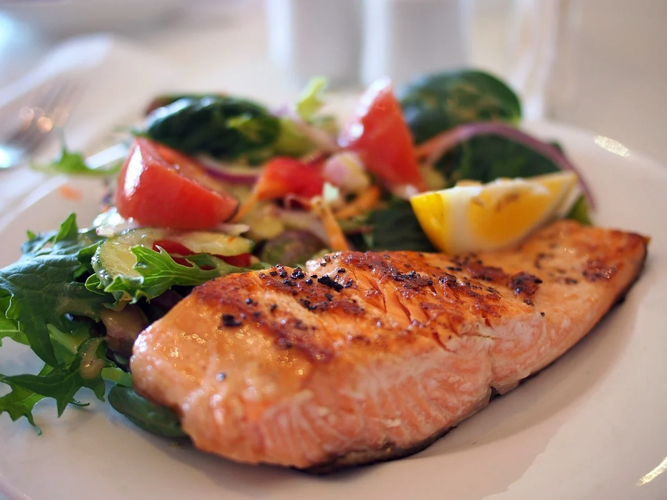
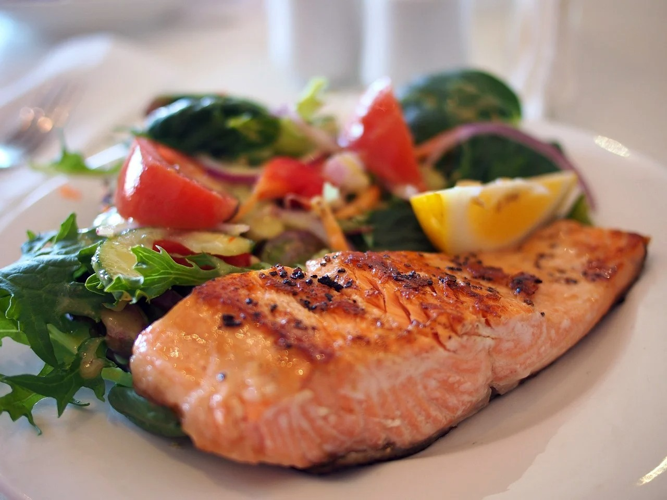
And that’s it. You’ll have a slab of salmon that is crispy on the top and bottom, but absolutely buttery all the way through the filet. A squirt of lemon is all it needs, and you’ll never cook salmon any other way again.
I find that white fleshed fish don’t hold up as well to sous vide because they tend to be much flakier than a salmon steak or filet, and they fall apart under the low moist heat of the process. And while I love fried fish, I hardly ever deep fry anything in my house, with the occasional exception of some chicken or shrimp for a po’boy. Even then, I tend to drag my electric skillet outside and cook it on top of my grill so that the mess can be contained and burned off during my next grilling session.
Again, my boy Keni has come to the rescue with another technique that works well for just about any white fish that’s not too thick of a cut (think cod, pollock, grouper, snapper, etc.) You can read his entire methodology here (and you should,) but let me summarize it so you can see how easy it is.
Basically, preheat your oven to 300 degrees. Dry your fillets and season with salt and pepper. Lay out three plates: one with all purpose flour, one with an egg that’s been beaten with a tablespoon of water and one with panko bread crumbs, seasoned or unseasoned (it’s up to you). Dip the fish in the flour just on the side of the filet that doesn’t look as pretty then shake off the excess flour. Then dip the filet in the egg wash and let the excess drip off. Finally, press the fillet into the panko, punching down hard to make sure you get a thick even coat of bread crumbs. I usually put the breaded fillets on a wire rack over a small sheet pan to rest while I prepare for the final steps.
Then get out that cast-iron skillet. Preheat the pan over medium heat and then add a little more vegetable oil than you did for the salmon, roughly an eighth of an inch deep. Carefully add the fillets breading-side down to the oil after it begins to shimmer. Cook the fillets, gently moving them around the pan occasionally to ensure even cooking until the breading is a deep golden brown, usually four to five minutes. You want them to look fried without being fried.
Flip your fish gently and transfer the skillet to your oven for another five minutes until they register 140-145 degrees on an instant-read thermometer. The result is a piece of fish that has the crunch of being fried without overpowering the delicateness of the flesh. I’ve never screwed this one up, and I’ve never had anyone say it wasn’t one of the best fish dishes they’ve ever eaten.
Consider this my holiday gift to you and a head start on any healthier living new year’s resolutions.
Since I’ve already droned on too long with instructions, let me just recommend a few nice wines I’ve had lately that would pair very well with your fish dish.
Salmon:
2019 Col Credas Valdobbiadene DOCG Rive di Farra di Soligo Extra Brut — I know everybody says you should drink pinot noir with salmon, but this bone-dry sparkler plays well with the beefy fish. And if 2020 has taught us anything, don’t wait until NYE to open the bubbles!
White fish:
Dry Creek Vineyard 2019 Fumé Blanc — What’s the difference between Fumé Blanc and Sauvignon Blanc? They both come from the same grape, but Fumés are aged in oak instead of steel tanks. The resulting butter and oak characters pair very nicely with the crispy pan-seared fish.
2019 Marco Felluga Mongris Pinot Grigio Collio DOC — This wine from Italy’s Friuli-Venezia Giuli region is much more complex than your usual Pinot Grigio, full of minerality and lots of lemon. Perfect with fish.
Cliff Lede 2019 Sauvignon Blanc — A delightful sauv blanc from one of my favorite producers. Unlike the Kim Crawfords of the world that exhibit too much freshly cut jalapeño aromas in my opinion, this is more of an Old World-style made with finesse and restraint.



Post a comment as anonymous
Report
Watch this discussion.
(0) comments
Welcome to the discussion.
Log In
Welcome to the discussion.
Keep it clean. Please avoid obscene, vulgar, lewd, racist or otherwise abusive language. Comments featuring hate speech or threatening or violent content will not be tolerated.
PLEASE TURN OFF YOUR CAPS LOCK.
Be truthful. Don't knowingly lie or mislead.
Be proactive. Use the “report” link on any comment that violates our comment policy.
Share with us. We'd love to hear your feedback.