

If you could distill the spirit of Nashville into an art show, it would be the one that acclaimed artist Carl Pope conceived and curated for Tennessee State University. But Nashville Visionaries isn’t Nashville in a superficial sense — there are no Johnny Cash murals or Confederate monuments, no CMT marathons or spangled bachelorettes. This is the Nashville that’s underneath all that, the heart of the city made up by contrary opinions and unpolished faces and millions of unheard songs. How did Pope, a nationally acclaimed artist based in Indiana, get a snapshot of Nashville that’s so precise? He asked the right people.
“I asked students and local artists of any age to write about their vision,” Pope tells the Scene via email. “I provided instructions to communicate their vision in any art medium without placing limitations on subject matter.”
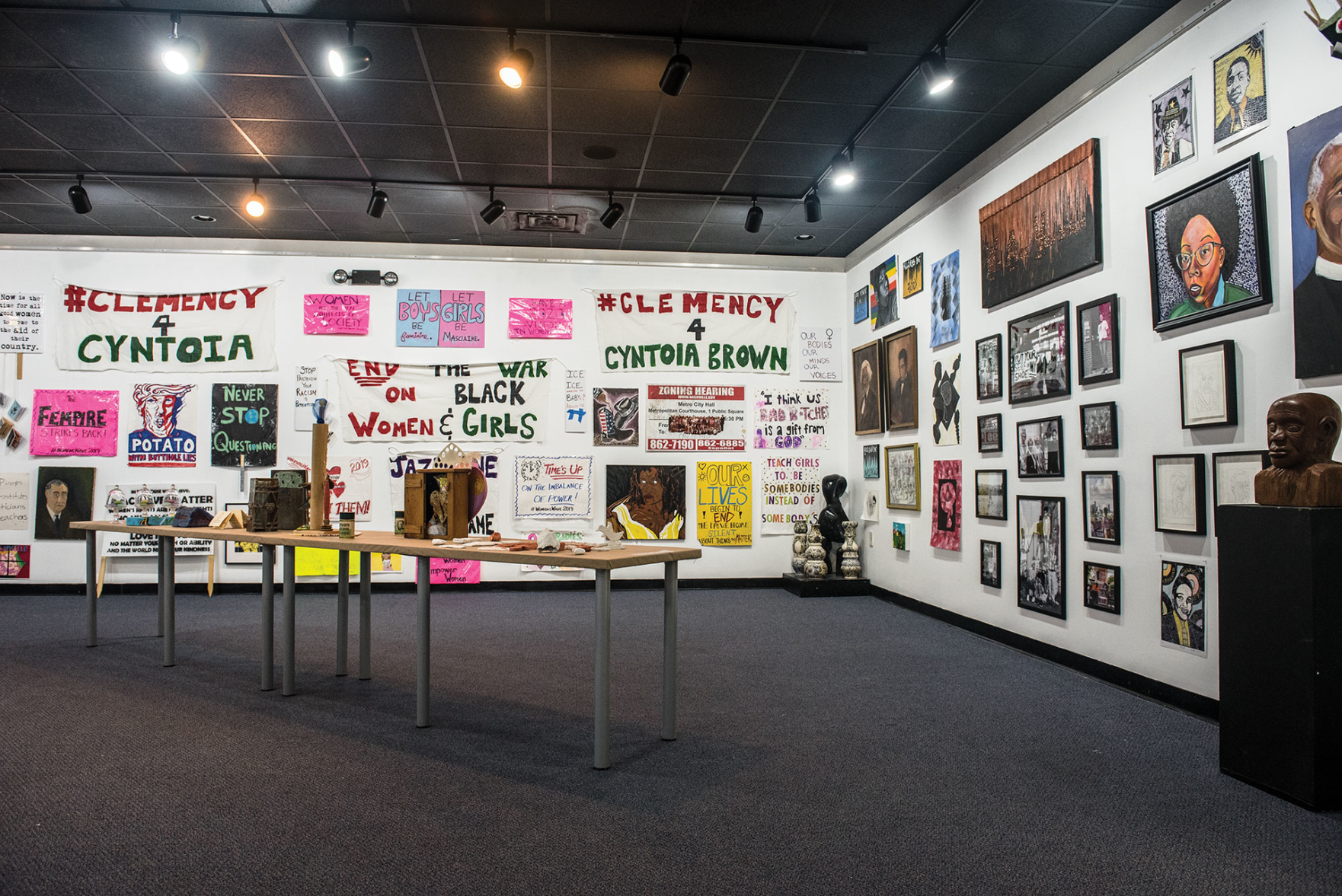
The call for art was simple, reading, “Need: song lyrics, poetry, signage, literature, pamphlets, zines, artwork, sound recording, video, sculpture, and/or live performances.” Pope’s goal in giving his request such broad parameters was to suss out art that is both “personal and authentic.” He worked with gallery director Courtney Adair Johnson to gather the work, which he then organized into a floor-to-ceiling salon-style installation. Nashville Visionaries contains every single piece of art that was submitted. Nothing was left out.
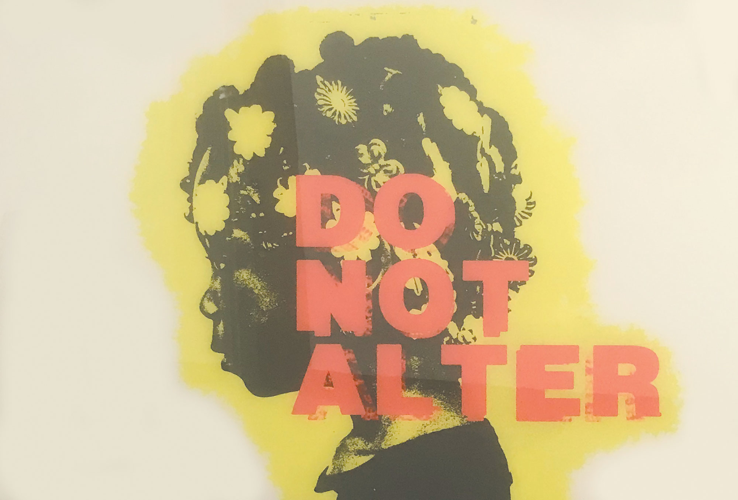
The scope of work is broad, but there are plenty of familiar faces from Nashville’s artistic community. Artist Rob Matthews contributed three elegant line drawings of black civil rights leaders, and Lesley Patterson-Marx created a handful of intricate portraits of Nashville musicians cut out of Nashville road maps. Xavier Payne provided several of his works, most prominently a pair of graphic, cartoonish paintings of brains floating in jars — one is surrounded with green dollar bills and is labeled “normal,” while the other is labeled “criminal.” LeXander Bryant has photographs and multimedia works that take a prominent spot on the gallery’s title wall.
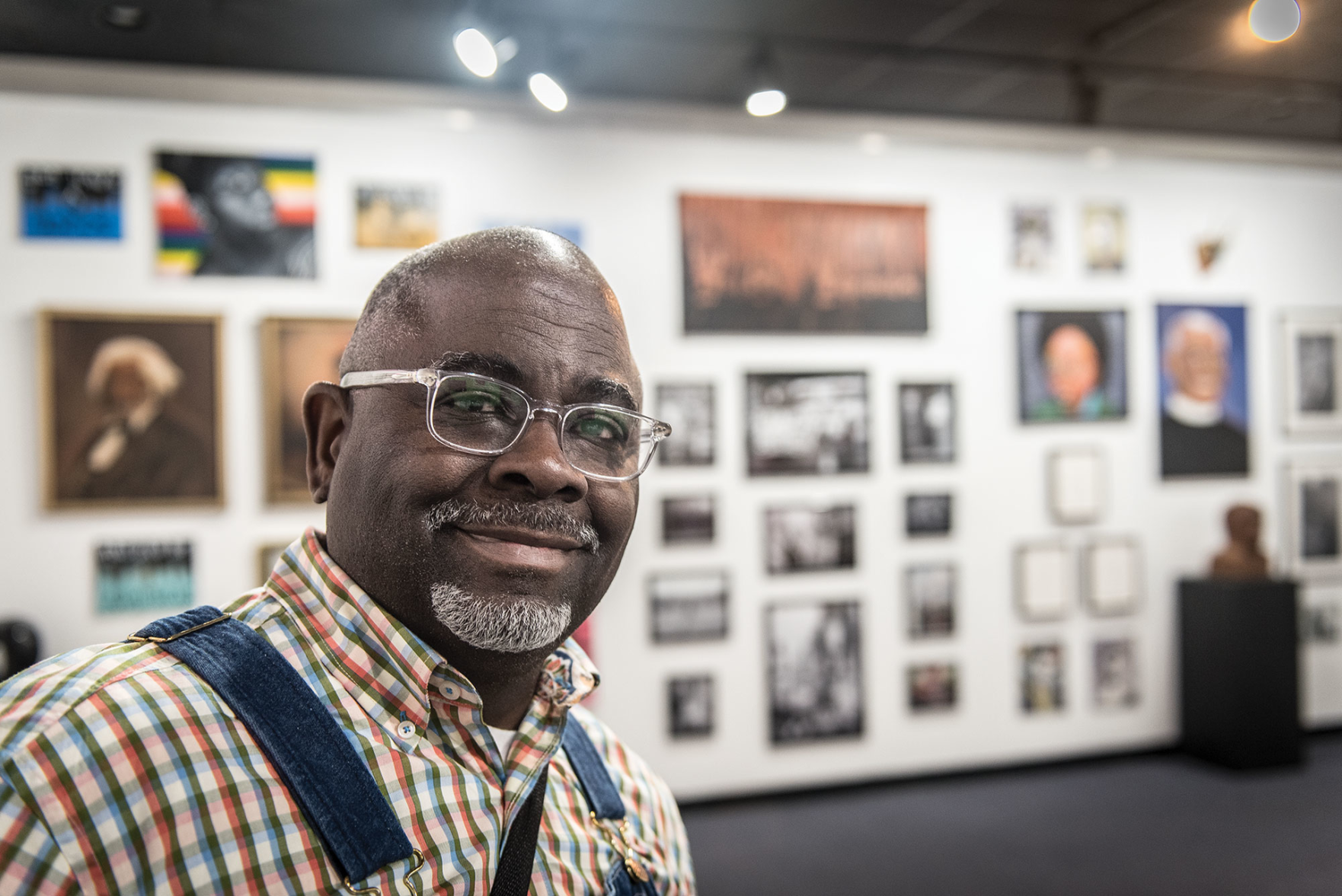
Carl Pope
But like the city itself, Nashville Visionaries isn’t just about Art with a capital “A.” A painting of Franklin Roosevelt on a warped canvas looks like something you might find in a Salvation Army. And there’s a painting of Lisa Simpson sitting in the lotus position while a miniature panda bear serenades her on a saxophone. At Nashville Visionaries, everyone’s invited to the party.
That party includes, as requested, poetry and songs and sculptures. Nuveen Barwari’s working skateboard lined with threadbare Persian carpet lies next to Beth Reitmeyer’s inflatable kiddie pool filled with plastic balls.
A sign next to the pool asks visitors to write their hopes and dreams for Nashville on the balls and drop them back in, like a wishing well. One I saw in the pool said, in all caps, “LOVE ALL OVER.”
Tables are piled with works on paper and poems printed on copy paper. Like the visual artworks, these poems feature a refreshing and inclusive range of work. The poem “Nashville” by Tiana Clark, which was printed in the Oct. 9, 2017, issue of The New Yorker, is there, as is a piece by writer Makiya Wallace that includes this great line: “When you hear the word ‘beautiful,’ you think of Claire’s, moonlight flowers and Opry Mills Mall.”

But the biggest impression is left by a wall that features, almost exclusively, protest signs. The amount of signs, along with Pope’s style of hanging them in repetitious clusters, is almost overwhelming, surrounding you with voices of dissent. They say things like “Clemency 4 Cyntoia,” “End the War on Black Women & Girls” and “Jazmine Barnes #SayHerName.” The signs are beaten-up and homemade, emphasizing that this is a form of communication that’s not about visual perfection. It’s the written equivalent of screaming, and it brings the urgency of a protest into the gallery space.
“It is an innovative way for TSU to contribute to the artistic and cultural vitality and legacy of the city,” Pope says of Nashville Visionaries, “and at a time when public universities and their art departments are searching for ways to be more involved in the progressive development of their communities.”
“Please know that the show is not about artistic merit,” Pope says in another email. “This exhibition is about the Nashville creative community and young artists gaining the confidence to trust their creative vision and imagination in order to manifest their positive contributions to themselves and others.
“It will not be material assets,” he adds, “that will support us in the unknowable future we are about to face. It will be our ability to make innovative choices that will give us real stability and duration in our evolution as humans at this moment in history.”
TSU’s Hiram Van Gordon Memorial Gallery is located in the university’s Elliott Hall, near the intersection of John L. Driver Avenue and 37th Avenue North.



