

Following up on
Tim Kerr's list of must-reads, Nashville-based artist and illustrator
Jen Umanhas submitted a list of her own. If you're looking for autumnal literary inspiration, look no further: Jen's list includes a legendary biography of a legendary civil rights activist, a midcentury children's book illustrator, and a young man who disappeared mysteriously in the Southwest desert in the 1930s.
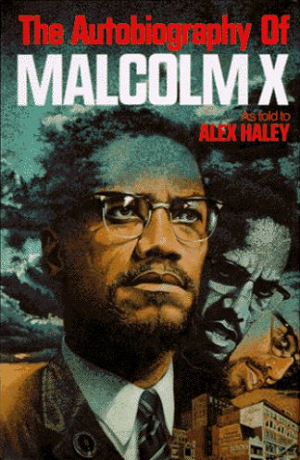
• The Autobiography of Malcolm X, by Alex Haley
From Wikipedia:
The Autobiography of Malcolm X was published in 1965, the result of a collaboration between Malcolm X and journalist Alex Haley. Haley coauthored the autobiography based on a series of in-depth interviews he conducted between 1963 and Malcolm X's 1965 assassination. The Autobiography is a spiritual conversion narrative that outlines Malcolm X's philosophy of black pride, black nationalism, and pan-Africanism. After the death of his subject, Haley authored the book's epilogue,a[›] which describes their collaboration and summarizes the end of Malcolm X's life.

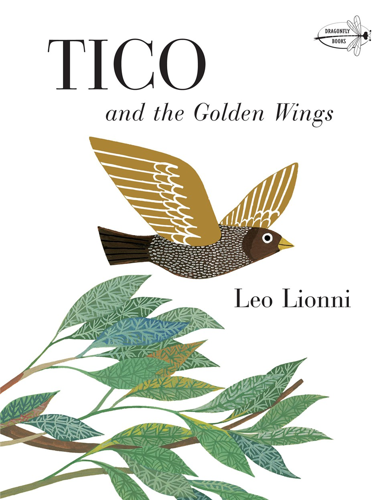
All Tico the wingless bird wants is a pair of golden wings to carry him up over the mountaintops. But when Tico's wish is granted, none of his friends will talk to him. What's so wrong with being different? Tico wonders all alone. One day Tico helps a crying man by giving him one of his golden feathers. A black feather appears in its place. Each day he gives a feather away to someone in need until his golden wings are as black as India ink. When Tico returns to his friends, they are all relieved to see him. "Now you are just like us," they say. But Tico knows there is more to him than the color of his wings.
•
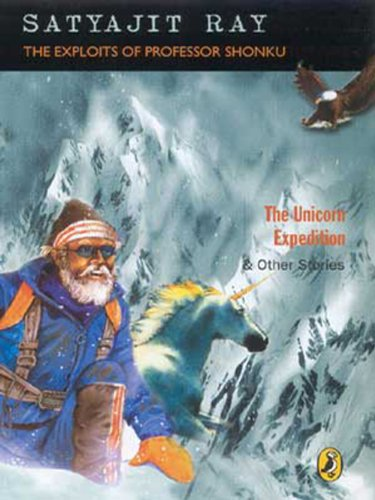
The Unicorn Expedition, by Satyajit RayFrom Publisher's Weekly:
This charming collection of modern-day folk tales proves that the author is as skillful a writer as he is a filmmaker. These 11 stories are in every sense of the word a family affair; originally they appeared in the magazine Sandesh, founded by Ray's grandfather, and draw heavily on characters developed by his father, known as the Edward Lear of India. Many of the stories deal, as do Ray's films, with a search for identity.
•
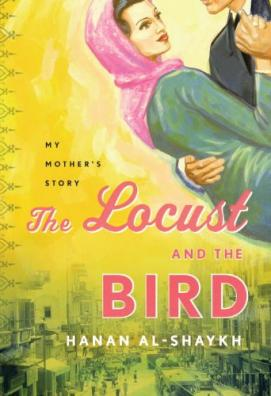
The Locust and the Bird, by Hanan-Al-ShaykhFrom Publisher's Weekly:
Al-Shaykh, a Lebanese journalist and author of six novels (including Story of Zahra), finally succumbs to her illiterate mother Kamila's haranguing to write her story. The result falls somewhere between memoir and biography as she recreates and undoubtedly takes literary license with her mother's history. Kamila and her brother grow up in poverty, estranged from their father, until their mother moves them to Beirut to live with their older siblings from her first marriage in the 1930s. Soon, one of their sisters dies of rabies and the family marries 14-year-old Kamila unwillingly to the widower, Abu-Hussein, 18 years her elder. Kamila torments her husband to show her displeasure, but bears him two children by the age of 17. Her starry-eyed love of the cinema is all that assuages her unhappiness but also fuels her affair with a man her own age, Muhammed. After the 10-year affair has shamed both their families, she is granted a divorce from Abu-Hussein but must leave her two daughters behind, including the author, Hanan. Kamila has five more children with Muhammed. Though at times Kamila's life feels overly condensed, the author's journalistic talent reveals itself in her ability to get past her own abandonment to paint Kamila as a vivid, willful girl who lived as though she were the heroine of a great film.
•
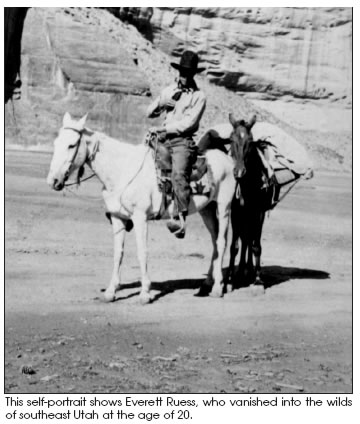
The Wilderness Journals of Everett RuessFrom the
Wikipedia entryabout Ruess:
Everett Ruess (March 28, 1914 — November 1934?) was a young artist, poet and writer who explored nature including the High Sierra, California Coast and the deserts of the American southwest, invariably alone. His fate while traveling through a remote area of Utah has been a mystery for many years.



