

Giacomo Puccini's Turandot may well be the grandest grand opera of all time. This monumental work, set in China during legendary times, features a huge chorus, a sophisticated orchestral score and unforgettable characters. It's often staged as a kind of Cecil B. DeMille spectacle, and opera buffs usually drop everything to see a new production.
This weekend, Nashville Opera is opening its new season with a staging of Turandot at the Tennessee Performing Arts Center. John Hoomes, Nashville Opera's longtime artistic director, promises this production will be an extravaganza.
"Without question, this is the biggest production Nashville Opera has ever done," Hoomes tells the Scene. "We have more than 200 people involved in this production, including principal singers, adult and children's choruses, orchestra musicians, supernumeraries, designers and stage crew. It's going to be quite a spectacle."
One will likely hear plenty of "oohs" and "ahhs" Thursday when the curtain goes up on production designer Allen Charles Klein's opulent (and controversial) set. First constructed in the early 1980s, this well-traveled design has been criticized for evoking more of 20th century Hollywood than ancient China. Be that as it may, Klein's giant sculpted dragon has always made a lasting impression on opera fans.
"The dragon is quite impressive," says Hoomes. "Our Emperor of China will be hoisted into the dragon's arms and will remain there for the entire performance."
Turandot was Puccini's last opera and was left unfinished at the time of his death in 1924. Respected Italian composer Franco Alfano was commissioned to complete Act III. The opera was a departure for Puccini, since its subject matter was far removed from the realistic verismo style that was popular in his day. Turandot is a fairy tale.
Set in ancient Peking, the opera tells the story of Princess Turandot, an icy cosmic avenger of women who will marry any royal suitor who correctly solves three riddles. The penalty for failure is stiff: death by beheading. Calaf, the exiled prince of Tartary, is unintimidated and accepts the challenge. This story line sets up one of the most compelling male vs. female conflicts in the history of opera. Other composers have dealt with this subject — Wagner, for one, explored the philosophical implications of a mystical union of opposites in Tristan und Isolde.
Such a Nietzschean approach, however, wasn't for Puccini. Instead, he opted to probe the depths of human emotion. These sentiments are expressed in some of the most sublimely beautiful music in all opera, climaxing with Calaf's celebrated tenor aria "Nessun dorma."
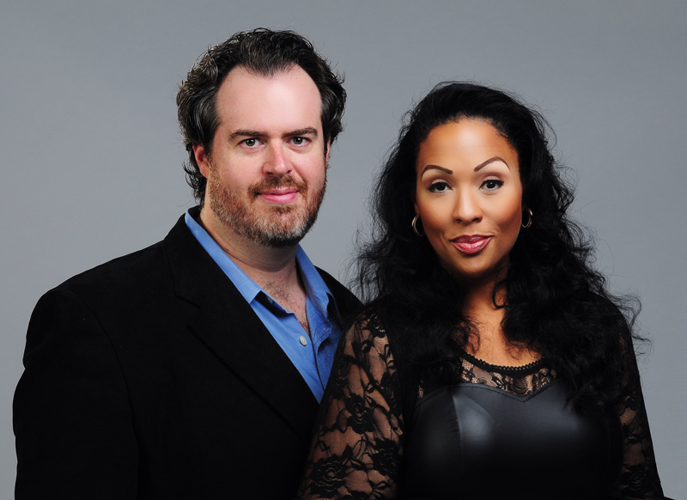
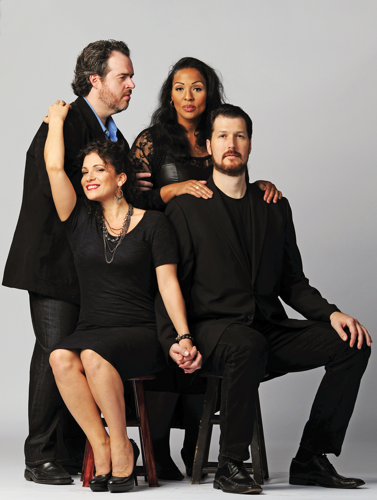
Not surprisingly, the success of any Turandot production usually depends on the quality of the two leads, and Hoomes has lined up a compelling pair of singers for Nashville. The role of Turandot is unique among Puccini's operas, since it requires a dramatic soprano of Wagnerian proportions. Nashville Opera has therefore engaged Canadian-born soprano Othalie Graham to sing the title role. Graham specializes in Wagnerian roles, having already appeared as Isolde and Brünnhilde, among others. Similarly, Jonathan Burton, whose specialties include the lead in Beethoven's Fidelio, brings certain heldentenor qualities to the role of Calaf.
Graham will be familiar to Nashville operagoers, since she appeared in Nashville Opera's 2012 production of Puccini's The Girl of the Golden West (La Fanciulla del West). She's worked with Hoomes on several productions of Turandot in different cities, and she says he demands a great deal of physicality in this opera.
"John does not want people to stand in place and sing," says Graham. "He wants Turandot to show her vulnerability through her movements, and Calaf must physically show that he has the upper hand."
Graham says her favorite Turandot soprano is the legendary Birgit Nilsson, whose 1961 Met performance with Franco Corelli (as Calaf) still stands as this opera's gold standard. Like Nilsson, Graham sings with considerable heft. But she insists there's more to this part than power.
"There's a real bel canto quality to Turandot," says Graham. "Warmth and beauty of voice is just as important as thrust."
At first blush, Burton seems like an unlikely opera star. His first love was rock guitar, but developments in the 1990s dashed this dream. "Basically, Nirvana came around and messed everything up," Burton says. "People weren't as interested in guitar shredders anymore."
Turns out that didn't matter, since Burton had a voice. In his senior year of high school, a teacher asked him if he'd ever considered singing opera. "Truth is I never considered it, but it turned out to be a perfect fit."
Both Graham and Burton have expressed considerable enthusiasm for Joseph Mechavich, who will conduct the Nashville Opera Orchestra this weekend. Currently the artistic director of Kentucky Opera, Mechavich is a veteran opera conductor who's as comfortable leading performances of John Adams as he is Puccini. He's very particular in what he wants from his Turandot leads.
"Turandot and Calaf need voices that are big but not muscled," Mechavich says. "These singers must be schooled in the fine art of bel canto singing. Puccini demands absolute beauty of tone."
Email arts@nashvillescene.com



