

Every suburban neighborhood has one: a garage band of teenagers who practice on the weekend at decibel levels sure to get the cops called. In my neighborhood in Ormond Beach, Fla., the band was called The Escorts, but my mother called them "those Allman boys." She employed the same tone of voice a contemporary mother might use to say "those al Qaeda boys." They had long hair. They were rumored to drink. They were always tearing around on loud motorcycles, always in some kind of trouble at the high school. It was 1965, a time when even first-graders were allowed to wander the town at will, but Mom told me in no uncertain terms to stay away from the house down the street where those Allman boys practiced.
But one Saturday I wound up there anyway. The band member who lived there (it had to have been Escort drummer Maynard Portwood or bassist Van Harrison, but I can't be certain which) had a younger brother and sister close to my age. I was playing in their front yard when the older brother asked if we wanted to come over to the beach and watch them practice. Without telling my mother or anyone else, I piled into a station wagon with them, and off we went to a rambling Victorian house miles away, where, sure enough, I could see those Allman boys up close and personal.
In my house, the record player was always on in the evening, always playing Broadway cast recordings, Perry Como, Dean Martin, Mitch Miller and, once in a great while, Chet Atkins or Frank Sinatra. There was nothing close to rock, not even Elvis. Whenever someone mentioned rock music, my father would say, for decades afterward, "Can't get no, ain't got no, don't want no"—making fun of "Satisfaction," a song he had memorized, thanks to the time The Escorts played it over and over one particularly loud Sunday afternoon. But at the beach house, with the Atlantic Ocean pounding 30 feet away, I heard rock and blues for the first time, and I felt something shift in my soul. That Allman boy with the guitar—all hair and whiskers, the very devil my mother had warned against—played with his eyes closed, reaching for something on his Gibson frets that even as a small child I knew was somehow sacred, was a thing infinitely more profound than the party atmosphere the teen gathering suggested.
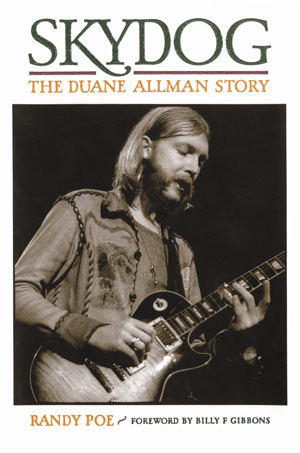
By the time my mother tracked me down near sunset and gave me a whipping I remember to this day, I had learned never to wander off without telling her, but I had also learned to search for the musical bliss I saw that day on the face of 18-year-old Duane Allman. If ever there was a James Dean of rock—someone who cultivated a bad-boy image, influenced a generation with his talent and became truly famous only in death—Duane Allman is the one. And until Randy Poe's Skydog: The Duane Allman Story came along, much of his short life was a mystery.
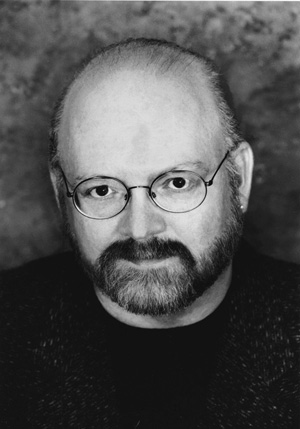
First published in 2006 and now released in an expanded and revised paperback, Skydog is the first definitive biography of the guitarist, band leader and music visionary, covering his boyhood in Tennessee, the various Florida bands from The Escorts through the Allman Joys and The Second Coming, as well as his extensive studio work. Poe, a seasoned music journalist and the author of more than 100 album liners, many of them rock classics, conducted hundreds of hours of interviews for the book. When publication of the hardback edition brought out dozens of "lost" Duane anecdotes from readers, he extended the biography to its present version. The book also includes a stream-of-consciousness forward by ZZ Top's Billy Gibbons, recalling a shared billing with the original Allman Brothers in New Orleans.
When the Allman Brothers formed in March 1969, it was just another in a long series of short-lived bands for 22-year-old Duane and his younger brother, Gregg, Nashville natives who had moved to Florida with their widowed mother in 1960. By the time Duane died in a motorcycle crash in Macon, Ga., just two-and-a-half years later, he had left a mark on rock 'n' roll as indelible as the mark he left on me that sunny Saturday in 1965. He influenced a generation of musicians and was ultimately named No. 2 in Rolling Stone's list of the greatest guitarists of all time, second only to Jimi Hendrix.
During the late 1960s, the Allman Joys became a frequent act—nearly the house band—at the legendary Briar Patch in Nashville, and it was here, Poe writes, that Duane and Gregg developed the free-form blues improvisations that would later be their trademark. As early Allmans' manager John Loudermilk told Poe, he tried a test at the Briar Patch that he had learned from Tom Parker, Elvis' manager: "Turn your back to the artist. You know what he looks like onstage. Just turn around and watch the audience. You can see the emotion in their faces, and you can tell about how much they'll pay to continue having that emotion."
What Loudermilk saw in those early Nashville jams was, I am certain, the same look that lit up the face of a 6-year-old in deep trouble in 1965, and loving every minute of it. It is the look I search for with my 40-something band mates as we send noise out over our neighborhood every Saturday afternoon, hoping no one calls the cops.



Post a comment as anonymous
Report
Watch this discussion.
(0) comments
Welcome to the discussion.
Log In
Welcome to the discussion.
Keep it clean. Please avoid obscene, vulgar, lewd, racist or otherwise abusive language. Comments featuring hate speech or threatening or violent content will not be tolerated.
PLEASE TURN OFF YOUR CAPS LOCK.
Be truthful. Don't knowingly lie or mislead.
Be proactive. Use the “report” link on any comment that violates our comment policy.
Share with us. We'd love to hear your feedback.