

Three separate selections of this year’s Academy Award-nominated short films debut at the Belcourt Theatre this weekend. Whether you’re a miniature-movie fan or just an awards-season obsessive, these distinct shorts programs all offer unique titles including live-action narratives, documentary films and even animated films.
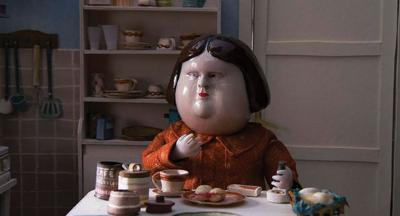
We love a great animated shorts program, and this year’s Oscar nominees offer a killer slate of curt cartoons. Joanna Quinn and Les Mills’ “Affairs of the Art” is a study of family and obsession told through the circuitous tales of Beryl, a 59-year-old factory worker rediscovering her love of art making. This is Quinn’s fourth short based on her Beryl character, but it’s the first to introduce viewers to Beryl’s supremely eccentric family. There’s some fun storytelling here, but the real highlights are Quinn’s gorgeous hand-drawn imagery and the filmmakers’ accurate identification of the hallmark of true artistry: compulsion. In Hugo Covarrubias and Tevo Díaz’s “Bestia,” audiences endure a surreal and increasingly disturbing exploration of the day-to-day life of a secret police agent in the military dictatorship of Chile. The cracked psychology of a country and its citizens is revealed as alarming details emerge from the seemingly banal reality of an anonymous woman and her loyal pooch. “Robin Robin” is a Netflix production helmed by Dan Ojari and Mikey Please. The directing duo deploys a talented cast of voice actors — including Gillian Anderson and Richard E. Grant — in this delightfully designed stop-motion tale about a clan of mice who rescue a robin’s egg from a menacing cat. “Robin Robin” is a musical featuring a number of memorable songs over its half-hour run time, and it’s also a Christmas story that ties the wish-granting power of the holidays to themes of family, loyalty and growing up. On the opposite end of the animated-short spectrum is “The Windshield Wiper” — an adult-themed story written, designed and directed by Alberto Mielgo. Mielgo uses keyframe animation to create what looks like a blend between video footage and cartoon imagery — the film’s look and philosophical themes recall Richard Linklater’s rotoscope masterpiece Waking Life. “The Windshield Wiper” also boasts one of the best onscreen text-messaging sequences ever, and the film reminds us that animation can be seriously engaging when it takes on serious themes like modern dating, suicidal tendencies, the multifaceted sensuality of cigarette smoking, mortality, and the answer to the question “What is love?”
Live-action shorts aren’t just abbreviations of their feature-film siblings. Like novels and short stories, these are two separate art forms despite their similarities. The great strength of — and biggest challenge for — short cinema is its capacity for distillation. An Oscar-nominated Kyrgyzstan/Switzerland short offers an intense cultural drama stripped of narrative artifice: Maria Brendle and Nadine Lüchinger’s “Ala Kachuu — Take and Run” tells the tale of a young Kyrgyz woman whose dreams of university life in the city are challenged by the Kyrgyz culture’s marriage traditions. The film is more emotionally harrowing than I knew a short could be thanks to some great ensemble acting playing against dramatic exteriors. “Please Hold” does a whole lot with very little, turning this one-actor drama into a satire of the self-serving corporate prison economy of the near future. K.D. Dávila and Levin Menekse’s short impressively recalls Sorry to Bother You, but with a full dose of A Scanner Darkly techno-paranoia. Nashville audiences will also appreciate Martin Strange-Hansen and Kim Magnusson’s “On My Mind,” which wraps a story of grief and goodbyes around a country music chestnut.
This year’s selection of Oscar-nominated documentary shorts offers true-life stories that deliver plenty of drama and insight without the luxury of feature-length run times. Matt Ogens and Geoff McLean’s “Audible” profiles the Maryland School for the Deaf’s champion high school football team. This short’s epic intro turns the stock pigskin-cinema scene of the dramatic halftime-locker-room speech on its head before handing off a moving movie about growing up on and off the field. Jay Rosenblatt’s “When We Were Bullies” is a Ross McElwee-esque movie memoir about the director and an elementary school friend — the pair is reunited by a strange coincidence before they reconstruct their mutual memories of bullying another boy in fifth grade. This film is nostalgic without being overly sweet, and it brings a fresh perspective and nuanced understanding to a painful subject. Ben Proudfoot’s “The Queen of Basketball” tells the story of pioneering lady basketballer Lusia Harris. The daughter of Mississippi sharecroppers, “Lusi” would sneak out of bed late at night to watch her pro basketball heroes on television. She was also tall. In her book Sum It Up, UT coaching legend Pat Summitt — Harris’ Olympic teammate — described Harris as “the first truly dominant player of modern women’s basketball, 6-foot-3 and 185 hard-muscled pounds of pivoting, to-the-rim force.” Harris was the only woman ever drafted by the NBA, and this film’s award nomination has been made more poignant since Harris passed away only a few weeks ago.



