


“Instant Structures”
Nashville’s cinema scene has really come of age. The Nashville Film Festival — which turns 50 this year — gets bigger with each installment, and the Belcourt Theatre is now a full-on nationally recognized film center. Music City’s appreciation of edgy avant-garde screen fare is also at a high point: August will bring us the experimental programming of East Nashville’s Defy Film Festival, and this week the Far Out Film Fest will psych out audiences at the Belcourt.
Nashville filmmaker and Far Out artistic director John Warren curated this year’s super-strange cinematic selections, which should complement the aural excitement of the Far Out Fest psychedelic music lineup going down at Little Harpeth Brewing on Friday and Saturday. (Read more about Far Out’s music in our Critics’ Picks on p. 22.) More than 20 short films will screen at the event, which will also feature a DJ set from Mike Mannix, host of WXNA’s Psych Out! Here’s a taste that’ll have you seeing tracers.
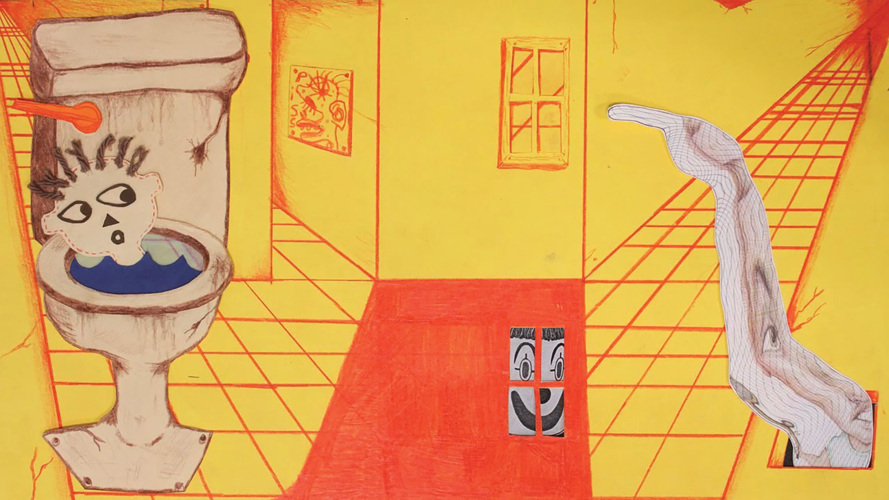
Arielle McCuaig and Craig Storm’s “Instant Structures” (2018) pictures a modular, building-block urban freakscape populated by strange creatures and sentient objects rendered in jittery, stroboscopic imagery. It’s a delightfully nonlinear affair that also plays with traditional structure, beginning with a cold-open sequence that features the film’s excellent 8-bit soundtrack at its funkiest. It’s a perfect pick for a film program attached to a psychedelic music festival.
“The Drift” (2007) reimagines the early days of the space race, telling the story of a rogue rocket mission and the discovery of the mysterious titular space fever. Using still found images and well-written and well-performed narration, Kelly Sears’ film recalls Homer’s Odyssey as well as the musical revolution of the 1960s, spinning a countercultural myth about the birth of psychedelic rock. This visionary, poetic sci-fi gem is one of the highlights of the fest, and it’s the best example of “far out” you’ll find here.

“Nutrition Fugue”
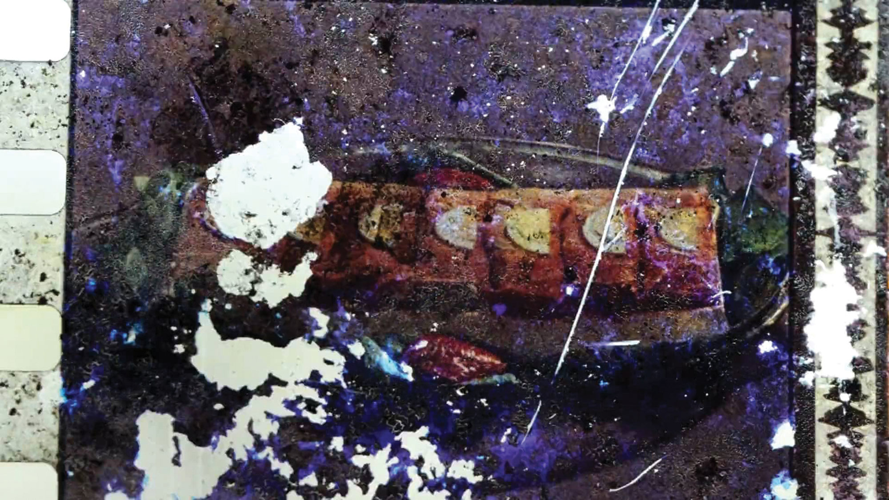
Peter Lichter’s “Nutrition Fugue” reads like avant-garde vintage food porn. Lichter uses found footage of television advertisements for Közért — Hungary’s government-owned grocery chain during the country’s communist era (1949-1989). Lichter explains on Vimeo: “The film strips were digged in the soil, rotten with food and cut up in pieces.” Lichter cut up the footage further in the editing room, resulting in a Stan Brakhage-esque collage of shimmering Jell-O plates, streaming slices of deli meat, spinning piles of whipped-creamed desserts, and pure abstractions made of double-exposed images and frames full of scratches, cracks and stains. This visual feast plays against a background of noise — mundane food advertising is transformed into an exhilarating experience in pure cinema.

“Please step out of the frame”
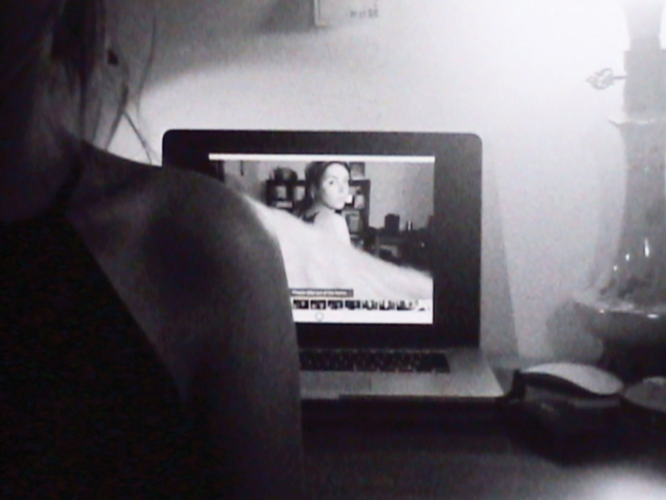
Experimental films often jettison narrative storylines in favor of examinations of film materials and techniques themselves. A great example of this is Karissa Hahn’s “Please step out of the frame” (2018), which reflects on internet and mobile video culture using zooms and editing to interrogate how visual framing devices can affect perspective. Hahn gives us a visual analogy that matches her poetic mini-manifesto on the film’s Vimeo page. An excerpt:
mistrust the manufactured imagedistrust the assembled picture
give no credence to the massed account
discredit the aggregate narrative
defame the corporate chronicle
denigrate the collective annals
doubt the constructed copy
- consider the clone
The revolution will not be streaming.
Roger Beebe’s “TB TX DANCE” challenges the most basic assumptions about filmmaking — the images in this movie weren’t filmed at all. Beebe attached lengths of clear film leader to sheets of paper to feed them through a black-and-white laser printer. The result is an animated film made up of printed pictures celebrating the Lone Star State and exotic dancing. Beebe doubles down on his office-machine aesthetic by composing a percussive soundtrack from samples of buzzing printer noise.
Most of the movies in the Far Out Film Festival are recent creations, but “Two Space” is a 1979 film created by digital movie pioneer Larry Cuba. When computers first broke through into the art world in the 1960s, Cuba and his peers were inspired by the new technology and began applying the mathematical capabilities of computers to the creation of abstract art. Cuba programmed early masterpieces of digital art and is also known as the man who created the Death Star animation that’s shown to the Rebel Alliance in Star Wars Episode IV: A New Hope (1977). “Two Space” presents viewers with a mesmerizing dance of white pixel patterns against a black background. The aesthetic appears elementary to 21st-century eyes, but Cuba’s gracefully choreographed digital dots dancing to a gamelan-esque soundtrack of ringing bells and vibrating chimes remain absorbing and affecting.
Nashville filmmakers Kelly Shay Hix and Zack Hall combine a cacophony of colorful cross-fades in their poetic take on instructional videos, “How to Dye.” The movie is an impressionistic documentation of how to forage natural plants and insects for use in dyeing silk. But narrative is mostly sacrificed for a chromatic immersion in sound and images that speak to themes about the beauty hidden in the natural environment, and achieving immortality through art. The beautiful pictures were shot by Hix and local artist Stephen Zerne. Hall takes credit for the trippy edits, and the soundtrack comes courtesy of Nashville’s own Sugar Sk*-*lls.



