




Lovers Rock
It’s been quite a year. Like several of my most beloved festivals, the New York Film Festival made the leap to the virtual/online realm (as well as several drive-in screenings throughout the five boroughs). It’s a tradition for me to attend just to stay at the forefront of global cinema, and this installment (nearly simultaneous with the Nashville Film Festival) saw me attending (remotely) for the 19th year. Granted, all bets are off for the future of theatrical exhibition in the U.S. Drive-ins are doing fine, and several arthouses — including the Belcourt — have moved into virtual screening rooms where they have partnered with distributors to keep the metaphorical lights on. But how long the big mainstream exhibitors are going to be able to hang around is a significant unknown. So we’ll see how it all shakes out.
My absolute favorites shared no commonalities other than being superb film experiences. Opening-night film Lovers Rock (premiering on Amazon Prime on Nov. 27 as part of the Small Axe quintet) from Oscar winner Steve McQueen was a sensual feast of Proustian dubby bass lines (truly the most essential soundtrack of the NYFF) and the scent of fresh curry. It’s a perfect illustration of the specific becoming the universal to the open-minded viewer, and it captures perfectly the sorely missed magic of the communal gathering. Tsai Ming-Liang’s Days is a disciplined study of loneliness (45 shots in just over two hours), a testament to the liberation of gay sex, and a deeply moving portrait of a one-night encounter.
Hopper/Welles, a remarkable document of a few hours in 1970 where Orson Welles and Dennis Hopper have some drinks and maybe shoot some material for Welles’ then-gestating The Other Side of the Wind, is essential for anyone invested in the art of making movies. But it’s also scandalous fun; you’ll learn a lot (including how Welles saw Hopper becoming a Republican 30 years before the fact), and the photography is exquisite.
And then there’s Dea Kulumbegashvili’s Beginning, which will kick your ass. There’s some Bresson, some Von Trier, and some Tarkovsky in the mix, but Kulumbegashvili, a first-time director from the nation of Georgia, has her own perspective about the trials a woman of the Jehovah’s Witness faith must face in modern Eastern Europe, and this is as wrenching and elegant a debut as one could hope for from a film so deeply, deeply upsetting. I will watch anything she makes from this point forward.
Coming to New York after winning the Golden Lion at Venice 2020, Chloé Zhao’s Nomadland (coming in December to the Belcourt) is a tour de force for star/producer Frances McDormand. As a widow whose town has collapsed after local industry led the way, she takes to the road with a van full of memories and a determined heart. If you’ve been wondering how badly the ongoing collapse of the economy has been affecting the remnants of domestic manufacturing, you should absolutely check this kindhearted film out. The documentary The Truffle Hunters depicts a similar community built around the rarest kind of savory fungus, following the endearing curmudgeons and their dogs who prop up an extreme aspect of modern foodie culture — though through a more subtly critical perspective.
But of all the films exploring the construction of communities at this NYFF, the most captivating is Ephraim Asili’s The Inheritance, in which we witness the coming together of a commune for Philadelphia’s Black community. Blending narrative and documentary traditions, this is a remarkable work that addresses the legacy of the MOVE house (with several surviving members appearing), the Black Panthers, and the willingness of all minority communities to gather together and collectivize. It’s a dazzling achievement.

On the Rocks
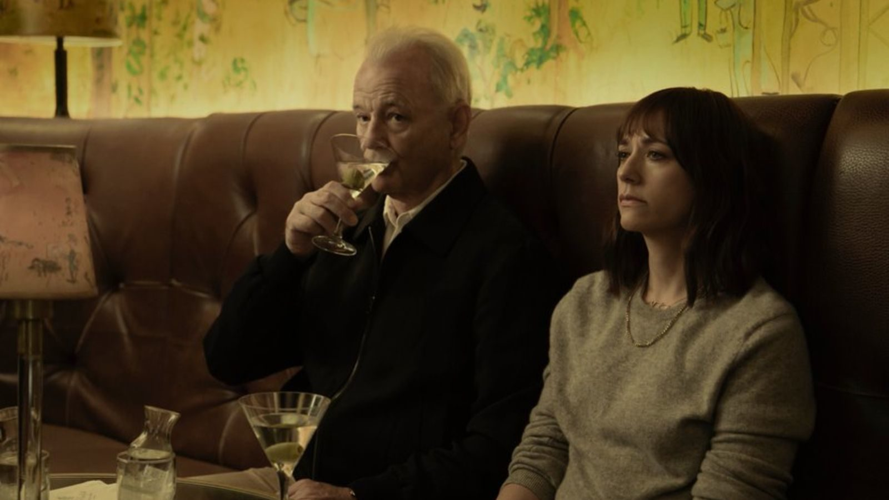
One of the primary sites for immersive drama is the family, and this year’s festival offered several stories in that mode. The new Sofia Coppola, On the Rocks (playing at the Belcourt’s drive-in in a sold-out engagement Oct. 16-18), is a delightful New York story of a marriage buffeted by uncertainty, leading Rashida Jones (looking reminiscent of '70s Margot Kidder) to enlist her father, charming lothario Bill Murray, to help find out if her husband is cheating on her. It’s a delightful romp through the city, with several deft character turns and a genial sense of adventure.

French Exit
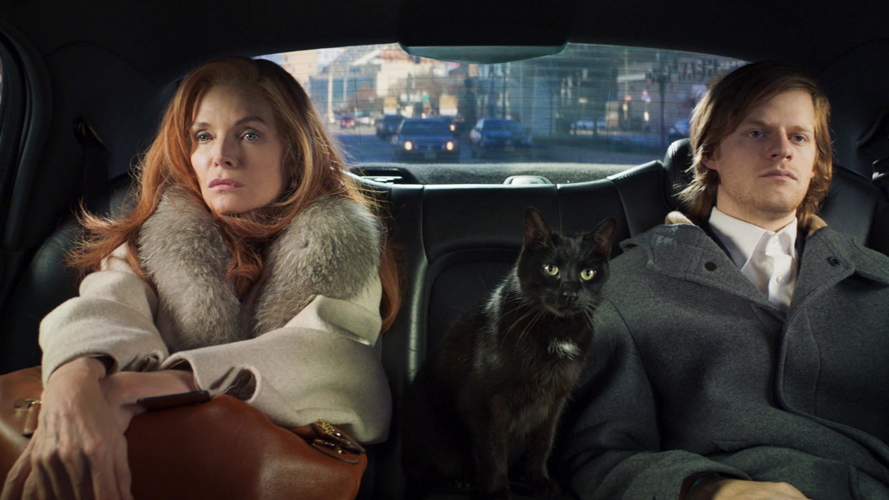
Similarly, French Exit, the closing-night film, features Michelle Pfeiffer in a pleasant, steely turn as a wealthy woman who has outlived her fortune and her purpose. To Paris then, with her manchild son (Lucas Hedges) and their petulant cat, who holds the soul of her late husband. A lot of people are calling the film out as privileged white nonsense, and there’s truth there, but to me it seems like French Exit is about transitioning out of privileged white nonsense and into a more conscious and less insular state of being. Also, Danielle MacDonald has a three-scene role as a cruise ship fortune teller who is irresistibly charming.
In Sudden Darkness, a new short from Tayler Montague, is an exquisitely drawn portrait of a Black family during the 2003 blackouts that threw New York for a three-day loop. It’s charming, impeccably acted, and drops Keith Sweat’s “Make It Last Forever” and emotionally saves the world.
Time (now available on Amazon) starts in the past as well, as we witness a woman beginning to document her life and the lives of her children for her husband, who's imprisoned for robbing a bank. It is a devastating and observant film about what the passage of time does to everyone, but particularly to those who are bound to a Sisyphean task, or who must always compete with memory, or what might have been. It will floor you with its simply accumulated grace, and its truth gives it an immeasurable impact.
And Steve McQueen’s Red White and Blue (the fifth of the Small Axe quintet, premiering on Amazon Prime on Dec. 18) delves deep into the conflict between generations, and more so the conflict between idealism and pragmatism. Dialectical and wrenching, this builds like a skyscraper, with a final sequence that sticks with you. John Boyega is staggeringly good, and this deals with police aggression in a way that demands acknowledgement from everyone.
Whether secret banking systems ("Trust Study #1"), the horrors visited upon indigenous women ("Extractions"), a wistful multiverse tear through the musical universe of Phil Collins ("In the Air Tonight") or getting to know the spiky side of one of our greatest thinkers ("Meeting the Man: James Baldwin in Paris"), there was a lot to learn from the various short-film offerings about the aspects of history that aren’t remembered as well as they should be. John Gianvito’s masterful Her Socialist Smile is as essential a work of radical political art ever made, and what it does in documenting Helen Keller’s lifelong devotion to the principles of socialism and economic and cultural equality is life-changing. For too long, Keller has been a footnote used to proclaim the triumph of the human spirit and as an assimilationist beacon, and let me tell you that has been off base. Inspirational, savagely funny and conscious of the world around her, Keller was one of the most fascinating human beings ever reduced to an easily digestible figurehead.
Similarly, Sam Pollard’s MLK/FBI (coming to the Belcourt in some capacity in early 2021) digs deep into all the things the FBI were doing to undercut the effectiveness and influence of Dr. Martin Luther King Jr. It’s an exposé of government prejudices overstepping their bounds, but also an analysis of the aspects of a human being that don’t get held on to in annual commemorations.
Mangrove, the first of Steve McQueen’s Small Axe films to air this fall (on Amazon starting Nov. 20), details the process-oriented grind of racist police policies that attacked Britain’s West Indian community throughout the '60s and '70s, then becoming a visceral dramatization of an integral court case in U.K. Black history as well as letting Black Panther’s Letitia Wright and Llewella Gideon deliver barn-burner performances. The documentary Ouvertures dramatizes the story of revolutionary Haitian leader Toussaint L’Ouverture while also showing a group of contemporary Haitian youth adapting L’Ouverture’s life into a contemporary theatrical work. Ouvertures taps into the electrifying immediacy of theater as it comes together, as well as allowing contemporary youth to reckon with the legacy of their own history as they’ve been told since childhood.
Some local drama surfaced in the short film "Wild Bill Horsecock" (which also showed at the recent Nashville Film Festival), which addresses the ongoing uncertainties surrounding country artist/amateur porn star/alleged rapist Hayes Johnson. The film leaves a lot of unanswered questions, and it’s difficult to come away from watching the film without feeling very uneasy.

Gunda
There are few things that yield more visceral joy than a film festival mindfuck. Something so uncompromising and brain-blasting that you can’t help but have to recontextualize your psyche. Gunda (coming to the Belcourt at some point in 2021) does this with no dialogue and in crystalline black-and-white. The film features farm life deconstructed and rendered with alien curiosity (early comparisons to Eraserhead by some critics are not unmerited), and the family of pigs (and their cow and chicken associates) at the heart of this abstraction will poke their snouts into your heart. There’s no shock gore or explicit political subtext (Gunda is rated G, in fact), but the final 10-minute single-take sequence pulled an Okja and had me swearing off pork just with a plaintive search.
The restoration of the long-thought-lost 1976 Iranian film Chess Game of the Wind was an amazing experience — starting like a restrained family drama and then exploding into a fraught dreamscape. The score by Sheyda Gharachedaghi is unhinged, and it’s wild to see a pre-Islamic Revolution Iranian film, especially one that was scandalous enough to be banned. And then there’s the new short from Winnipeg auteur Guy Maddin and the Johnson Brothers, "Stump the Guesser," which fuses sexual paranoia and Soviet allegory together into a singular explosion in the hippocampus.
Film, by nature, is really good at depicting ongoing processes. Documentary does this as a matter of form, but even in fictional narratives, there’s something about the act of viewing and experiencing a film that immerses the viewer within. The short "This Day Won’t Last," a nameless Tunisian young adult’s abstract document of their closeted life in a repressive society, hits hard, both because of the stakes it depicts and the way that the pointillist language of how we use our phone-based cameras to document fragmentary bits, moments, phrases and sights from our own lives is a universal language that we respond and react to even if we’re dependent on the subtitles. The Indian film The Disciple aims for a longer, wider canvas of several decades spent in a classical musician’s life used trying to master a demanding form, and the new 4K restoration of Béla Tarr’s 1988 artistic rebirth Damnation (coming to the Belcourt virtual screening room in November) works with the duration of shots themselves to yield information and detail that gathers force with each ongoing moment — allowing a gritty film noir to yield the cumulative impact of grand opera.

Notturno
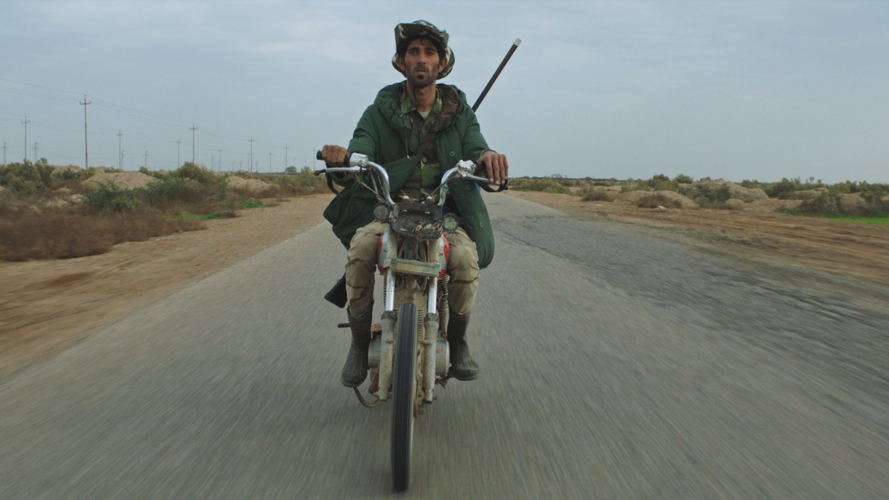
There’s an unforgettable moment in Gianfranco Rosi’s Notturno, a film full of unforgettable moments, in which an art class full of children — all of them survivors of ISIS massacres — explain their drawings, and how their memories of the atrocities committed against their families and friends are what they’re trying to metabolize. With crayons. Encompassing crises throughout the world, but rendered as continual experiences, Rosi’s film is visually beautiful even when relaying the utterly repellent (which is its own discussion).
Immediacy is what documentary filmmaking excels at, and The Monopoly of Violence is about as timely as films get, bringing together social theorists, police representatives and protestors from Paris’ protests and riots and allowing them to discuss and review their experiences during that time. It is essential viewing for anyone who is horrified by the continuing militarization of police throughout the world, and it is an incredibly useful tool for discussing what it means for the oppressed on an international scale.
City Hall (opening Nov. 6 in the Belcourt’s Virtual Screening Room), the latest from documentary legend Frederick Wiseman, lets you spend four-and-a-half hours getting to know the ins and outs of Boston’s city government and all that it does, from business licensing and tree removal to council meetings and commemorative ceremonies. It’s what Wiseman does well, and if you exult in the civic process, there’s nothing that comes close. (It’s also great if you need to re-educate some libertarians as to what a properly funded government can do.)
Amazingly enough, of all the films rooted in the uncertainties of The Now, the most immediate is from 1973. Selected by The Inheritance’s Ephraim Asili as a revival, The Spook Who Sat by the Door is a scabrous and unforgettable film about a Black man recruited to the CIA for optics who bears down and learns how to unmake white supremacist ideology through violent revolution. It’s awesome, and it does not fuck around. Though prints were destroyed back in the day through government intervention, the negative thankfully survived. You’re not ready.
The way that women’s voices are expressed (or in some cases, ignored) made for a lot of complicated experiences this year, with the new restoration of Joyce Chopra’s 1985 film Smooth Talk (coming to the Belcourt in November) setting the tone. That film, Laura Dern’s first leading role, adapted Joyce Carol Oates’ immortal short story "Where Are You Going, Where Have You Been?" into an intense portrait of the choices young women are asked to make on a daily basis. If anything, the intervening 35 years have increased its queasy power.
Yulene Olaizola’s Tragic Jungle and Song Fang’s The Calming both come from similarly emotionally fraught places, with the former an edgy, vaguely mystical tale of ancient lore and mercenary masculinity colliding in the forest primeval. The latter demonstrates the quiet and internal chaos of an unmade life trying to reorganize itself.
That’s quite the contrast with the new Hong Sang-soo, The Woman Who Ran, which is about how women talk amongst themselves, though its secret structure is that of a mystery, where we assemble the absences at the heart of these discussions. And then "Hidden," the new short from the legendary Jafar Panahi, shows us the literal cost of a woman’s profoundly lovely singing voice, hidden away in her village home, a treasure worthy of the grandest halls and stages of the world, given one chance to reach beyond her self-imposed curtained walls.
It’s always a delight to see how the act of making films metabolizes and evolves the art of storytelling. Though few offerings went as intertextual and expansive as Wojciech Has’ wild 1965 The Saragossa Manuscript (presented as a revival), it was fascinating to see the role of the griot become a means of deliverance in the Ivorian prison epic Night of the Kings (coming to the Belcourt at some point in 2021), or how Borgesian fancy and the corrosive literalism of Narcos culture collide in the inventive and daffy Fauna, which features one of the best scenes in the whole festival, wherein a supporting actor must re-create his silent TV role for a late-night bar crowd.
In Isabella, Argentina’s Matías Piñiero returns with an elliptical riff on Shakespeare’s Measure for Measure that scatters itself throughout time and addresses how the act of performance refracts throughout the entire life of the actor. Christian Petzold (Barbara, Phoenix, Transit) takes the classic German folk tale of a water nymph bound by blood to whomever will love her in Undine (at the Belcourt, TBA 2021), which is a fraught and delightful romance, featuring global treasure Franz Rogowski at his most charming.

The Human Voice
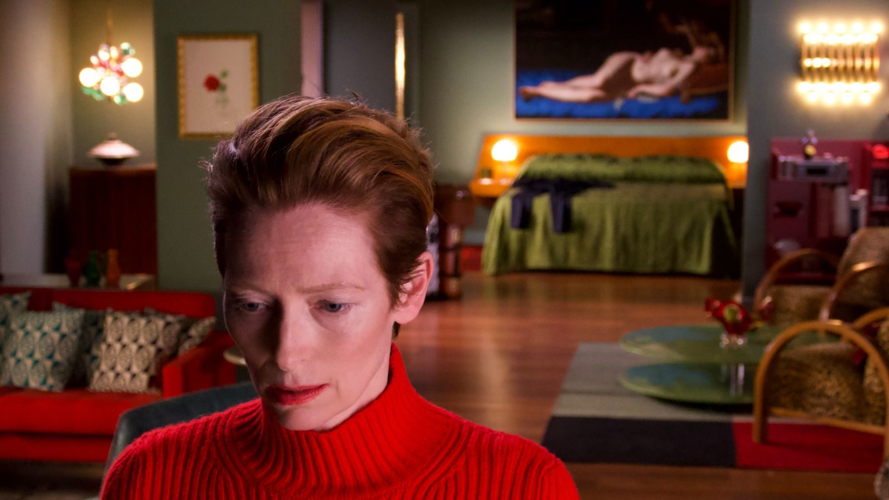
The sheer dizzying pleasure of cinema can be hard to qualify, but you know it when you experience it. A pair of flawless 4K restorations (Wong Kar-Wai’s eternal In the Mood for Love and Hou Hsiao-Hsien’s hazy brothel reverie Flowers of Shanghai) deliver texture and the most profound romantic melancholy in gold-toned, smoky abundance. And Pedro Almodóvar’s English-language debut, a one-act extravaganza starring Tilda Swinton in an adaptation of Jean Cocteau’s The Human Voice, is pure magic. A triumph of pandemic ingenuity, Swinton’s pandimensional power and Almodóvar’s gift for physical space (seriously, how has Mattel not reached out to him to design a Barbie Dream House?), this is a must-see for anyone who loves glamour and refined actressing.
David Byrne’s American Utopia (premiering on HBO on Oct. 17) is an energetic shot of amped-up decency. It’s not Stop Making Sense, but nothing could be. With Spike Lee, Byrne has found a collaborator who gets the music and the message, and this filmed document of Byrne and his amazing musicians’ Broadway residence is utterly wonderful. And if you find your pleasures in the academic, There Are Not 36 Ways of Showing a Man Getting on a Horse — an essay film about academia, cinema history and criticism as an act of archaeology — is a delight that will fuel an internet wormhole of rarefied kicks.
When you consider the giant, flaming poisoned question mark that is 2020, it’s a wonder that so many arts organizations have been able to at least make a partial transition to the online realm. Especially when so many haven’t. When the history of this period of time is written, it’s going to be brutal when we must come to terms with all the people and organizations that didn’t make it. And that’s a lot for anyone to bear. But when faced with this overwhelming chaos and despair, especially with the losses that New York City has borne during this pandemic, the folks of Film at Lincoln Center gritted their teeth and came up with something to keep art alive. They remain at the forefront of wherever domestic cinema is headed. And cinephiles step gingerly behind them, safe for the moment.



Post a comment as anonymous
Report
Watch this discussion.
(0) comments
Welcome to the discussion.
Log In
Welcome to the discussion.
Keep it clean. Please avoid obscene, vulgar, lewd, racist or otherwise abusive language. Comments featuring hate speech or threatening or violent content will not be tolerated.
PLEASE TURN OFF YOUR CAPS LOCK.
Be truthful. Don't knowingly lie or mislead.
Be proactive. Use the “report” link on any comment that violates our comment policy.
Share with us. We'd love to hear your feedback.