

A labyrinth made of pillows. An ethereal (in both senses of the word) mystery of low stakes but cosmic importance. And a journey into the most basic denominator of human consciousness — one that feels like it’s doing an upgrade on your consciousness even as you watch, hear and experience it on multiple levels. The latest film from genius sensualist Apichatpong Weerasethakul, Memoria is like a 4DX experience for the soul — an internal reshuffle that drops it low and keeps an eye on you while you rebuild yourself from the mitochondria on up. More precisely, Memoria is like a lover you trust enough to watch over you as you sleep, unease banished and breath deep and constant, knocking on ancient doors in this realm and the next.
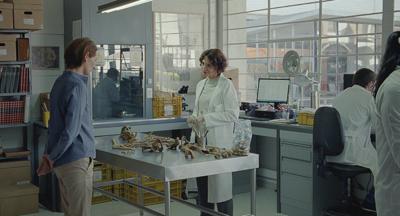
When you need a movie star to bridge the worlds of the literal and figurative (and Robert Englund wouldn’t be tonally right), Tilda Swinton is an ideal choice. She meshes with the world of Apichatpong’s dreamscapes beautifully. Here, she is Jessica, a Scottish woman attending to her ill sister in a Colombian hospital. Awakened suddenly in the middle of the night by an immersive clank of a booming sound, she finds herself changed. But how do you solve an internal mystery like that — a sound big enough to disrupt your life but that no one else is hearing? And what exactly does it all mean? Thankfully, there are Star Trek IV-style recording-engineer musicians, industrial refrigeration experts and living human-experience archives who can and will help, even if some or all of them may not actually be real in the way we often bandy the term “real” about.
Memoria at many points in its run time feels like it could spin off into a genre or narrative that we’ve encountered before. Horror and sci-fi fans will be particularly giddy with the thematic touchstones it shares with works as disparate as The Stone Tape, Quatermass and The Pit, the entire Italian cannibal film subgenre and The Fog. But this is not a horror film, and it never cleaves to any path that any viewer might have seen before.
Apichatpong’s films are a magical collection of cosmic soothe. His Palme d’Or-winning 2010 feature Uncle Boonmee Who Can Recall His Past Lives was a kind of breakthrough in mainstream discourse, but it was 2004’s Tropical Malady that hit the collective unconscious like a lightning bolt of delicate cotton candy. Bodies? Mutable. Desire? Constant. Magic? Why not? There’s no one else in the global-cinema game these days with feet firmly planted in loamy earth even as the heart and mind (and sexy parts) drift and expand throughout all that is possible like Apichatpong. The attention given Memoria due to its distinctive release plan (similar to the past few Matthew Barney films, but way less arthouse-alpha in approach) will hopefully bring more folks on board with his visions of a world experiencing multiple epochs at the same time.
I have been known to throw around the simile “like church, if church were cool” when talking about particularly exceptional films. This isn’t meant as a slight on anyone’s religious faith — a space where one can focus on spiritual evolution, or become part of a collective contemplation with others asking similar questions, is to be cherished. (That’s as opposed to weaponized systems of judgment that allow the small-minded and fearful to justify their own failures of empathy.) That’s what the movies are for me, and it’s why phone-based foolishness in movie theaters feels like such an affront. And if ever a film called for a comedy-club-style approach to confiscating cellphones, Memoria is it.



