

In addition to getting a feel for the upcoming patterns in world cinema and becoming aware of potential awards traction (because everything, even arthouse film criticism, is part of the global machine), the thing you learn from the film festival experience is where people are — artists, activists, thinkers, weirdos — and how things are going in their world. There’s not a lot of hope in the air at the moment, and we know this because smoking is back. Not vaping, but full-on lighting up butts, because who cares? It’s something that stays with you, this sense that the failure of the carbon sink really has been steeping and we’re all just sort of tidying up for extinction.
Ironically, this year’s festival offerings — and we’re focusing on the 62nd New York Film Festival as well as NewFest (NF) and the Brooklyn Horror Film Festival (BHFF), because if you’re going to travel for a film festival, why shortchange yourself on opportunity — are pretty superb. No stinkers to be found, though a surprising number of these films don’t have American distribution, so it doesn’t hurt to reach out to the theaters, festivals and film companies you like and respect to try to get these films screened locally.
We’re not going to get into films that have already been released (like Anora, Dahomey and Rumours) due to deadlines, but know that they all add to the vibe of what cinephiles will be steeping in for the next year-and-change.

Sean Baker’s latest — one of the year’s best films — opens Friday at the Belcourt and AMC Thoroughbred 20
The State of the World
Payal Kapadia’s Malayalam-language All We Imagine as Light (coming this winter) is a marvel. It’s a Sirkian melodrama told with a delicate and deliberate touch that feels very different from the Indian cinema we regularly get access to in the U.S., though it is emblematic of a kind of cinema that finds its own path. Also, you’ve got to respect a film in which a character buys a burqa as part of a scheme to get laid properly.
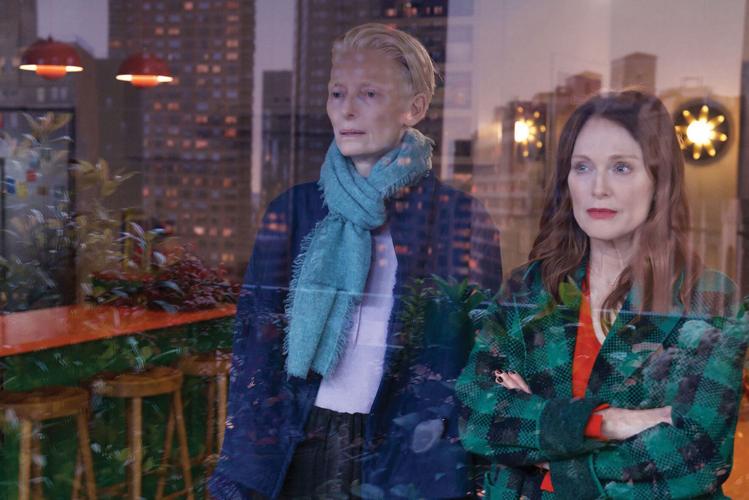
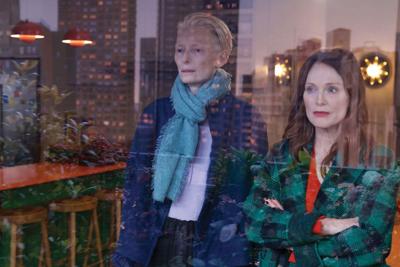
Though Pedro Almodóvar’s first English-language feature The Room Next Door (coming in January) never quite attains greatness — and leads Tilda Swinton and Julianne Moore put their ankles into some sincerely felt moments — it hits full-strength when John Turturro pops up to get real about the state of the planet. That moment is so disarming and devastating that you can’t help but wish the rest of the film were up to that same level. (As with last year’s gay cowboy short “A Strange Way of Life,” I think Almodóvar could use a collaborator on Anglophone scripts. The first reel in particular is almost a disaster, with characters just speaking subtext, though it does right itself.)
The slow-motion tidal wave of bureaucracy, austerity and arts funding drives all 14 hours of the German/Greek epic exergue – on documenta 14, which gets into art-world scandal, the pitfalls of corporatizing funding and what happens when ambition and striking ideas aren’t enough. Even in the U.S., we’re feeling the ripples from this one.
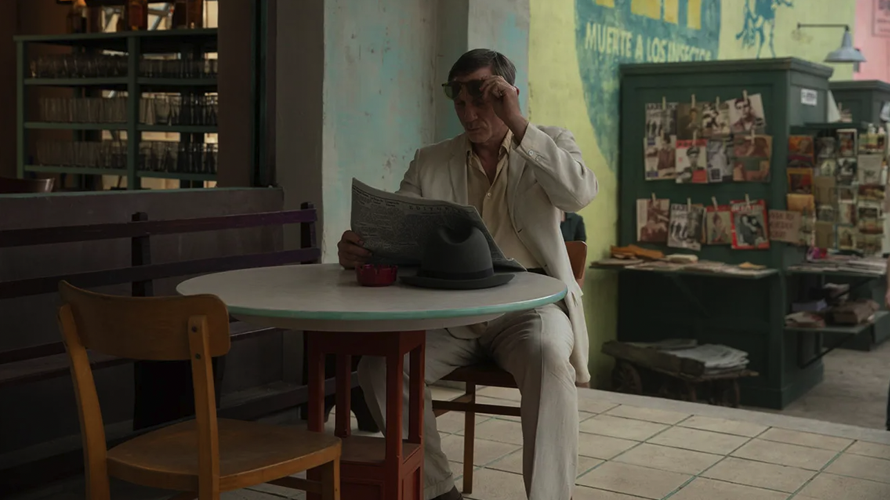
The remarkable Brazilian film Transamazonia reckons with religious missionaries, colonialism and the exploitation of Indigenous people and land, but it’s much easier to explain how entertaining it is by calling it a fusion of The Mission and Paper Moon.
Jia Zhang-ke’s narrative feature Captured by the Tides looks at the Three Gorges Dam project and COVID-19 as similar seismic fracture points in Chinese history, reshaping lives across the intervening years. While the second two parts of Wang Bing’s Youth trilogy, Hard Times and Homecoming, depict the pitiless way that industry transforms lives and entire cultures in the Zhili district and in the rural homes from which these workers come. It’s almost overwhelming, and it certainly says something about the world when the West Bank documentary (more on that in a bit) has more hope for the future than the film about the industries that the global economy is built on.
Unexpected Detours
The delicious and informative documentary The Last Sacrifice (BH) digs deep into the 1945 murder of Charles Walton, a crime that is the root for the majority of late-20th-century British horror. It offers up lots of historical context and thought, excerpts from all manner of folk-horror classics to seek out, and a reckoning with the fine line between traditions of paganism, libertinism, cult activity and what is classified as witchcraft, and it is essential viewing.
Only director Albert Serra could get me to watch Afternoons of Solitude, a measured and stylized document of torero Andrés Roca Rey and 13 bullfights in which he participates. It is simultaneously revolting and a tad beautiful, and valuable for understanding Spanish culture and Serra’s skill as a director and at capturing movement and the emotions locked in body language. But this is not for everyone, or even most people. Just as gory, but thankfully not real, was the new 4K restoration of Clive Barker’s Hellraiser. It’s equally gorgeous, grotesque and influential, and it was a very special thrill to see this as part of the NYFF’s honored Revival section. To the best of my knowledge, this may be the most “respectable” honor ever shown this film, which deserves all that and more. Robina Rose’s 1981 Nightshift was the other British indie in the Revival section, and it’s quite the find — a surreal procedural that sees your Jeanne Dielman and also predicts some of Nina Menkes’ trippier efforts. Distributor Arbelos has it for the U.S., and I can’t wait for it to be something readily available to audiences.
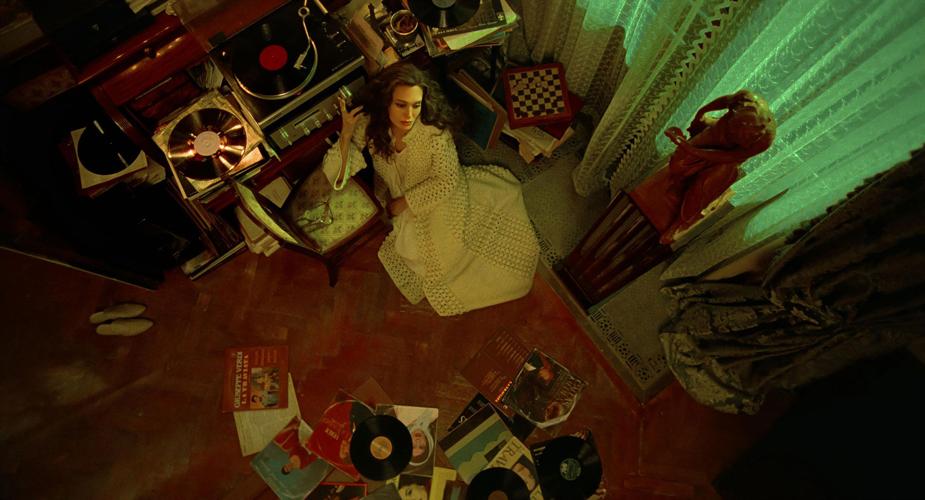
Baby Annette returns! Writer-director Léos Carax goes full Godard in his 40-minute short “It’s Not Me,” and it’s a captivating ride, but elevated into must-see territory by the return of Annette’s Baby Annette and her reclamation of the “Modern Love” dance from Frances Ha. And there was also an unexpected grace note from Godard himself with Scénario, his final film — a trailer for something never to be made, paired with a documentary exegesis in which, on the day before his death, he goes through the storyboards of what might have been. It’s fascinating and ultimately devastating.

Queer
Queer Situations
Luca Guadagnino, not content just to elevate cultural interest in bisexuality and tennis with Challengers, is back with Queer (opening Dec. 9 at the Belcourt), a William S. Burroughs adaptation that’s equally versed in the hope, the horny and the heroin that WSB’s milieu is built on. With a staggeringly great lead performance from Daniel Craig and a Jason Schwartzman turn that’ll find him drinking for free at every bear bar on the planet, this is like a magickal spell that confounds and caresses, somehow having a dialogue with David Cronenberg’s Naked Lunch and Wong Kar-wai’s 2046.
Misericordia, the new film from Alain Guiraudie, is like Crimes and Misdemeanors for gay Catholics. It’s wicked and funny and has a moment that got a response from the New York press corps that can only be compared to the exploding head in Bacurau a few years back. Equally weird and unpredictable is Who’s Watching (BHFF), which is devoted to exploring kinks that neither psychology nor Pornhub has a name for yet. (Just know that dudes stalking ladies with camera tech will learn a whole new manner of lessons.) Did you know that bees can’t see the color red? You’ll learn that and a whole lot more from the trippy and wry Seven Walks With Mark Brown, which starts like a jaunty hike with the most effusive and kind elderly gay gardeners you’ll ever meet and then gets weirder, more cosmic and ultimately transcendent as it goes along.
You can do just about anything in a musical, and Emilia Pérez, which won an unprecedented quadruple Best Actress award at Cannes earlier this summer and featured at both the NYFF and NewFest, aims to prove it, following a murderous narco cartel boss who, in transitioning, finds herself in a position to mitigate some of the damage she previously did. It’s a mess, but it’s never boring, and it hews unpredictable (except when it decides to embrace the hoariest of clichés). It’s not my place to evaluate it as a trans film, but I am capable of evaluating it as a musical, and the musical numbers are creative and well-choreographed, and you are simply not ready for Selena Gomez’s achievement in wig acting. Also coming to Netflix this awards season is Maria, Pablo Larraín’s portrait of the legendary diva Maria Callas, with a stellar lead performance from Angelina Jolie. I’ve never been a huge opera fan, but I love drama, and I love films that understand that by-the-book realism is boring and played-out. If anything, this is a subtler film than you might expect, but Larraín is 3 for 3 with his portraits of fascinating 20th-century women. And this film’s consumption of Fernet-Branca is nigh heroic.

Maria
If what you want is social ethnography with an undeniable beat, see the Brazilian doc This Is Ballroom (Salão de Baile, NF), which documents how the traditions of the Harlem ballroom houses have evolved and flourished in and around Rio de Janeiro over the past few decades. The most fascinating aspect is how queer Brazil incorporated the military dictatorship’s gestures and salutes into their dance moves as a particularly vicious kind of mockery.
Youth in Revolt
Are the kids all right? Are any of us, really? The Japanese film Happyend is just astonishing, a coming-of-age film, a paean to political awakening, a low-key sci-fi epic about academic conformity and authoritarian regimes, and a testament to the healing power of When the Beat Drops. An unexpected treasure, to be sure. The Australian epic Carnage at Christmas (NF), the latest from trans auteur Alice Maio Mackay, manages to address parasocial true-crime podcast relationships, confronting residual high school trauma and the recursive horror that murder and urban legends visit upon communities, and also brings back the Lucio Fulci move of pulling open a skull with bare hands to get to the brain.
Oh, Canada
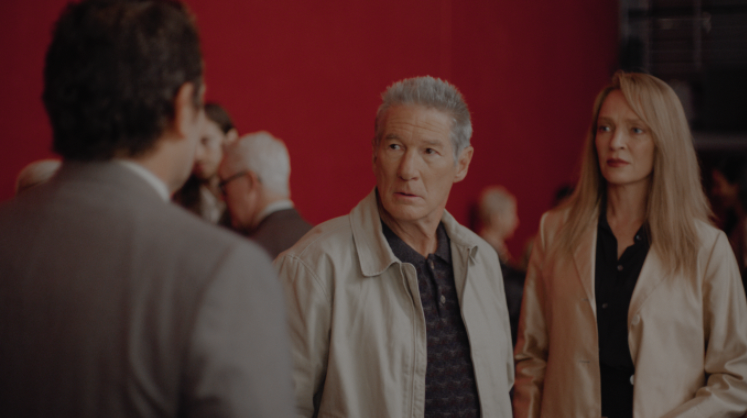
Oh Canada, the latest from Paul Schrader, is an intense reverie that diagrams the impetuousness of youth in reaction to the cruel assaults of cancer and dementia, as well as digging into what the Vietnam War did to whole swaths of American youth. Jacob Elordi makes for a great young Richard Gere. (There’s also an unexpected momentary Looking for Mister Goodbar tribute.) For a different perspective on the lingering wounds of the Vietnam War, Trương Minh Quý’s Viêt and Nam is a kinky, experimental portrait of inconvenient love, human trafficking and flood-related PTSD. It’s equally great at diagnosing cultural trauma as well as getting at the existential frustration of trying to find a place to hook up. Also, “Ôi Tình Yêu” by Anh Tú is a banger.
Reconciliations
Jesse Eisenberg’s A Real Pain (opening Nov. 15 at the Belcourt) is a singular film that explores two cousins (Eisenberg and Kieran Culkin) visiting the parts of Poland that their grandmother lived in up until the Holocaust. Simultaneously an amiable character study, a stoner comedy, a thoughtful dialogue of Jewish commiseration and a serious reckoning with survivor’s guilt, it’s got a lot more going on than its slight run time might suggest. It’s also a comeback for Jennifer Grey and a truly livewire Culkin performance. (Seriously, the closest point of comparison would be Vince Vaughn in Made, a similarly amazing performance that induced fits of anger in large swaths of the audience.) Its subtle take on the ideas of borders are explored even further in Athina Rachel Tsangari’s exceptional Harvest, which delves deeply into what the making of maps and the establishment of borders can mean across all class lines. Grimy but equally glorious, it’s a film that haunts you long after the screening is over.
One of the year’s finest performances is delivered by Marianne Jean-Baptiste in Hard Truths (coming in early 2025), a return to collaborating with director Mike Leigh. Her Pansy is a scabrous, often viciously funny turn fueled by rage and regret. The rest of the cast delivers remarkable work in helping an audience understand the how of the situation, and there could be an entire spinoff set in the salon belonging to Pansy’s sister Chantal (Michele Austin) — I would watch religiously. If there’s a lesson to be learned from the exceptional and visceral Zambian drama On Becoming a Guinea Fowl, it’s that some families can only be fixed with a flamethrower. This is an exceptional film, but one that, like Anora or a Safdie brothers film, should let you know that taking your psych meds beforehand is probably a sensible course of action.
Director Dea Kulumbegashvili’s first feature, 2020’s Beginning, was my favorite film of that year, and her new offering, April, is as uncompromising as one would hope for a film about abortion, masochistic tendencies, emotional and social compartmentalization, and what it means to live in a society that uses bureaucracy as its own kind of totalitarianism. The slorch of sinking in mud is as inescapable as women’s bodies’ blood regardless of what happens with a pregnancy. It’s emotionally hardcore, visually rigorous and, in its way, a pitiless guide to surviving dark times (much like Walter Salles’ devastating I’m Still Here, a lacerating portrait based on the actual experiences of a family in the ’70s caught in Brazil’s military dictatorship).
I am still confounded by David Cronenberg’s The Shrouds (coming in 2025). He’s still my favorite living director, and this film is one I’ve been wrestling with since I saw it in October. It’s always wriggling out of reach, refusing to be diagnosed, an uncontrollable, unqualifiable organism feeding on conspiracies and earth freshly fertilized by human decomposition that seems to be in dialogue not only with his body of work, but also with the director’s own life and reputation. I laughed, I cried (there’s a specific scene that seems to be carrying on a discussion with Crash’s immortal “describe it to me” sequence that caused several electrons to jump levels in the Walter Reade), and I emerged like Max in the TV version of Videodrome, where the image accumulator helmet never comes off.
When a documentary manages to be perceptive, sexy, historically informative and absolutely uncompromising about what climate crisis means to The Now, that’s a wide assortment of goals, and A House Is Not a Disco (NF) is a remarkable achievement. Taking into account what Fire Island represents and also literally expressing the danger that shifting weather patterns have already wrought, it’s effective both as a call to action and as a remembrance of the things that political action and collective support can make happen. Similarly, Exorcismo (BHFF) is a remarkable journey through the Spanish film system during the regime of Francisco Franco and in the aftermath of his death, when all the prurience, shock, horror and corruption hidden away behind authoritarian law began to seep up into the visual arts — first as something for export, then, with the coming of the “S” classification, serving as a bloody, breast-baring feast of sparagmos. There’s not been a more essential film for scholars of deviant cinema, nor one so relentlessly entertaining and enthusiastic in the history it serves up.
Wonder of Wonders
Having spent the past two decades in a very conflicted relationship with the films of South Korean director Hong Sang-soo (he’s the guy who made last year’s out-of-focus drama In Water, which left me shaking with rage), I am in the unexpected position of having to vouch for his new film A Traveler’s Needs (coming some time in 2025). Isabelle Huppert is either a renegade language teacher or a scam artist (possibly both) who takes a lover and infiltrates unexpected facets of Seoul society, and it’s simultaneously a Wittgenstein treatise and a Burroughs screed about how language affects and adjusts our perceptions of the world around us. (In a way, it is similar to the Colombian hippo biography Pepe, which works as a history of the Escobar menagerie and a meditation on lanuage and storytelling.) Finally, this is a film from the guy who made 2002’s Turning Gate instead of the slapdash sketches he’s been cranking out (with a few exceptions) in the interim.
I’m no development executive, but if any studio asked me, I’d direct them to Yeo Siew Hua’s Stranger Eyes, a remarkable thriller about a missing child that starts like Brian De Palma and finishes like Clint Eastwood. It’s a film that understands complex emotional relationships and DVD nostalgia, and if mainstream audiences could fully embrace subtitled films, this could be a massive hit. It’s not the new Parasite, but it could have that kind of impact. Dead Mail (BHFF) is like a punch in the throat — a relatable suspense-based character study that never yields to expectation and gives voice to the kinds of characters we often don’t get to see in American films, even as it fucks with your mind like a mid-’90s Busta Rhymes B-side. Take the modular synthesizer person in your life to see it.

The Brutalist
The Best of the Best
It’s been an incredible festival season, in which even the weakest offerings are still pretty good. Sometimes a year will shake out like that, when the bar is very high, and this thankfully was that kind of year. People have been talking about The Brutalist (opening Jan. 17 at the Belcourt) from Brady Corbet (possibly the only person to both star in a season of 24 and win Best Director at Venice) since it first popped up overseas. It is a triumph of ambition in American cinema. You’re not going to see a brisker three-and-a-half-hour film — and it’s shot in VistaVision as well. The first half is masterpiece territory, with the second half going weirder and more diffuse in a way that seems at odds with what’s gone before. But there’s an epilogue that not only makes the whole thing cohere, but also gets into your whole perception of the role architecture plays in human history. And when this thing is available to a wider audience, the discourse is going to be unhinged. I can’t wait.
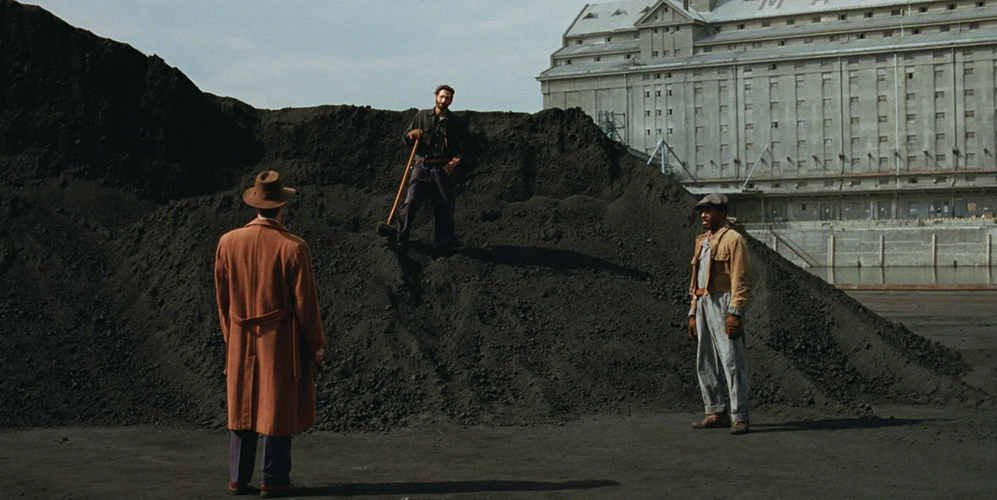
As visually adventurous but on a smaller scale, Roberto Minervini’s The Damned is a moody Civil War meditation that encompasses Gerry, Meek’s Cutoff, Eyes of Fire and even a little bit of Ed Wood’s battlefield plays. How’s this — The Revenant, but actually meaningful. Essential viewing.
Among 2024’s most controversial films (look into what happened to it at the Berlinale), No Other Land is doing everything that documentary cinema is supposed to do — giving voice to those whose voice is suppressed, bearing witness to unspeakable violence and bureaucratized cruelty, and finding some sparkle of possibility for a different way. What happens, and what has continuously happened, in the Masafer Yatta region of the West Bank is difficult to process. An ongoing cycle of destruction, rebuilding and resistance has been simply part of life for so long, which we see in the primary source footage made across generations. The fact that strong relationships can develop among multiple cultural circumstances is mordantly funny, inspiring in very visceral capacities, and ultimately a glimmer that maybe there’s the tiniest bit of hope.
And then there’s My Undesirable Friends — Part 1: Last Air in Moscow. Sometimes a documentary happens to be in the right place at the right time, capturing a major moment in history with a depth and range that we don’t normally expect. Director Julia Loktev hopped over to Russia toward the end of 2021 to talk to journalist friends who’d found themselves on the “foreign agent” list that anyone going against the Putinist line more often than not would end up on. And this is the context in which we get to know several journalists, freethinkers and activists, most at least tangentially working with TV Rain, one of the last independent news sources in Russia. And then the invasion of Ukraine happens, and everything gets so much worse. Loktev was incredibly fortunate to get access to and the trust of her subjects, and the five hours and change of part one are among the most riveting and intense experiences in any film, narrative or nonfiction, this year. Here’s hoping that it and No Other Land will get the distribution they deserve, and that they can help the world we live in.



Post a comment as anonymous
Report
Watch this discussion.
(0) comments
Welcome to the discussion.
Log In
Welcome to the discussion.
Keep it clean. Please avoid obscene, vulgar, lewd, racist or otherwise abusive language. Comments featuring hate speech or threatening or violent content will not be tolerated.
PLEASE TURN OFF YOUR CAPS LOCK.
Be truthful. Don't knowingly lie or mislead.
Be proactive. Use the “report” link on any comment that violates our comment policy.
Share with us. We'd love to hear your feedback.