
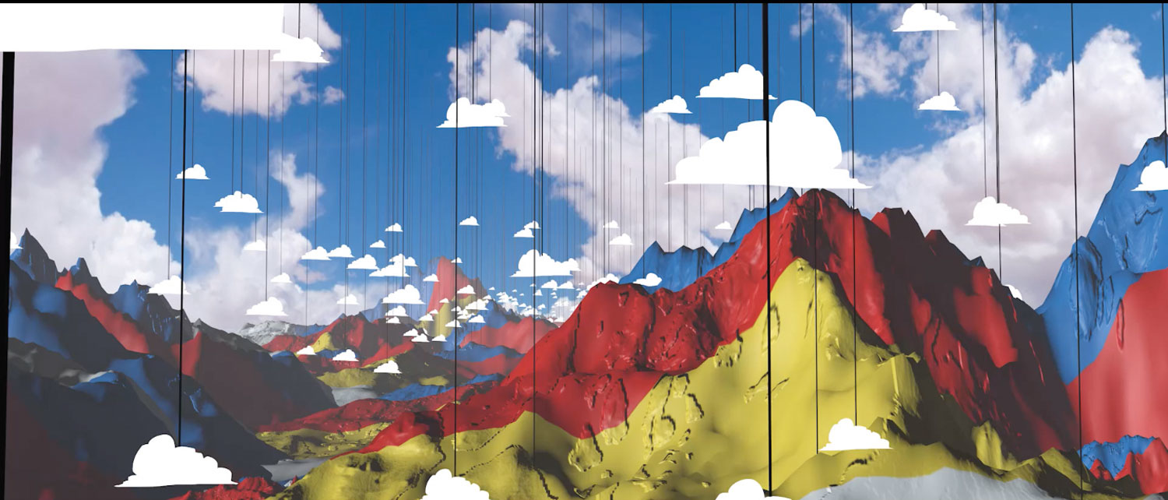


“Nirvana,” Sean Walton and Ryder
Fifth Avenue of the Arts
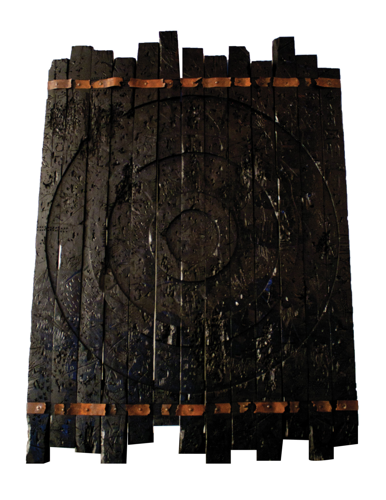
The most anticipated show on Fifth Avenue is Wesley Clark’s exhibit at Tinney Contemporary. Clark’s massive sculptures were a highlight in Topography, the group show Jamaal Sheats curated at Tinney in 2015. The Prophet’s Library hit the walls earlier this month, but the gallery postponed its opening reception for the June crawl. Clark’s work explores race, politics and history in relation to the African diaspora, and while he often works with wood and metal, these new works include experiments with resin sculpture, mixed-media printmaking and painting. For all his innovation, Clark ultimately presents these pieces as though they’re weather-worn found objects — time capsules from an alternative history. I love the description of the show in the artist’s press release: “a narratively driven collection of artifacts.” I can’t wait to see what he’s dug up.

“Black Don't Crack,” Wesley Clark
Jim Jobe’s Nostalgia for the Familiar is an exhibition of drawings and paintings that includes pieces that veer from representational renderings of natural objects and intricate designs to works that flirt with pure abstraction. There are lots of details to tease out of these, so you’ll want to set your crawl to linger at The Arts Company.
The Downtown Presbyterian Church’s artists-in-residence program is nearly 25 years old, and the collective’s Browsing Room gallery has brought some crucial contemporary curatorial chops to the downtown art scene. The space just closed a two-month run of David Onri Anderson’s excellent painting exhibition Hum, and this month the Browsing Room opens a group show by the artists-in-residence themselves. These group shows are always notable for the variety of work on display, and for the opportunity to see the collective’s better-known artists hanging alongside their gallery mates. Nashville gallerygoers will recognize Hans Schmitt-Matzen’s lyrical abstract sculptures from his recent show at David Lusk Gallery, and Richard Feaster’s abstract canvases from his knockout display at Zeitgeist Gallery earlier this year. For this show, Schmitt-Matzen has also included figurative work that caught me by surprise, and I’m always curious to see the efforts of Cary Gibson, who has an established history of combining art and activism. The show also includes work by Sarah Jordan and William Steven Stone.
The Arcade
Do you ever dream of animals? Cuddly puppy dreams? Nightmare dragon or shark or spider dreams? The Jungian in me is always looking to understand the symbolic meaning of various dream critters, and Sarah Kaufman’s Dreams at Blend Studio offers plenty of spirit animals to choose from. Kaufman’s narrative paintings include fur-filled dreamscapes tweaked with just enough absurdity to land somewhere between surreal and cuddly.
The Frist’s Pattern Recognition: Art and Music Videos in Middle Tennessee, which we reviewed in last week’s issue (“Mirrored Images,” May 25), is required viewing for gallerygoers curious about the state of video art in our part of the Volunteer State. The “art” part of the installation is particularly strong, but the music videos at the Frist help create a context for the kind of work you’ll find in Nirvana at Watkins Arcade Gallery. This music video collaboration between artists Sean Walton and Ryder offers a mythical narrative about the sun and moon via a multimedia quest to reach the mysterious meditative state referenced by the titular character in Hermann Hesse’s Siddhartha: “I am a sinner and you are a sinner, but someday the sinner will be Brahma again, will someday attain Nirvana, will someday become a Buddha.” Make me one with everything on Saturday night.

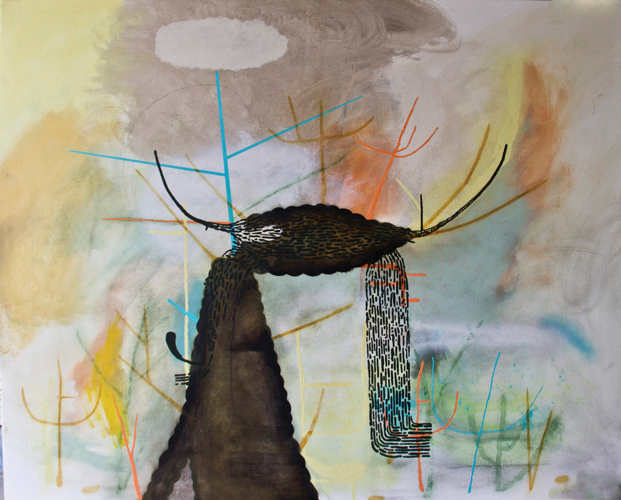
“The New Old Forest,” Brady Haston
Wedgewood-Houston
Zeitgeist continues its excellent displays of work by painters Brady Haston and Douglas Degges on Saturday night. In case it wasn’t clear, Nashville’s 2017 art calendar has been completely dominated by abstract painting exhibitions, and Zeitgeist may have more to do with setting that high bar than any other venue in the city.
That said, David Lusk Gallery has definitely been a big part of that same conversation, but for June the space is following up its successful display of Emily Leonard’s large abstract flower paintings with the folk art survey, Outsider Artists: Bridging Communities. I hate it when MFA-educated artists dabble in the tropes, techniques and subjects of folk artists — it’s a trend that began after the 1980s art market suddenly went bananas for works by self-taught artists. This kind of “fauxk” art is particularly prevalent in the South, and I physically cringed when I got the press release for this show from David Lusk. Thankfully, this exhibition organized by noted collector John Jerit is definitely the real deal, and I can’t wait to see the works by Mose Tolliver, Jimmy Lee Sudduth and Howard Finster here.
In The Packing Plant, Jennifer Crescuillo opens her Future Fossils exhibition at Coop. This show finds the artist from Silver Point, Tenn., transforming elements of obsolete technology into detailed cast-glass sculptures. The objects create a dialogue about ancient arts and crafts, and the impermanence of the contemporary tools we so freely discard and replace.
At Channel to Channel, Michael Giles’ bold, colorful abstract paintings are full of process-based patterns and rhythms that speak directly to that abstract painting conversation I mentioned earlier. But Giles isn’t a Nashville-based artist — he works out of Knoxville and was born in Venezuela. His exhibition, One Hundred, is inspired by Gabriel García Márquez’s novel 100 Years of Solitude. On the contrary, I expect this gallery to be pretty packed on Saturday night.
Email arts@nashvillescene.com



