

Joe Nolan is a 21st-century Renaissance man. He’s a poet, singer-songwriter and intermedia artist — as well as one of the Scene’s most longstanding cultural critics. In his new column "Critic/Ally," he’ll muse about art, culture and whatever else comes across his periphery. Strap in, fans of the strange and obscure — the Scene’s about to get a whole lot weirder.

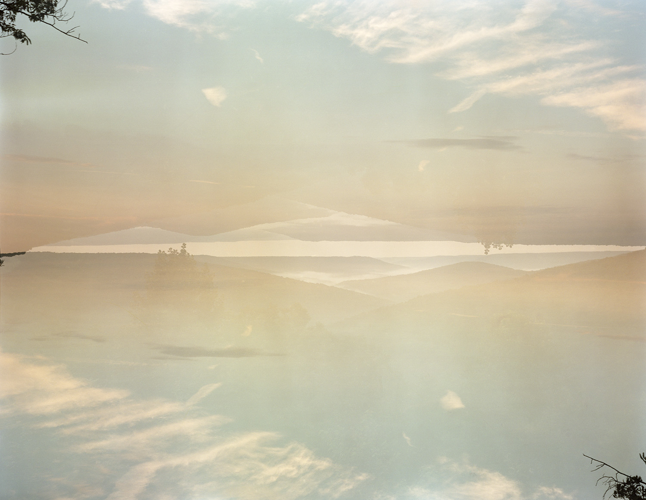
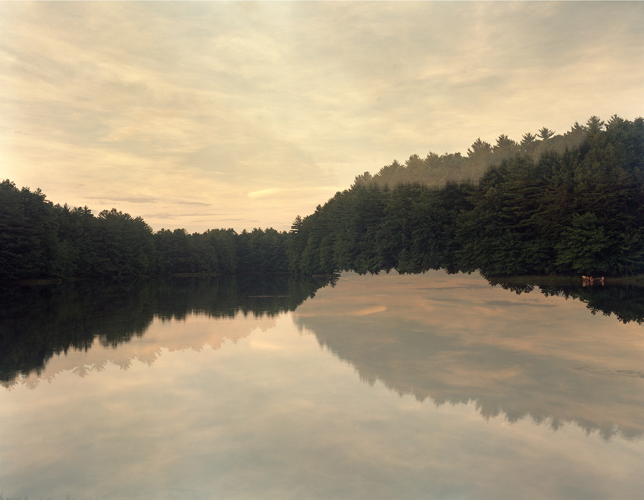
"Double Plateau (Mist)," Caroline Allison
Is a photograph an image or an object? In one sense, a photograph can be thought as a pure disembodied image of reflected light. Even analog film photography that's printed on paper can seduce us with illusions of pure imagery: We wittingly overlook the fact that we’re gazing at the result of a printing process that's on a piece of paper, and perceive only the image itself magically floating in a frame. But what happens when an analog purist hands you a fresh Polaroid print and tells you to shake it? Is an instant photograph an image or an object?

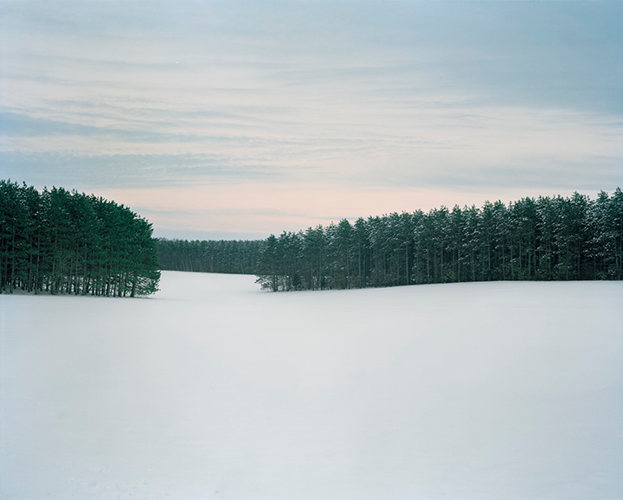
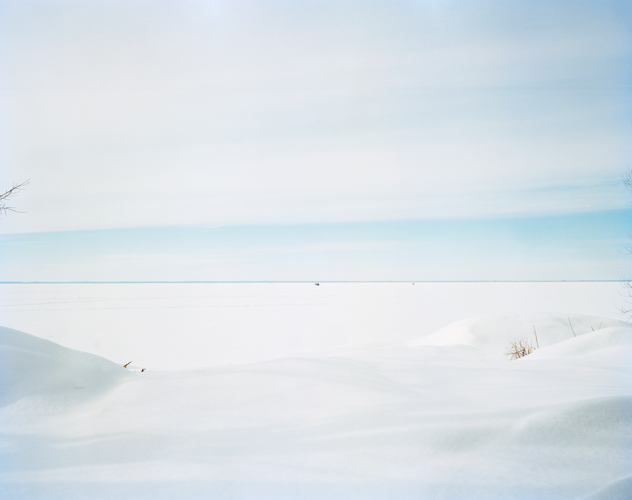
"Lake Winnebago," Caroline Allison
This is the rabbit hole I’ve been running down ever since Caroline Allison’s remarkable A History of Snow opened at Zeitgeist last month. Allison is one of Nashville’s best fine art photographers, but this breakthrough display finds the artist at her most conceptually sophisticated and technically daring.
This ambitious exhibition creates compelling conversations with both painting and sculpture. Works like “Lake Winnebago” and “Double Plateau (Mist)” are color photographs that read as monochrome due to the the snowy whites and melancholy grays of the winter landscapes Allison captures. She uses light, composition and color to create the painterly illusion that we’re looking at a flat, minimalist picture plane. These works connect directly to Alex Blau’s similarly remarkable exhibition of paintings, which shares the exhibition space at Zeitgeist.

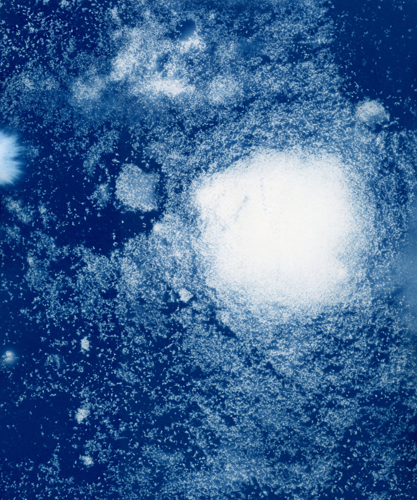
"Winter Ephemeral," Caroline Allison
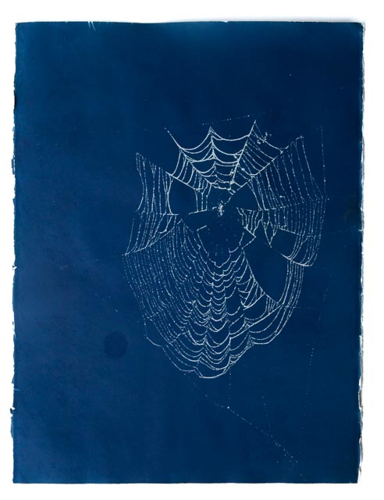
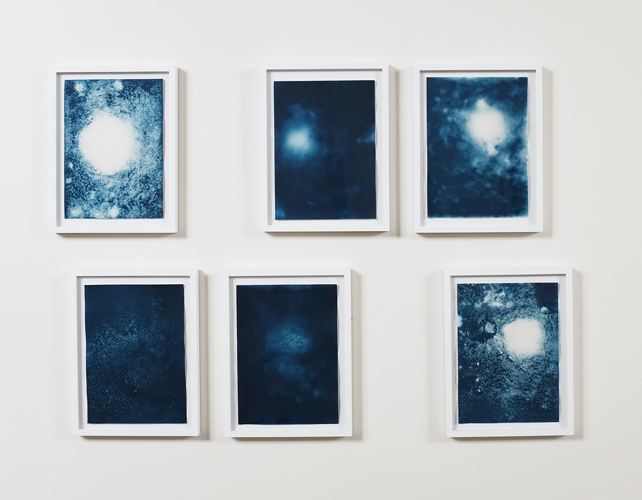
Allison’s photographs-that-look-like-paintings read more like objects than pure photographic images. She pushes that envelope even further with a series of cyanotype prints that capture chilly, dew-covered spider webs and exploding snowballs. The cyanotypes’ blue-and-white detailing and heavy paper can only read like physical prints of an image. The relative crudeness of cyanotypes also gives us an important clue: The illusion of pure imagery is dependent upon fidelity. Well, sometimes. This rabbit hole is endless.

"Reservoir," Caroline Allison
With “A Sunrise,” Allison drives fully into sculpture territory with a large print of a sunset that has been cut into two pieces and framed with a space separating the top chunk of the golden solar scene from the bottom piece. This is also one of a series of three prints that Allison soaked in a supersaturated saline solution. The process results in organic rivulets of excess salt sticking to the surface of the print. At every turn, Allison interrupts attempts to understand this work as a pure disembodied image, which is particularly subversive given the universally seductive subject of a beautiful, beaming sunset.
A History of Snow is an exhibition of striking photographic images, but it’s also a show about how we perceive photography. There is a lot to think about here — but more importantly, there’s a lot to feel about.
Allison and Blau will be doing a gallery walk-through at Zeitgeist on Oct. 24. Both shows run through Oct. 26



