


It’s hard to think of a more appropriate name for an early-January art exhibition than Looking Back (Looking Forward). But Vanderbilt Fine Arts Gallery curator Joseph Mella didn’t have New Year’s resolutions and clean calendar pages in mind when he put together the two shows opening the gallery’s 2018 season. Instead, he was thinking of the 20th-century avant-garde artists who pioneered what contemporary art would become — namely, the artists who came up in Black Mountain College, but also Andy Warhol, whose exhibition of Polaroid portraits will make you rethink the artist’s concept of celebrity.
Warhol, who was rarely seen without a camera around his neck or in his hands, is arguably the most relevant artist of the modern age. He was celebrated, of course, for originating the 15-minutes-of-fame concept. (Appropriately enough, there is plenty of debate on whether or not Warhol was the first to utter the “15 minutes” quote, an expression that has gone on to develop a life of its own.) And yet, here we are — Instagram has replaced Polaroid as the most instantly gratifying mode of photography, and our president is an image-obsessed reality-TV star. Side note: In his diary, Warhol once called Donald Trump “cheap” because he never paid for the portraits of Trump Tower he’d commissioned.

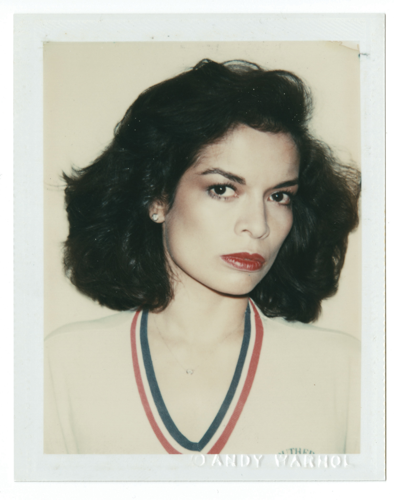
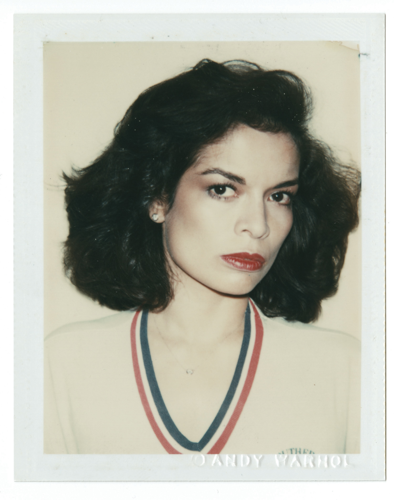
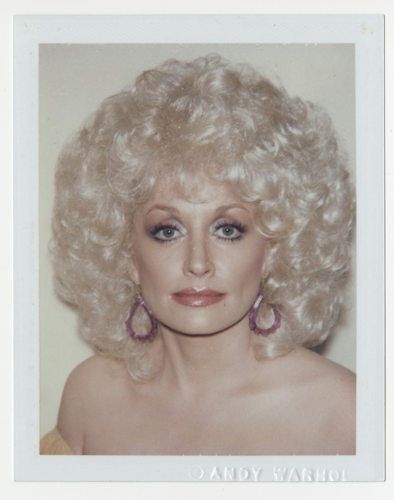
Warhol’s Famous! (And Not-So-Famous) features 41 Polaroids, 17 silver gelatin prints and a portrait of Warhol, a large test print made with diamond dust. The exhibit also includes three Polaroid cameras, in a glass display case, that are similar to the ones Warhol used. The “famous” half of the exhibit includes Bianca Jagger in a tennis sweater and Dolly Parton — this week’s Scene cover image — whose Best Little Whorehouse in Texas-era perm seems larger than life even at 5 square inches. A photograph of a young and handsome O.J. Simpson reveals nothing of the dark future that awaits him, and an elderly Georgia O’Keeffe is photographed alongside her 58-years-younger companion Juan like a badass, saintly queen.
But most of the Polaroids are of ordinary, or at least unfamous, subjects. Like an unknown actor cast alongside A-list stars, these shots are compelling because they’re more relatable than the celebrities. But they’re also interesting because Warhol, who was obsessed with fame and documenting his own life, likely never intended for them to be seen — these were studies for commissions and are, in many ways, like receipts from Warhol’s financial transactions. It’s as private a look into the artist’s working life as you can get — a triptych of a man in a business suit pulling his hand to his chin, or a glamorous middle-aged woman so heavily powdered she looks like a she’s been made up for Kabuki theater.

In the alcove beyond the Warhol exhibit, Looking Back (Looking Forward): The Black Mountain Experience is a small survey of work by artists from the experimental Black Mountain College. The exhibit coincides with art department professor John Warren’s class on Black Mountain, which was founded in 1933 in the Blue Ridge Mountains of North Carolina. Although the college was only in operation until 1957, its students and faculty were incredibly influential and included luminaries such as Allen Ginsberg, Cy Twombly and Robert Rauschenberg. Portraits of Black Mountain alum Merce Cunningham and John Cage are sure to attract attention, as will the photographs of architect Buckminster Fuller’s famed geodesic domes, which were conceptualized and constructed for the first time while he was a teacher at the relatively isolated Black Mountain campus.
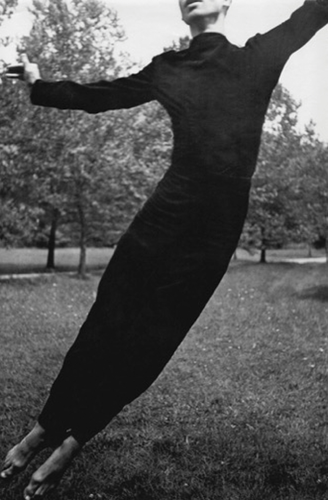
Projected on the main wall of the space is a short film of dancer Katherine Litz performing her work “Thoughts Out of Season” in one of the few surviving films of the era. The silent footage shows Litz from a close perspective that seems less concerned with the dancer’s choreography than with her body itself, which moves across the frame, along with the light filtering through trees in the background.
Another highlight of the exhibition is a 1948 photograph of Black Mountain artists during a performance of “The Ruse of Medusa,” a one-act absurdist play by French composer Erik Satie. In the photograph, Buckminster Fuller sits at the middle of the table in a cartoonishly tall top hat, joined by fiercely prim-looking painter Elaine de Kooning, as well as Merce Cunningham, who played a character that Satie described as simply “a costly mechanical monkey.” The scene is both highbrow and oddball, like a live-action Coen Brothers staging of Da Vinci’s “The Last Supper.”
There’s much more to learn about Black Mountain, and luckily there’s plenty of opportunity. On Feb. 1 at Cohen Memorial Hall, Ruth Erickson, curator at Boston’s Institute of Contemporary Art and co-curator for the recent retrospective Leap Before You Look: Black Mountain College 1933-1957, will give a keynote address about the exhibition and the school. And in keeping with the Black Mountain spirit of experimental collaboration, Nashville dance companies Intermission Arts and New Dialect will perform Third Voice, a research lab and performance program incorporating newly composed music, video installation and dance. The dance will immediately follow the talk — visit vanderbilt.edu/gallery for more details.
Email arts@nashvillescene.com



