

Music City Vintage
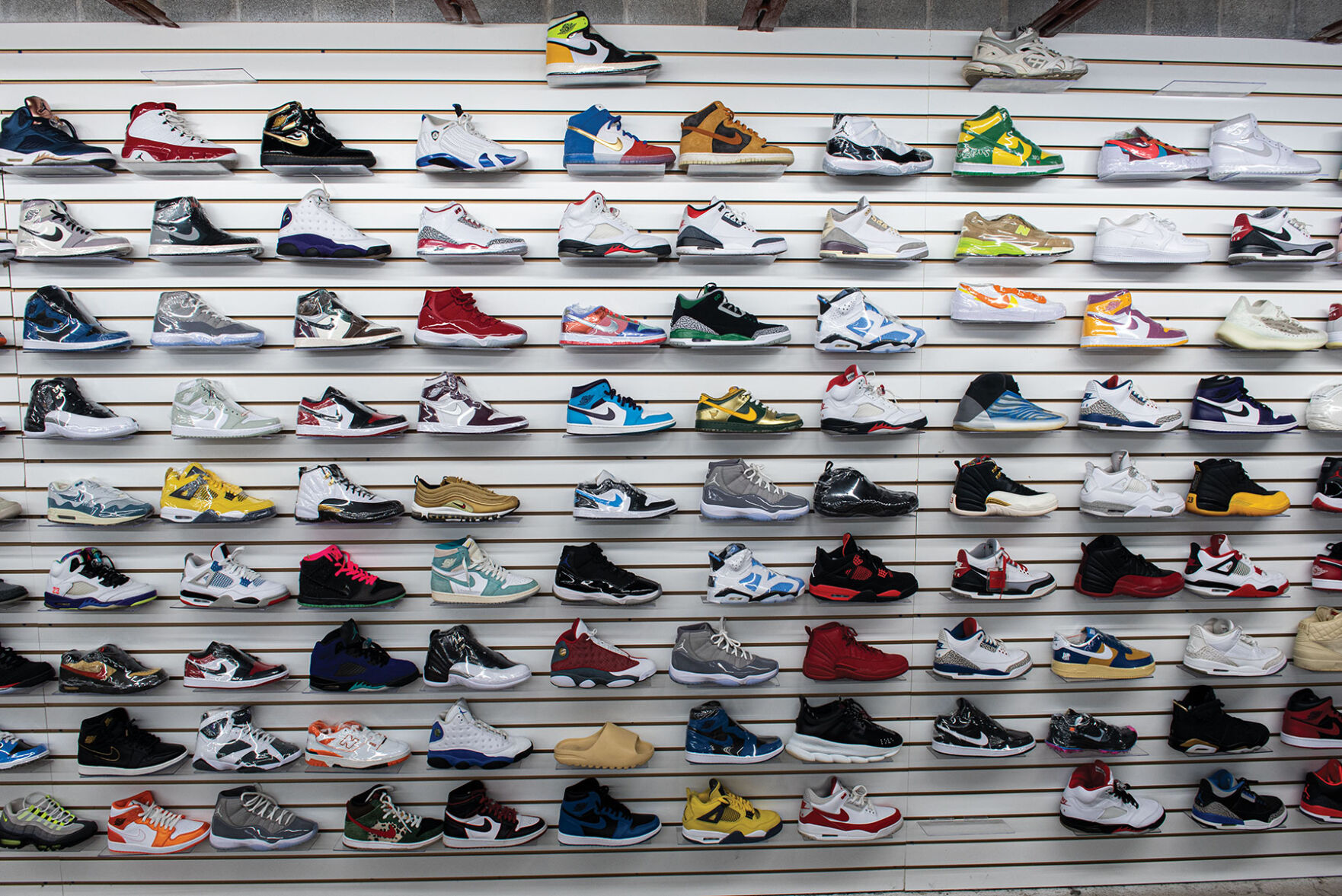
Some items at Music City Vintage aren’t for sale. An old Apple computer, a pair of 1985 Jordan 1s and another pair of shoes that survived the March 2020 tornado are too meaningful for owners Trea Broyles and Justin Allman to part with.
The duo’s original Music City Vintage location was destroyed in the tornado, along with most of their inventory. But they’ve since resurrected the shop and built a new collection, and now they have loads of items to sell — tie-dyed Grateful Dead T-shirts, a button-up shirt displaying old Playboy covers, shoes that have never been worn. At least, that’s what’s in stock when the Scene visits the shop on Gallatin Avenue in East Nashville. You never know how long a piece of clothing may last in a spot like this one before it finds a new home.
Nashville’s vintage fashion scene is a popular one. The combination of Music City’s Southern honky-tonk style, the state’s large assortment of thrift stores and estate sales, and a big community of musicians looking for stagewear make for the perfect storm of supply and demand. It’s also a relatively affordable city in which to open a store — that may be changing as real estate prices soar, but it’s always been cheaper than places like New York City and L.A.
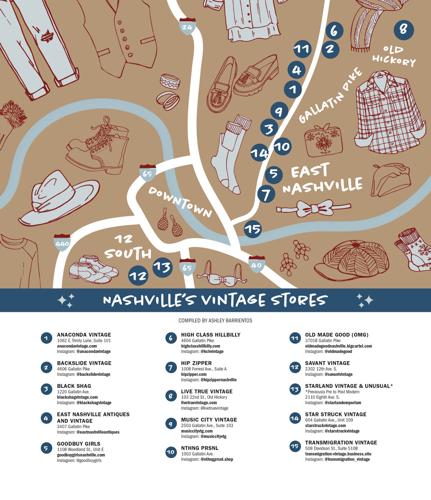
There’s also an undeniable connection between vintage clothing and music. Most of the vendors the Scene spoke with for this story are also musicians. East Nashville’s Anaconda Vintage is located right behind Grimey’s, and is co-owned by musician and longtime Scene fave Tristen Gaspadarek — she used to sell clothing at beloved record and vintage shop Fond Object, which closed in 2019. Trisha Brantley is a longtime East Nashvillian, having opened her well-curated vintage shop Hip Zipper in Five Points back in 1999 — she’s a musician too. The owners of Backslide Vintage, , are also musicians, and neighboring shop High Class Hillbilly is owned by singer-songwriter Nikki Lane. Turns out, when you’re touring across the country and you have time to kill before shows start, thrifting is a solid option. It’s also a creative means of gaining supplemental income.
Even outside of thrift stores and fashion-resale chains like Buffalo Exchange, there’s a plethora of vintage clothing stores across town. Many of them are peppered along Gallatin Avenue on the East Side, though there are outliers like Starland Vintage & Unusual (formerly Pre to Post Modern) on Eighth Avenue South and Live True Vintage in Old Hickory. Some vendors sell vintage clothing at flea markets or antique stores, while others hawk their wares online and at pop-up shops. Madyson Williams, owner of Horse Girl Vintage, started selling her finds on Instagram and at pop-ups, and she plans to start selling at Nelson Drum Shop in April.
As a general rule, an item must be 20 years old or older to be considered vintage. Some vintage stores adhere to that rule more strictly than others. The owners of Backslide Vintage tell the Scene they aren’t opposed to selling newer items if customers want them. Some places lean into the Y2K aesthetic that’s back en vogue — of course, anything made in 2002 or before is technically vintage, though it may not feel that way. Gaspadarek doesn’t carry any items that were made after 1998 at Anaconda Vintage, because that’s “basically when manufacturing went to fast fashion.”
With the fast-fashion model, many large clothing companies sell low-quality clothes for low prices. These clothes aren’t made to last, and instead perpetuate a cycle of tossing worn-out clothes and purchasing more fast-fashion pieces to replace them. This approach has a significant negative environmental impact. Many used garments end up in landfills, clothes that are made with spandex cannot be recycled, and according to the Princeton Student Climate Initiative, “the fashion industry consumes one-tenth of all of the water used industrially to run factories and clean products.” Plus, many fast-fashion pieces are made overseas in shops with inhumane working conditions.
Though vintage fashion may not be a singular solution to the fast-fashion problem, it is part of the answer. Folks like Gaspadarek can address these issues by providing sturdy clothing meant to last for decades, as well as ethical working conditions for employees.
Anaconda Vintage
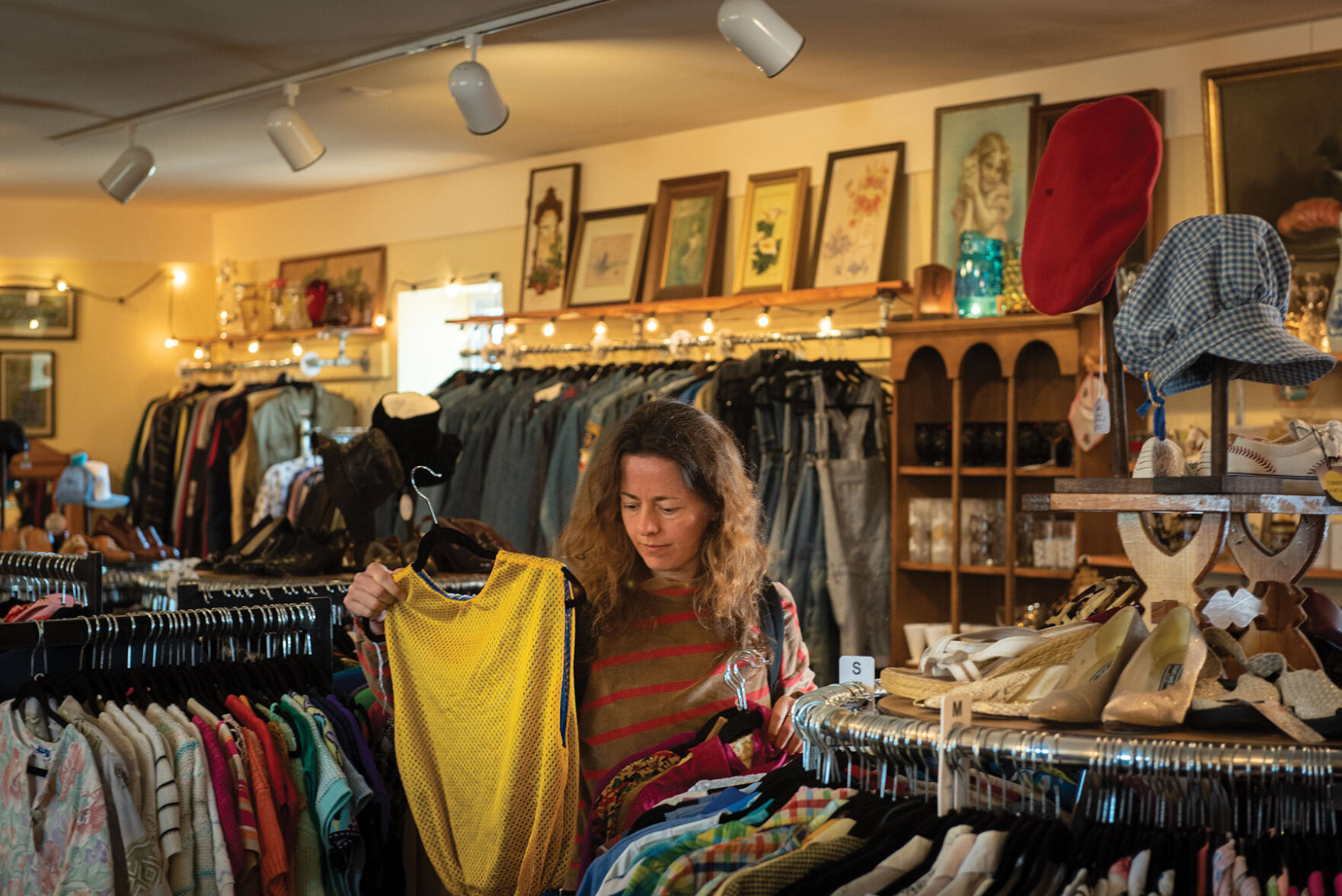
Compared to the “linear culture” of buying something, using it and then tossing it, vintage fashion “is a circular economy,” says Gaspadarek. “So the thing is made, it’s used, it’s sold back to us, we sell it back to people, they use it, they sell it back to us. … So hopefully not much goes into the landfill like that. We’re actually more of a recycling company.”
Of course, some folks may be critical of the markup on vintage pieces — jackets, boots and even T-shirts can easily cost north of $100. But there’s a pretty compelling reason for that. Vintage clothing vendors put significant effort into curating their collections — finding clothes, washing them, mending them. Broyles points out that a lot of clothing is collectible too. “If you think of any major event, there’s a T-shirt or there’s some kind of memorabilia from it,” he says. “It’s just wearable history.”
Critics may also argue that the vintage-fashion industry gentrifies thrift stores, diluting access to fashionable clothing and pricing out lower-income people. But according to nonprofit climate and culture magazine Atmos, the sheer amount of secondhand clothes in circulation somewhat negates that argument, and rising prices in thrift stores are a result of inflation, not scarcity — the majority of used clothing still ends up in landfills.
“I have thought about it a lot, because I would never want to take away anyone else’s accessibility to cool clothes,” says Williams. “I really don’t think that vintage sellers are taking away [clothes]. There are so many clothes — I’ve especially seen that going to the Goodwill bins, just how much stuff gets dug through and then how much stuff still gets sent back after it’s been dug through.”
It can take a lot of time and effort to establish a solid, consistent collection, and though many vendors enjoy it, there are also … let’s say, occupational hazards. Sifting through used clothes can be gross. Broyles and Allman say they have encountered sex toys and a snake when digging through used clothing. Williams has found rodent droppings on clothes she discovered at an estate sale.
Some vendors typically look for clothing at estate sales or in the bins of a Goodwill outlet, which charge about a dollar a pound, while others shop online. “You’re either a clicker or a picker,” says Heather Scudder, a vendor who sells her Wild Knees clothes at Anaconda Vintage and her Lil Knees kids’ clothes online. “I like the picking. … A lot of people will just buy wholesale online, buy just an entire inventory on eBay. … And that’s an OK way of doing it, too.”
True expertise is required when it comes to finding vintage wares and knowing how desirable and valuable certain pieces are. While there are some indicators of a solid vintage find — things like paper tags, metal zippers and general sturdiness — some pieces require research. “It’s hard to teach,” says Gaspadarek.
Overall, the folks the Scene spoke to say the vintage fashion industry is a supportive one. Williams says some vintage stores host pop-ups for other vendors, and that when she sees fellow vendors at estate sales or sifting through the bins, they’re typically friendly and supportive of one another. It’s similar to the creativity and collaboration that enables the music industry to thrive here. But there is, of course, a bit of competition.
“Everybody kind of has their little secrets,” says Scudder. “I know that I do.”
Many within the local vintage scene also strive to keep it inclusive. “As someone who’s never been skinny, it was always hard for me to shop vintage, and I’ve been a wide range of sizes in my life,” says Williams. While she would like to see more plus-size options, Williams says she’s noticed many stores are trying to be more size-inclusive, and another East Side spot, Speakeasy Vintage, is a particularly great spot for that.
“We want [Anaconda] to be accessible,” says Gaspadarek. “We want to have plus sizes, we want to have little sizes. We want everybody to feel like they can walk in and find something.”


Spring looks, street style and vintage retailers



Post a comment as anonymous
Report
Watch this discussion.
(0) comments
Welcome to the discussion.
Log In
Welcome to the discussion.
Keep it clean. Please avoid obscene, vulgar, lewd, racist or otherwise abusive language. Comments featuring hate speech or threatening or violent content will not be tolerated.
PLEASE TURN OFF YOUR CAPS LOCK.
Be truthful. Don't knowingly lie or mislead.
Be proactive. Use the “report” link on any comment that violates our comment policy.
Share with us. We'd love to hear your feedback.