
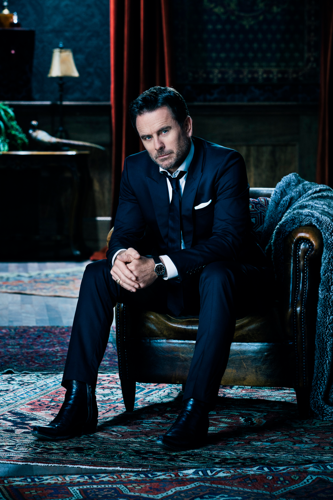
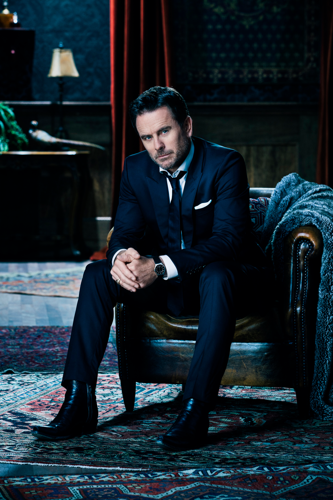

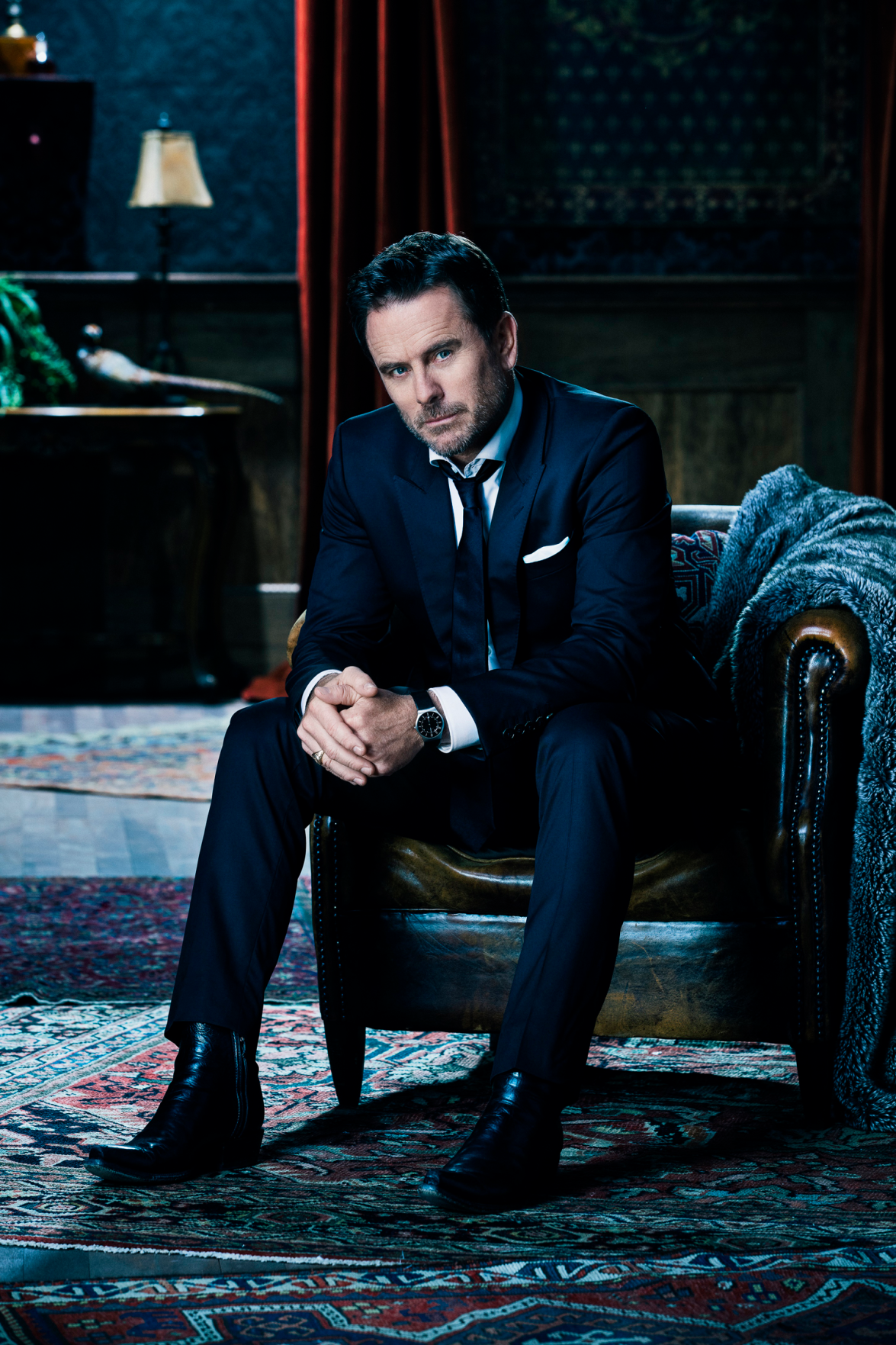
Charles Esten
Nashville’s first episode opens with long establishing shots of familiar landmarks all across the city. Printers Alley. The Opryland Hotel. Nissan Stadium, which was still known as LP Field when the pilot aired on ABC back in October 2012. The sentimental strains of Eli Young Band’s “Even if It Breaks Your Heart” play as the camera glides over greater Nashville’s rolling green hills. We approach a house — a 20,533-square-foot mansion, to be exact — that sits on six acres near where Belle Meade meets Forest Hills in the tony southwest corner of Davidson County.
The pilot episode of the show, which was created by Oscar-winning Thelma and Louise screenwriter Callie Khouri, was watched by roughly 12 million people, and to many of us who lived in Nashville — the real Nashville — it seemed like every single television in town was tuned in. After years of incrementally increasing media attention from the likes of Forbes, GQ, The Atlantic, Vice and The Observer, all proclaiming the city “boom” or “next” or “now” or “it,” network TV had finally moved to town. Would the show get it right? Would Nashville know its 5 Spot from its Bluebird and its Gulch from its East Side?
“From the very beginning, from that very first soaring shot coming in over the trees … you could tell that there was something special about this city,” says Nashville co-star Charles Esten, who played series lead Deacon Claybourne for all six of the show’s seasons. “Callie was so smart in creating something that went here. … That was the first thing, is that there was a whole lot to work with in terms of the beauty of the setting.”
After Nashville’s opening shots, we’re shuttled inside the aforementioned Belle Meade mansion. There we find series lead Rayna Jaymes, played by Connie Britton — who was nominated for an Emmy for her performance in the episode — with her two children and her husband Teddy Conrad. In reality, the mansion depicted as Rayna’s is owned by philanthropist and socialite Sylvia Roberts. (It’s currently listed for sale at $18 million, in case you’re in the market.) On the show, Teddy informs the kids that mom needs to go out and do some work, because the family is what is known as “cash poor.” (Teddy would go on to be elected mayor of Nashville before resigning amid scandal. Pretty far-fetched for little old Music City, right?)
As we find out later that evening at the Ryman, Rayna is the “reigning queen of country,” a title she’s vying to keep despite dwindling ticket and record sales. That’s not to mention a play for the throne by up-and-coming pop-country diva Juliette Barnes, whose songs all seem to feature at least one line about mascara. Thing is, this pilot actually features a surprising degree of music-biz inside baseball for what is essentially a nighttime soap opera. There’s talk of the new boss at the record label pressuring Rayna into a co-headlining tour with Juliette. A co-headline, Rayna’s team explains, can keep production costs low and expose the fading star to a younger audience.
Even so, the soap did ultimately get soapy. The web of characters spread to include not only Juliette, Rayna and her tormented-but-charming alcoholic sideman Deacon, but also darling rubes, floppy-haired hipsters (what passes for hipsters on prime-time TV, anyway) and closeted cowboys — many of them played by real-life performers, who throughout the series’ run would pop up at the real Opry and elsewhere to sing songs from the show alongside their own originals. And that’s not to mention the plot’s assortment of cult leaders, creepy tech-industry billionaires and political instigators. The late Powers Boothe even played Rayna’s father, a former Nashville mayor and business magnate, for 26 episodes. Powers Boothe, for chrissakes — Tombstone’s Curly Bill Brocius!
Nashville was never a huge ratings smash, though it did hold pretty steady at several million viewers per season and performed well with the DVR crowd. Even so, ABC canceled the series after its fourth season in May 2016. A month later, after some outcry from loyal fans and some shopping around by the show’s producers, Nashville was picked up by CMT. From there, the storyline got only more outlandish. Fair warning: Some spoilers are ahead. At the end of Season 5, Rayna, freshly married to Deacon after the collapse of her marriage to Felon Mayor Teddy (and the collapse of her engagement to another, different country singer), was killed due to some nebulous medical complications in the wake of a car accident — her second major traumatic car accident of the series, for what it’s worth.
Whether or not Nashville’s increasingly convoluted characters and plotlines always perfectly reflected Nashville culture, the show did indeed mirror the city’s boom times.
“I think it’s important to know that this place was already on a big upswing as we arrived,” says Esten, going on to reference the devastating 2010 Nashville flood that caused millions in damage and took 26 lives. “The comeback from that flood and everything they did to pull themselves back together … it was a real comeback story.”
According to the U.S. Census Bureau, the population of Nashville-Davidson one month before the 2010 flood was just north of 600,000. By July of last year, that number had risen nearly 11 percent, with growth still on the rise. Despite national stagnation in hotel construction, Nashville was one of only three cities, along with Dallas and New York, that saw hotel building increase last year. And according to the Nashville Convention and Visitors Corporation, the city’s tourism business had a record-breaking year in 2017, with a total of 14.5 million visitors.
Esten points out that when Nashville first started filming, there was a wealth of vacant lots where the crew could establish what are known as basecamps — spots where actors’ trailers, hair-and-makeup stations and equipment trucks could set up during filming. “Every year, we kept noticing every vacant lot we ever parked in was suddenly turning into a building site,” says Esten. “Six years later, and just about every single one of them is a big beautiful building downtown.”
“It’s exploding, and everyone hopes it will keep the wonderful character that it has,” says showrunner and executive producer Marshall Herskovitz, a TV veteran (Thirtysomething, My So-Called Life) who joined Nashville when the show made the move to CMT. “So far, it seems to have done so. I have a particular affinity for it, because there are very few places left in America that are in some way defined by the arts. … It is in some ways the largest artist colony in the world.”
Of course, Nashville was far from the first major production to set up shop in town, but it has almost certainly been the most significant.
Nashville “definitely had a huge effect acting as an anchor,” says Bob Raines, executive director of the Tennessee Entertainment Commission. The TEC is an office of the governor that is tasked primarily with increasing opportunities for what Raines calls “Tennessee’s creator class.” The show “was a wonderful anchor for production, because it would attract work and attract crew and vendors, and it was huge — because it was ongoing, it helped really stabilize the workforce here, and it helped grow the vendor-production support that was needed to be able to put together such a huge show like that.”
From Season 1 to Season 5, says Raines, Nashville doled out roughly $225 million in what’s known as direct spend in the state — that means incomes, production services and any goods surrounding the production. The series contracted with roughly 500 Tennessee vendors per season, and employed up to 250 full-time workers and more than 8,000 extras per season. It also, according to Raines, helped bump Tennessee up to the seventh-ranked state in the nation for employment in the motion-picture and video-production industry, with a 12 percent increase in film and TV in the state between 2012 and 2016. “$157.8 million was spent each year in the state because of the show Nashville,” he says.
“The timing of Nashville really coincides with one of the largest migrations of youth to city centers,” says Raines. “The show amplified our town as a destination for cultural ideas — cultivating ideas and pursuing passions with other like-minded, talented people. And just because the city possesses such an accessibility and attainability that was not available in larger marketplaces like New York and L.A., we really saw this influx over the last decade of new, young creatives, which will now be the nucleus to expanding our creative class here in our city.”
Both Esten and showrunner Herskovitz agree that our city has not only the richness of culture but also the resources and the infrastructure to support further large-scale productions. And what’s different about Nashville than, say, New Orleans or an Atlanta? In part, says Herskovitz, it’s that locals pay attention to detail, and care if you get it right.
“We would talk about a location, and we would say, ‘Well, what about that location, that looks good,’ and someone would say, ‘Well, no, they never do that kind of music there,’ or something like that,” says Herskovitz. “And we would laugh and we would say, ‘You understand that 99 percent of your audience has no idea what that location is.’ And they’d go, ‘Yes, but people in Nashville know,’ and that was it. That was the most important thing. ... It’s very Nashville — people just love the city and they wanted to do justice to it, and so I learned we’ll use the locations that are the correct locations, and I got behind it.”



