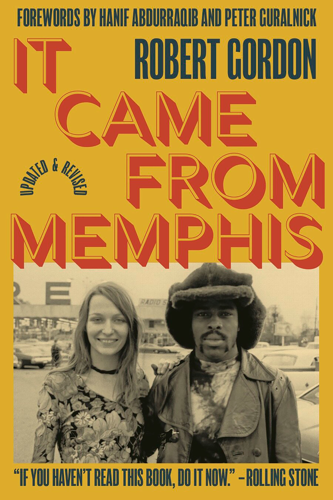


The title told it all, like some sci-fi B movie of your teenage dreams, with electric guitars for ray guns and aliens who answered to names like Dewey, Furry and Sputnik: It Came From Memphis.
Well, of course it did. Blues, rock ’n’ roll, soul. Music that shook the world. But Robert Gordon’s book, originally published in 1995 and back in an updated version from Third Man Books, isn’t about Memphis’ biggest stars and greatest hits. It’s about the wild spirit of the place, the profound weirdness. It’s about racial and cultural collisions. “Though no city has had more of a lasting impact on modern culture, Memphis has never been a company town,” Gordon writes. “The forces have all been independent, renegade.”
Gordon answered questions via email.
The back-cover blurb on my original edition began, “This is a book where Gus Cannon is more important than Elvis” — not exactly a marketer’s dream of a sales pitch. Yet the book is beloved, revered and now reissued. What were your expectations back then and now?
I was so pleased to have a book deal, my first, a dream come true, that my expectations were met when the contract arrived. Thereafter, it was all gravy. My parents couldn’t really fathom who the audience would be. I just figured that, like me, others were interested in obscure but important and influential artists from Memphis. And would like a book of rollicking tales.
How did you approach this new version, and how much has the book’s lead character, Memphis, changed since 1995?
In the new final chapter, I address the ongoing similarities in Memphis. I had a natural through line because the stars of the book — the great unknown band Mud Boy and the Neutrons, who took the mantle from the old blues singers — their children have become accomplished musicians, and in addition to their own pursuits, the children keep the songbook of their dads alive. Old songs keep getting older, aging like whiskey in a barrel.
And the city itself — quite honestly, it’s come a long way. As a whole (and speaking so broadly is dangerous), the hate and pretense that used to dominate here are greatly diminished. The city’s acceptance of its blues heritage is an implicit 180-degree turnaround of attitude. For much of its history, Memphis feigned, poorly, being a cultured European outpost — high tea at the Peabody, classical music over indigenous sounds. But Memphis is finally more comfortable with its role as capital of the Mississippi Delta, and I think citizens have — broadly speaking — accepted the history of hatred we’ve inherited and are working to turn it around.
Does Memphis have another revolution in it, sonic or otherwise? Another Sun or Stax Records? A Sputnik?
The revolutions you cite, none of them had any planning. You couldn’t go to Sun at any point and say, “Oh yeah, I see what you’re doing, you’re going to really change the world with this.” Most people told Sam Phillips he was a fool, and they made fun of Elvis Presley — until his success, which caused them fear.
Most of these revolutions were a reaction against Memphis’ long-standing hatred of African American culture. In my lifetime, that’s been the revolution: seeing what was once despised become respected. But the hatred lingers and is deep-set here, always combustible, so yeah, I have no idea how it will be expressed, but I think Memphis hasn’t finished speaking its mind yet.
Here’s hoping the book finds and inspires a new young audience. That in mind, how would you explain Memphis, in one song or album or artist, to some young kid just starting to really explore music?
I’m going with my gut response here, even though it’s not a blues: “Last Night” by The Mar-Keys. It’s sort of blues plus youth. The sense of barely contained, barely controlled chaotic energy. Pretty much everyone has to move to it, however familiar or unfamiliar it may be. It’s a song that puts a smile on your face, and within its two minutes and 40 seconds, it convinces you to dance, to respond. That’s quite a lot of power in a pretty short amount of time, and I think that’s indicative of Memphis. It’s not the place you’d expect to have had such an impact on Western culture, global culture, really. But it’s the place that did.
To read an extended version of this interview — and more local book coverage — please visit Chapter16.org, an online publication of Humanities Tennessee.