


Lucas L. Johnson II
Alex Haley’s Roots: The Saga of an American Family was published in August 1976. Haley’s fictionalized account of seven generations of his family, beginning with Kunta Kinte, a man abducted into the transatlantic slave trade, still resonates through American culture and beyond, inspiring many to explore their own family histories, even while some continue to resist Roots’ depiction of the brutality and racism that have shaped the United States.
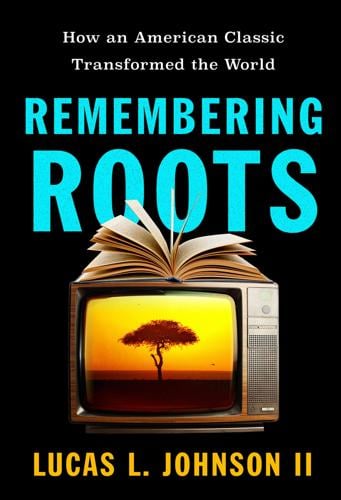
In Remembering Roots: How an American Classic Transformed the World, Lucas L. Johnson II sketches the history of Haley’s book and its TV adaptation, surveying their combined impact through commentary from scholars, genealogists, artists and ordinary people from different walks of life. A former reporter for the Associated Press and the author of Finding the Good, Johnson is a Memphis native now based in Nashville. He answered questions by email.
You note that Roots was named a state book by the Tennessee General Assembly in 2024, despite a political atmosphere that is hostile to frank discussions about race. What places the book beyond the ideological wrangling over “divisive concepts”?
In the case of what should place Roots beyond ideological wrangling, I refer to the sponsor of the “state book” legislation who called Roots a “masterpiece.” “In the final analysis, I believe it’s the most widely read work of any Tennessean ever published anywhere, and it did kind of change American culture,” said Rep. Gino Bulso. “So, there was no way to leave it off.” (Roots was one of 10 works the legislation cited.)
There are so many stories in Remembering Roots about the ways Haley’s book touched people’s lives. Do you have a favorite?
I can’t say I have a favorite, but there is one that I reflect on maybe more than others when I think about the impact of Roots. It’s the one about the Florida schoolteacher who has read Roots four times. But what I also like about her story is that she shared the book with her son, and it’s been an influence in his life. He will likely share it with his children. The story is an example of the generational impact of Roots, which in essence, is its legacy.

You don’t shy away from describing the controversies around the accuracy of Roots and the charges of plagiarism. How do you reconcile the impact and popularity of the book with those issues?
I believe in discussing the good and the bad. But I particularly wanted to address Roots’ controversies to provide some clarification. I wanted to make it clear that one of the plagiarism lawsuits was thrown out of court, and that Alex Haley’s attorneys believed he could have gotten the other thrown out as well. But according to a reliable source, he wanted to settle the latter suit because the miniseries Roots: The Next Generations was close to wrapping and he wanted to be on set, not in a courtroom.
Roots inspired people — of all races — to find out where they came from, a desire that still exists today through genealogical platforms like Ancestry and MyHeritage. Esteemed scholar Henry Louis Gates Jr. talked about how watching the 1977 TV adaptation of Roots inspired his lifelong interest in genealogy and eventually helped lead to his popular PBS series Finding Your Roots. He also acknowledged scholarly doubts about some of Haley’s historical claims while still expressing admiration for Haley’s impact.
Can you imagine any single book or miniseries having a similar cultural impact today?
It’s hard to imagine a single book or miniseries having quite the same unified cultural impact that Roots and the 1977 adaptation had. However, some modern works have come closest in pieces of what Roots accomplished. For instance, Black Panther had enormous cultural symbolism and identity resonance; When They See Us drove national discussion about race and criminal justice; and The Queen’s Gambit showed a streaming series can still become a broad shared phenomenon.
But none of these produced the same combination of mass simultaneous viewership, educational influence, emotional intensity, cross-racial national discussion, and long-term genealogical/social impact as Roots.
The tradition of oral history and storytelling is at the core of Roots, and Haley is sometimes called a griot. How can we keep that profoundly human tradition alive?
I believe it starts with our young people. It’s hard to pull them away from TikTok and video games. But maybe we can convince them to take a break from those things — if just for a little while — and sit down with Mom or Dad and ask questions about what it was like when they were growing up. And if that sparks interest, maybe they can move on to Grandma and Granddad.
For more local book coverage, please visit Chapter16.org, an online publication of Humanities Tennessee.

The 38th annual celebration of the written word takes place Oct. 17 and 18





Post a comment as anonymous
Report
Watch this discussion.
(0) comments
Welcome to the discussion.
Log In
Welcome to the discussion.
Keep it clean. Please avoid obscene, vulgar, lewd, racist or otherwise abusive language. Comments featuring hate speech or threatening or violent content will not be tolerated.
PLEASE TURN OFF YOUR CAPS LOCK.
Be truthful. Don't knowingly lie or mislead.
Be proactive. Use the “report” link on any comment that violates our comment policy.
Share with us. We'd love to hear your feedback.