

Dani Shapiro
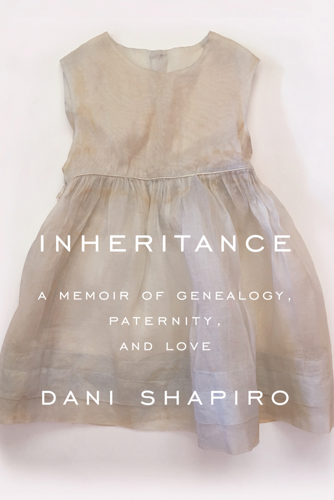
Known for candid memoirs that explore her own family history, Dani Shapiro was unprepared for a routine DNA test to shatter everything she understood about her origins. After sending off for an Ancestry.com genealogical analysis as a “lark,” she was stunned by the test’s results: Her beloved late father, Paul, was not a biological relative. Shapiro’s latest memoir, Inheritance, tracks the suspenseful fallout of the test, leading her through a gauntlet of questions about medical ethics, how we define lineage and the price of secrecy.
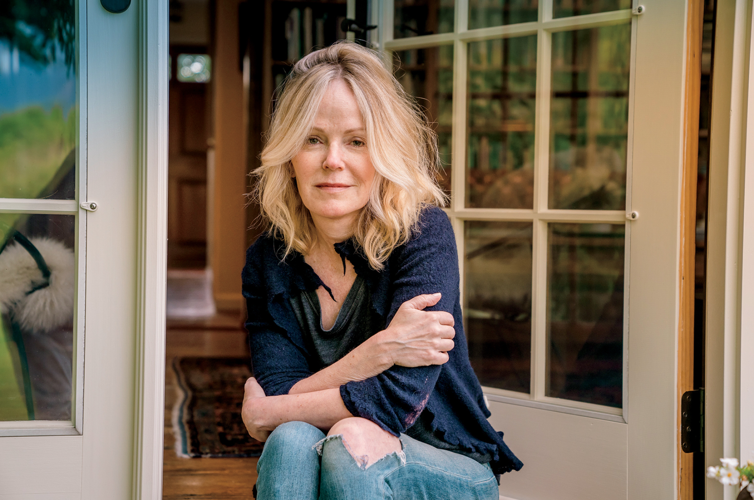
Glimmers of the truth were present from the start, Shapiro writes. She always felt she didn’t belong in her own family, and she describes lonely sojourns around her childhood neighborhood, longing for other families to take her in. But the strongest factor in Shapiro’s sense of alienation from her family lay in her own face. Her blond, blue-eyed appearance often sparked incredulous questions about her Orthodox Jewish roots.
In Inheritance, Shapiro describes the deep sense of pride she has felt in her father’s Orthodox Judaism, a lineage stretching back to many generations of shtetl life in Poland. Even as Shapiro grew into adulthood and moved away from most Jewish traditions, remembering these ancestors played a huge role in developing her sense of identity, including her spiritual life — a story she tells in another moving memoir, 2010’s Devotion.

With both her parents long dead and her biological background an unknown — “as foreign from my ancestors in the shtetl as could be” — Shapiro’s identity was upended: “Who were these people? What did this family have to do with me? Once again I became that child standing outside the warmly lit houses of my neighbors, alone in the fading dusk, longing to be invited inside.”
From the depths of turmoil Shapiro begins an overwhelming task: determining what the secrets revealed in her DNA mean for her life. She compares herself to the “black box, discovered years — many years — after the crash.” But, she writes, “I am also the diver who has discovered the black box. What’s this? I had been looking for it all my life without knowing it existed. … It is a witness to a history it recorded but did not see. What went on in that plane? Why did it fall from the sky?” To put it less metaphorically, what did her parents know about the details of her conception? Why had they never told her?
Inheritance unfurls with an immediacy that embodies Shapiro’s real-time experience. This point of view offers major narrative advantages but also some limitations. The story is suspenseful, reflecting the breathless upheaval occurring in Shapiro’s inner world. It tracks the initial tumult of revelations and Shapiro’s subsequent attempt to sort them out, a strategy that makes Inheritance compulsively readable.
Still, some readers may wish for a slightly longer lens on the story — a chance to see how its pieces grow even more resonant with time. Shapiro’s mother remains an antagonist throughout Inheritance, the same role she plays in all Shapiro’s memoirs. By contrast, the book treats her father, her biological father, her half-sister, the people who scrutinized “how Jewish” she looks, even some rogue scientists — almost all other figures in this story, in other words — with great compassion and empathy despite their questionable decisions, changes of heart and well-meaning deceptions that nonetheless caused harm. At times Shapiro seems to hold her mother to an impossible standard in these matters — a perspective that may well soften after a cushion of time.
In any case, Inheritance ends at a moment when the trauma of revelation has subsided and Shapiro has just begun to consider the long-term significance of these events. Her father’s 93-year-old sister Shirley predicts this threshold moment, calling the revelations “a door to discovering what a father really is.” Shirley goes on to set up what may turn out to be Shapiro’s next memoir: “It isn’t closure — you may not get to have that — but it’s an opening to a whole new vista.”
For more local book coverage, please visit Chapter16.org, an online publication of Humanities Tennessee.