

Mouse Hunt
Movies are great for providing pivot points around which you can readjust your own perspectives. Sometimes it only takes an image to do it. Sometimes it’s a cumulative effect over several different works that hits your emotional reboot button. But this week’s offerings are all about how interesting art can be used as a springboard to launch yourself into all sorts of experiences, and how it can sometimes be good to toggle between the subjective and the objective. So buckle up, because things get weird this week. As always, there are heaps of things to stream or rent in your home. Feel free to look around, and check out past issues of the Scene for more streaming recommendations: March 26, April 2, April 9, April 16, April 23, April 30, May 7, May 14, May 21, May 28, June 4, June 11, June 18, June 25, July 2, July 9, July 16, July 23, July 30, Aug. 6, Aug. 13, Aug. 20, Aug. 27, Sept. 3, Sept. 10, Sept. 17, Sept. 24, Oct. 1, Oct. 15, Oct. 29, Nov. 5, Nov. 11, Nov. 26, Dec. 3, Dec. 17, Jan. 6, Jan. 21, Jan. 28.

"Life and Freaky Times of Uncle Luke"
‘Life and Freaky Times of Uncle Luke’ via The Criterion Channel
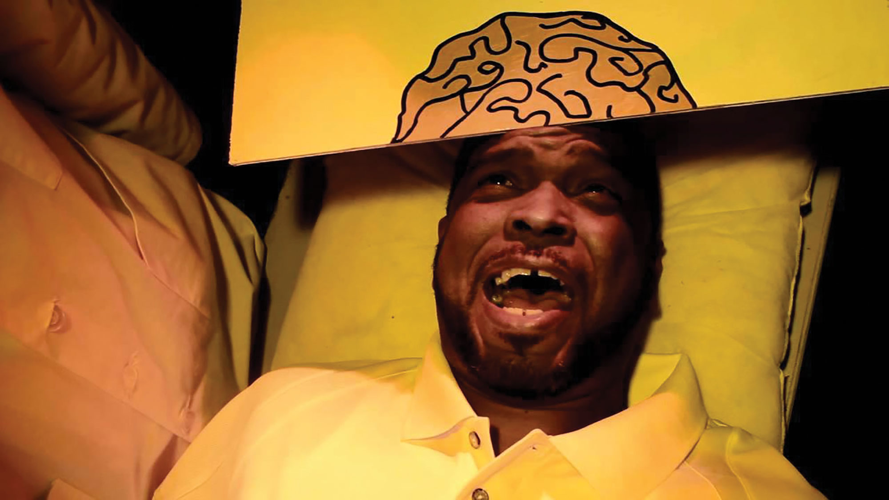
Another invaluable offering in The Criterion Channel’s Afrofuturism collection is this psychotropic 10-minute short that serves as a remake of Chris Marker’s “La Jetée” (and Terry Gilliam’s 12 Monkeys). “Life and Freaky Times of Uncle Luke” stars Luther Campbell, formerly of The 2 Live Crew and perpetually the incarnation of the Miami bass sound that shakes car stereos and frees asses worldwide. The consistent throughline behind all three films is a reality-twisting whirl through time and space heading full-speed toward the metaphorical brick wall of causality. But here, incorporating aspects of Campbell’s own life and several if-onlys acquired along the way, we’re allowed to see a historical person as more than a punch line. It’s a weird experience — one that is more rewarding if you’ve got some degree of familiarity with the Marker or Gilliam films and Campbell’s hits. But at 10 minutes, “Life and Freaky Times of Uncle Luke” is near-perfectly paced and brings a lot of discourses together.
Mouse Hunt on Hulu
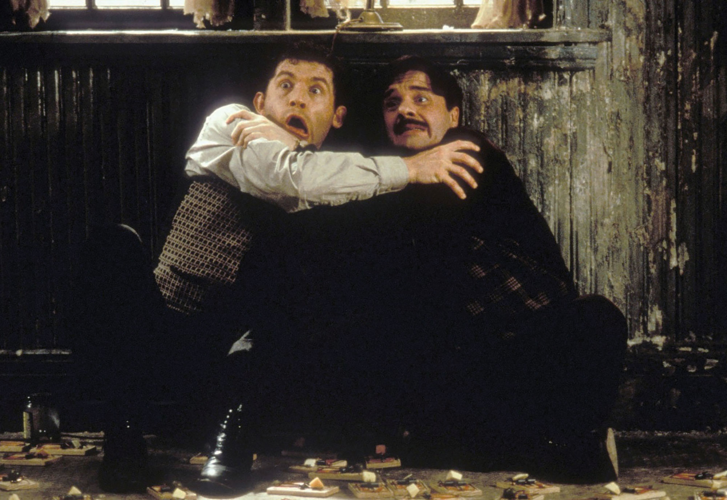
You can look at this astonishing trifle from Gore Verbinski (A Cure for Wellness) as a family-friendly midnight movie, or (as its legacy seems to be writ these days) as the most dark-hearted kids’ movie ever made. Regardless of where you fall regarding that divide, Mouse Hunt is a marvel of production design and physical comedy that is also ripe for rediscovery through the lens of income inequality and class warfare. On paper, it’s as simple as the classic cartoon rivalries: Tom and Jerry; Wile E. Coyote and the Roadrunner; Spy vs. Spy; Itchy and Scratchy. Only in this instance, it’s endearing character actors Nathan Lane and Lee Evans versus a mouse, and it unfolds in a palatial home that feels designed with the meticulous and exacting hand of someone who wanted to be featured in Architectural Digest but also wanted to allow for maximum hijinks at every possible step of the way. This feels like a wine o’clock movie (for the kids!) before such a subgenre had even been defined, and as such I can’t help but welcome its cruelly sweet heart back into my life.

Butterfly Kisses
Butterfly Kisses on Amazon Prime
First and foremost, what distinguishes Butterfly Kisses from the vast majority of found-footage films you’ll find all over the major streaming services (there are hundreds of them, and most are utterly terrible, including several titles I’d hoped to use for a themed approach to this week’s column before abandoning) is an overwhelming amount of ambition.
There’s a central horrific urban legend that spans all kinds of media and claims several youthful victims, but there’s also a rather intense dive into the psyche of people who seek to exploit tragedies and commodify the work of others by selling the aforementioned tragedy to audiences. Beyond that is a whole other layer that is deeply concerned with where the line between support and exploitation lies, and how low-key polite acknowledgement of an upsetting situation carries with it a degree of being complicit in whatever happens — up to and including supernatural disarticulation.
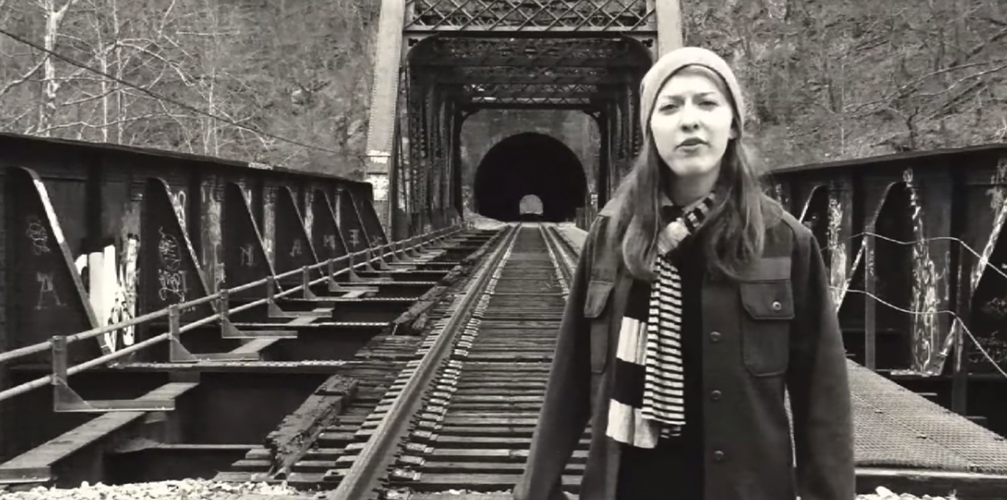
Found footage is an inherently metatextual genre, and Butterfly Kisses aims to take the genre, its purveyors and its viewers through the looking glass and beyond on as many layers of discourse as you’ll put up with. It depicts several kinds of horrors, all of them at least mostly effective, and some of them scary enough to yield a response that concerns the upstairs neighbors. Peeping Tom, the film’s supernatural big bad, is a mysterious wraith who draws ever closer to all transgressors who bear witness to him. Tom sticks in the back of your mind with a bit more immediacy than the obsessed filmmaker who’s dismantling his marriage (note: you will hate this guy) or the other documentarian whose moral indecision is muddying all sorts of narrative waters (you will probably feel professional pity for this guy until things start careening out of control). This movie has an urban legend with a great hook as well as four different filmmakers operating on three different projects that are all tied together with blood, flop sweat and a Whitman’s Sampler of anxieties.
Butterfly Kisses is a great tool for teaching about genre mechanics, and also about balancing your insights with properly calibrated scares. But what it demonstrates most capably is why found footage as a genre allows the public to express its hatred of filmmakers. The what or the why is irrelevant, but going all the way back to 1980’s notorious Cannibal Holocaust, every found-footage movie exists to punish those who want to make movies. This one gets at why that happens, time and time again. Even when these types of narratives try to make the central filmmaker do something noble and heroic, it never reads that way. (Not for nothing does one of the directors of the original Blair Witch Project show up, as himself, to discuss this phenomenon.) The simple act of making a found-footage film, or finding one and putting it together, is equated to tempting fate, and it’s fascinating that there’s no other genre of film that exists to become its own mea culpa. Butterfly Kisses is a lot to take on. But if you dig horror at all, or if you’re into how narratives are used to raise up or cut down their characters, it’s worth it, and it’s staked out a great deal of space in my subconscious since I saw it, extending its tendrils all around.