


Think of the worst job you ever had in your life. Every bureaucracy that’s snared you, and every middle-management authoritarian you’ve butted heads with, coupled with the phantom corporate interests that set goals as alien to the act of living as some long-dead language etched into some inscrutable altar. You wouldn’t think a film about mysterious goings-on at a lighthouse a century or so back would feel so relatable to modern life — especially given the technological advances that have transformed the world into the glinting husk of corrosion and burning resources that it is now. And yet here we are, with The Lighthouse.
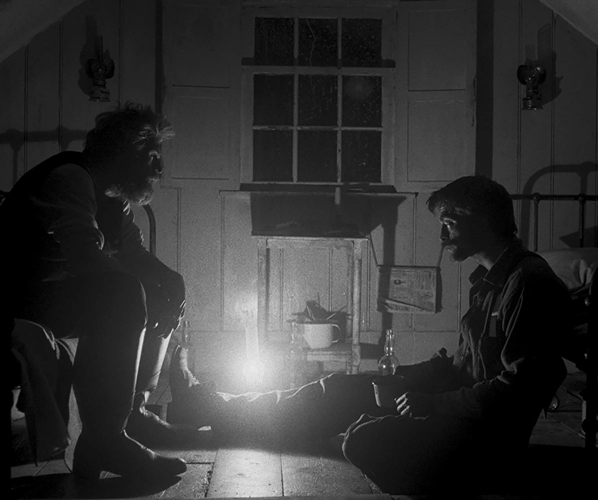
Winslow (Robert Pattinson, of glorious moustache and palpable dismay) is the new man at the lighthouse. It occupies the vast majority of the island, a tiny little slip of land in the middle of a particularly unforgiving part of the ocean. It’s a two-man job, this lighthouse, though all that awaits Winslow is a careen through the corporate sausage grinder. Because Mr. Wake (Willem Dafoe, alternately Viking stout and gifted with Dickensian snivel) supervises the lighthouse, and like everyone granted power by abstractions like hierarchy and traditional structure, Wake is a tyrant. He has lapsed into petty cruelty, because that’s how the system works. He pelts Winslow with insults, chores, dismissiveness and even a secret notebook specifically devoted to casting aspersions. Wake is the worst kind of boss, and he is also the only person for dozens and dozens of nautical miles around. There are fish and gulls, to be sure. But humanity on any level is in the shortest of supply. And part of the job entails being friendly — at least when the higher-ups say so.
There are moments between the two that carry the eldritch gravity of a Harold Pinter play. There are also some of the best-timed fart jokes since 2016’s Swiss Army Man. This is a weird space, and it can function as just about any allegory one might like it to. At times the atmosphere is so charged with machismo and repressed feelings that one senses petabytes of data unfurling into being, awaiting the slash fiction that will result on the internet. Other than a vision of a mermaid, there are no women in the film — though a moderately suggestive carving is enough to trigger fusillades of masturbation all over the island, and paranoid hallucinations deep within the heart and mind.
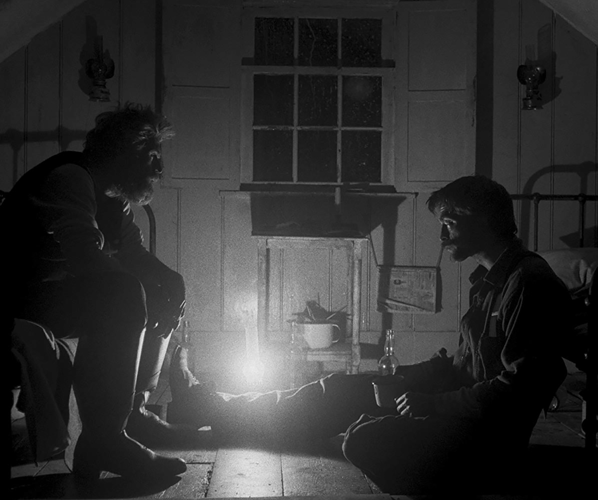
As viewers, we tiptoe around the film’s space. Its high-contrast monochrome sensibility (and monophonic sound mix) and uncommon 1.19:1 aspect ratio are alien to our current perceptions of cinema, and it holds its metaphorical cards close. Glimpses of tentacles in the trailer may lead some viewers to expect some grand Lovecraftian nightmare, which is not the case. At least, not of the shivering suction-cupped variety. There is something unearthly within the walls of the lighthouse, and it is inhumanly patient.
What director/co-writer Robert Eggers (The Witch) has created is something unique. Podcaster, professor and colleague Elric Kane has compared The Lighthouse to 1971’s Wake in Fright, and damned if he isn’t spot-on in that assessment — though I would add a little bit of 1994’s Cabin Boy to the mix as well. This film features the darkest tendencies of masculine impulses arising to redefine the world as we know it, consuming everything in a reaction of blunt-force violence. It is also deeply, deeply funny in a way that will delight the sickest and most discerning among us.



