
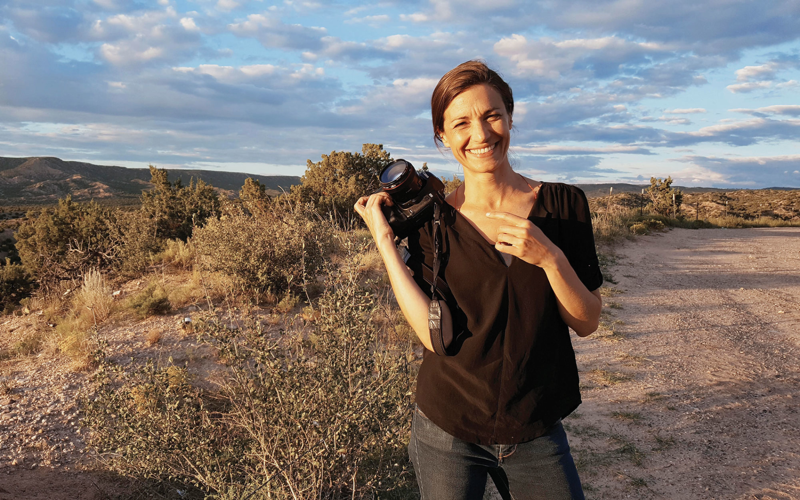

Kate Joyce
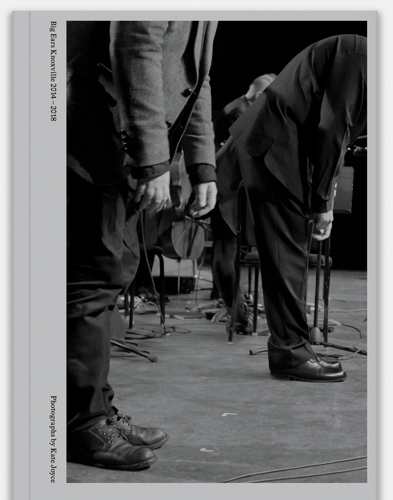
During the past decade, Big Ears Festival — a genre-defying music and arts event held every March in Knoxville — has become very large, containing multitudes. Now it’s the subject of a book, Big Ears Knoxville 2014-2018, with photographs by Kate Joyce, a preface by music writer Ben Ratliff, and essays by musicians Rachel Grimes and Joe Henry; all are frequent presences at the festival. But Big Ears Knoxville, the book, is less about the festival itself than about its brio. It is a book mesmerized by the festival’s corona.
Big Ears declared its intentions in February 2008, with an unsolicited email from promoter Ashley Capps that asked, “Do you have BIG EARS?” and promised a series of concerts to come. The first was with Zen funkmaster Nik Bärtsch’s Ronin, and a year later the first Big Ears Festival was staged — 35 acts over three days. It was possible to experience nearly all the performances and still have time to explore downtown Knoxville, have coffee or go for a long walk.

Nearly a decade later, the 2018 festival delivered more than a hundred overlapping events scheduled across four days. Simultaneous and virtually uninterrupted, they started at 10 a.m. and ended in the early hours of the morning, including one all-night drone fest. It’s been a remarkable progression from a low-key, end-of-winter movable musical feast to an early-spring sleep-deprivation experiment. It is not an event for anyone afflicted by a deep fear of missing out.
But the festival’s expansion is not the focus of Big Ears Knoxville — this book is more interested in the festival’s theme. What precisely is Big Ears Festival about? What, for example, connects Zen funk to other festival acts, like Anthony Braxton’s ZIM projects, Steve Reich’s “Electric Counterpoint,” Abigail Washburn’s clawhammer banjo, the circular-breathing saxophonist Evan Parker, and the bands Algiers, Bang on a Can All-Stars, and Vampire Weekend?
Kate Joyce’s photographs explore this question, offering images of performances, performers, audience members, stagehands and other festival matters. Noticeably scarce are headliner photos. Instead, Joyce focuses on details singled out from festival ruck: a caster wheel, a pianist’s legs, the conductor’s arms during a bow, light under a stage curtain, a boy’s face. Intermixed are images of life in downtown Knoxville: a wedding, a girl playing with a stick in sunlight and shadow, a dogwood in bloom. Collectively, the photos suggest environmental context is as crucial to the festival’s definition as its musical programming. These photos epitomize Big Ears Festival, capturing the music, sounds and compositions we missed because we were distracted by something else.
Big Ears Knoxville’s writers more directly reflect on the nature of the festival itself. For Ratliff, it is “four days of, say, Terry Riley, Kim Gordon, Milford Graves, Laurel Halo and Rhiannon Giddens dropping in and doing exactly what they want to do in a calm place.” Pianist and composer Rachel Grimes exhorts readers “to come together and be quiet,” reminding us that being “calm and quiet allows us to focus on the emotional terrain, to notice, and to listen.” Paradoxical as it may appear, festivalgoers will attest that a feeling of calm and silence can go hand-in-hand with four days of music and thousands of people. That’s part of the Big Ears mystery.
This unlikely puzzle is perfectly captured in Joyce’s lone crowd image. The shot is taken from behind a fully covered figure in a bright white, full-length burnoose and patterned head scarf. The figure, Syrian singer Omar Souleyman, appears to beckon to the crowd, and the crowd facing the camera is oddly static, even tranquil, frozen in the light of the strobe — in awe. Here we have the Big Ears performer and audience captured in one frame, each in character. It may be the festival’s ideal gatefold album cover: Big Ears Knoxville’s text and images are the liner notes and artwork to an uncategorizable musical experience.
For more local book coverage, please visit Chapter16.org, an online publication of Humanities Tennessee.



Post a comment as anonymous
Report
Watch this discussion.
(0) comments
Welcome to the discussion.
Log In
Welcome to the discussion.
Keep it clean. Please avoid obscene, vulgar, lewd, racist or otherwise abusive language. Comments featuring hate speech or threatening or violent content will not be tolerated.
PLEASE TURN OFF YOUR CAPS LOCK.
Be truthful. Don't knowingly lie or mislead.
Be proactive. Use the “report” link on any comment that violates our comment policy.
Share with us. We'd love to hear your feedback.