


The words “French film” can conjure up a very specific image of cinema, especially here in the United States, where what we see is a baguette in the haystack of an enshrined and storied national industry. In France, the so-called seventh art is an institution, a public good that’s supported, protected and regulated by the federal government. It’s a far cry from our own country, where popular culture is pumped out by the same monolithic conglomerates who screw you over on your phone bill.
Though France has produced its fair share of cheap entertainment, government support for motion pictures means a much greater percentage of the French industry is taken up by art films. Picture in your mind’s eye what a French film looks like, and you’ll probably imagine a relationship drama about a love triangle between starving artists, or maybe something along the lines of the experimental antics of late-period Godard. The predominant stereotype, inside the country and out, is that French films are made for minority taste: esoteric, emotional and abstract. But it’s not just that moviegoers assume French cinema is only concerned with interior conflict — the small slice we see abroad also tends to be blindingly white. If your knowledge of France comes only from Eric Rohmer movies, you might assume the country is an ethno-state.
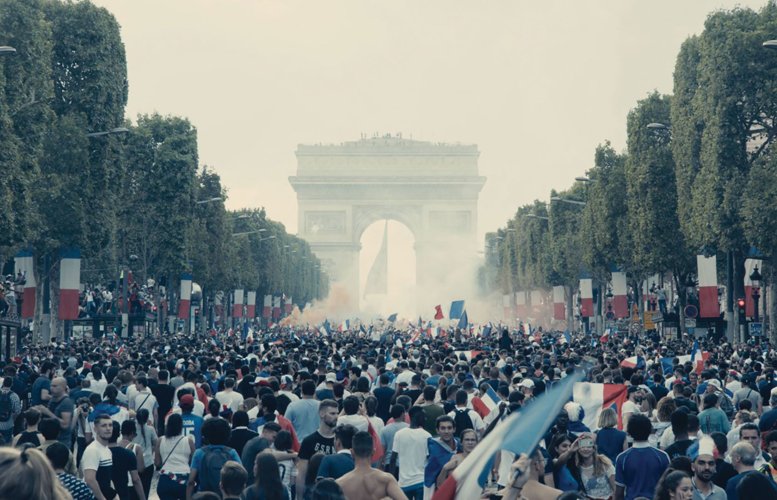
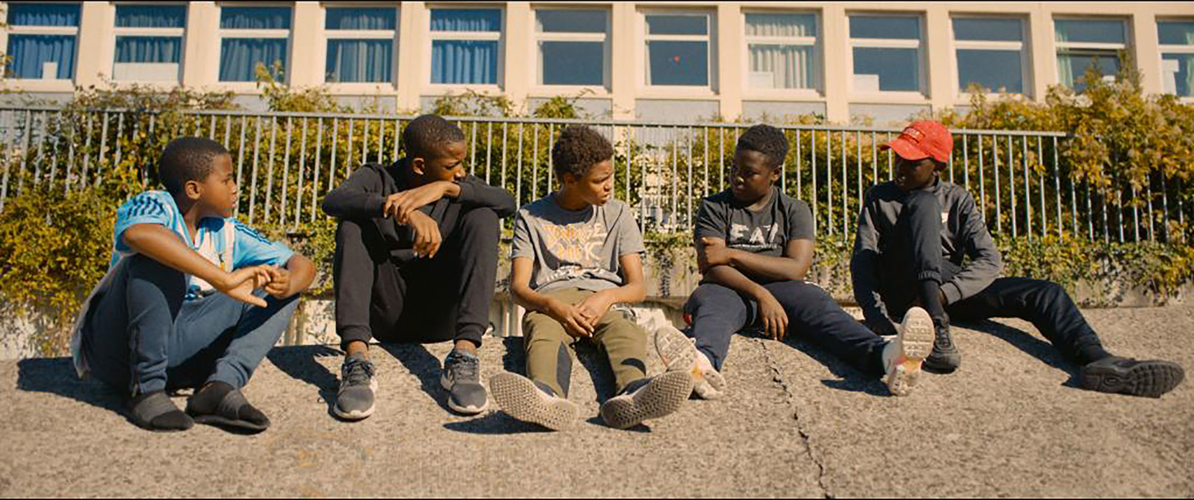
France’s submission to the newly renamed “International Feature” category at this year’s Academy Awards is a fierce rebuttal to outmoded stereotypes of its cinema and a considerably more accurate representation of what the country looks like today. The debut feature from Ladj Ly, Les Misérables isn’t another version of the oft-adapted novel — though in addition to the title, it also shares a setting with Victor Hugo’s most famous work. That real-life township, Montfermeil, is one of the banlieues, a word that technically refers to any of the suburbs that encircle Paris but specifically refers to neighborhoods with low-income housing largely populated by immigrants and working people of color. It’s a world Ly knows well — the son of a Malian immigrant, he’s a lifelong resident of Montfermeil.
Montfermeil looks quite different in the 21st century than it did in 1862, but some things remain the same: Poverty, despair and oppression are still in high supply. Damien Bonnard — who first made an impression in Alain Guiraudie’s bizarre psychosexual drama Staying Vertical, but will be familiar to some viewers thanks to roles in English-language films like Dunkirk and Nathan Silver’s Thirst Street — plays Corporal Ruiz, a cop fresh in from the countryside. He’s much more quiet and observant than his partners, who’ve been patrolling the avenues of Montfermeil for years and aren’t afraid to push its citizens around. It’s a familiar plot, featuring the archetype of the rookie cop who has the conscience kicked out of him by a corrupt system. Something goes wrong on a routine inspection, a trigger is pulled, a child is brutally injured, video is captured of the incident, and a match is tossed toward the powderkeg that is the police’s relationship with the communities they patrol.
It’s a tale we know all too well, but it’s given a fresh specificity by Ly’s own experiences. He first picked up a camera as a teenager in Montfermeil, documenting potentially dangerous confrontations between law enforcement and local residents — Les Misérables is inspired in part by the 2005 Paris uprisings, during which Ly made his first documentary. In his earlier years, Ly ran with a filmmaking collective called Kourtrajmé, which he’s since transformed into a free filmmaking school for the youth of his hometown. It’s clear that Ly has an intimate knowledge of this community, and it’s the feeling of lived experience that lends Les Misérables its merit. The film is most interesting when exploring the place of Islam within contemporary French culture, or when it examines deep-seated cultural conflicts between Montfermeil’s Romani residents and its population of African immigrants. Ly’s documentary background bleeds through, but there’s a curious sense of magical realism simmering underneath what’s otherwise a fairly straightforward procedural — a lion cub and a drone, for instance, are unexpectedly very important to the movie’s plot.
For all the worthwhile insight it offers, Les Misérables struggles to overcome the inherent shortcomings of its chosen genre. Critics have been quick to compare the film to Do the Right Thing, but Spike Lee’s classic never made the cops into anything more than supporting characters, an omnipresent, ever-observant presence on the periphery of a tense existence. By aligning our perspective as audience members with the police, Ly can’t help but ask us to offer them some kind of empathy. There are a thousand cop movies, but only a few that honestly offer the perspective of the children of the banlieue, and I wonder if Les Misérables might be better served by spending more time on the side of the people its title refers to.
But considering Ladj Ly was once one of those children himself, perhaps it isn’t my place to criticize his movie for gently letting cops off the hook. What matters most is not just that his voice is being heard, but that his voice is being used to uplift and enable the work of others from a world rarely represented in French cinema.



Post a comment as anonymous
Report
Watch this discussion.
(0) comments
Welcome to the discussion.
Log In
Welcome to the discussion.
Keep it clean. Please avoid obscene, vulgar, lewd, racist or otherwise abusive language. Comments featuring hate speech or threatening or violent content will not be tolerated.
PLEASE TURN OFF YOUR CAPS LOCK.
Be truthful. Don't knowingly lie or mislead.
Be proactive. Use the “report” link on any comment that violates our comment policy.
Share with us. We'd love to hear your feedback.