
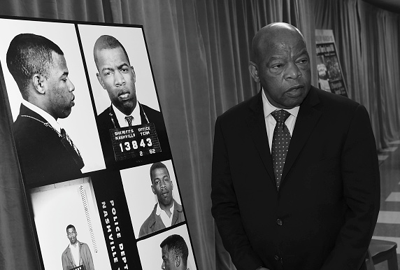
Over at The Tennessean, David Plazas is concerned about “unrest” in the wake of Officer Joshua Lippert’s killing of Jocques Clemmons:
Activists have threatened unrest around the city if certain demands are not met, but that should not be the way this ends.Nashville historically handles its problems peacefully and through conversation.
This is not true.
It is, in fact, one of the most pernicious and damaging lies Nashville tells itself — that we handle our racial problems peacefully and through conversation. I’ve joked about this in the past, this myth that white Nashville somehow accidentally fell into segregation, not realizing how bad it was, until Diane Nash went for a stroll one day and happened to run into the Mayor and asked him nicely to desegregate Nashville and he said, “What a good idea! Sure!”
The joke’s not funny if people don’t realize it’s a joke.
Here’s the truth: Nashville historically handles its race problems with white violence. Slavery, as an institution, was violent. You had to use physical and psychological violence in order to keep your prisoners somewhat compliant. It was violent in the particular. You could go to the corner of Cherry and Charlotte and buy a child to rape. Sexual violence was such a core component of slavery that slave traders would advertise “fancies” or “fancy girls” to buyers specifically looking for sex slaves. This went on in Nashville for nearly a century.
Then we had segregation and Jim Crow, both of which were maintained through great and small violence against black people.
Then there were the particular incidents: When free people of color tried to organize schools for their children in Nashville, whites whipped the teacher. After the Civil War, Nashville formalized the Ku Klux Klan downtown in one of our fanciest hotels. We lynched people. We hid Frank and Jesse James because we liked that they were still kind of fighting the Civil War. Nashville vandalized black streetcars to try to end the boycott. We bombed Hattie Cotton Elementary School in opposition to school integration. We bombed the home of Z. Alexander Looby, a civil rights lawyer, and he and his wife and their neighbors weren’t killed only by sheer luck. We spit on, kicked, punched, and dumped food and drinks on civil rights protesters. In one case a business owner tried to fill his business with poisonous fumes to drive off or kill protesters.
Where in this is the peace? Where in this are the conversations? It’s a small wonder that the worst that has happened here are the riots in ‘67 & ‘68.
And that it’s The Tennessean spouting this lie is truly heartbreaking. If not for John Seigenthaler’s sensibilities at The Tennessean, the story of Nashville’s civil rights movement could have been tragically different. But Seigenthaler was committed to looking past the myths and stereotypes and trying to understand what was really happening in Nashville and why. This often meant telling Nashville things it didn’t want to hear.
And to go from that to an approach of looking at both sides? Plazas writes, “The circumstances surrounding [Clemmons’] death on Feb. 10 are unfortunate. It is unfortunate that he felt compelled to flee when he was stopped by Metro Nashville police and it is unfortunate that Officer Joshua Lippert felt in danger and shot Clemmons three times.” What the fuck? These are not equal things. Rolling through a stop sign is not punishable by death. Running away from the police is not punishable by death. “Unfortunate?” Like we just got unlucky as a city here?
No one wants riots, but things are already violent. Clemmons wasn’t cuddled to death.
It’s insidious the way that actual white violence in Nashville’s history becomes invisible — so much so that Plazas can write this editorial declaring our city historically peaceful — and the perception of the threat of black violence is elevated to the point that it’s seen as something we all should be fearful of and work to prevent. That level of distorted understanding of our history is boggling.
And it’s a shame to see it coming from The Tennessean.



