


In November, the World Health Organization caused some alarm among health experts and researchers when it declared that the mosquito-borne and sexually transmitted Zika virus — linked to severe birth defects including underdeveloped heads and brains (known as microcephaly) in infants born to infected mothers — no longer met the definition of a Public Health Emergency of International Concern.
But the agency says the decision does not indicate that treating and preventing Zika outbreaks — like the one that began in Brazil in 2015, which according to the WHO’s Jan. 5 situation report, may be responsible for as many as 2,289 infants born with microcephaly — is any less urgent than before.
“This represents an escalation into a major activity within WHO,” said David Heymann, chair of the panel that recommended the designation change, at a press conference reported in The Washington Post. “If anything, it’s escalated in importance.”
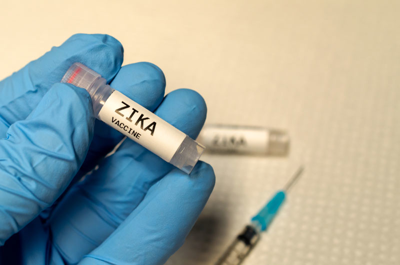
Multiple research teams are in the race to develop a vaccine that treats and protects against the virus, which has made its way into a total of 75 countries and territories, including the United States. At press time, Centers for Disease Control and Prevention reports 4,866 cases in the United States. The U.S. Zika Pregnancy Registry counts 1,292 pregnant women with lab evidence of a Zika infection in the same area — both numbers are higher when U.S. territories are included.
One such team works under Dr. James Crowe at Vanderbilt University’s Vaccine Center. Over the past two decades, Crowe and his associates refined a process for producing substantial quantities of the antibodies that the human immune system manufactures to fight off an infection. This makes it possible to rapidly test antibodies produced in a person who recovered from a viral infection without the aid of a vaccine, and determine which ones are the most effective at neutralizing the virus.
“We’re getting better and faster every time we go through this drill,” Crowe tells the Scene. “It used to take us about five or 10 years when I started, and when we did chikungunya and Ebola, it took us nine months to a year. This recent Zika work took several months. We want to push the time frame down to several weeks, so that as soon as we know an outbreak’s occurring in the world, about a month later we would have the drug candidates that could be developed for clinical trial — that’s the goal. I don’t imagine we can get it shorter than a month, that’s sort of a hard limit.”
In a paper published Dec. 15, 2016 in Nature, Crowe’s team presented results of a study funded by the National Institute of Allergy and Infectious Diseases, which they conducted in conjunction with Washington University in St. Louis and Philadelphia biotech firm Integral Molecular. They tested numerous antibodies produced using blood samples from three people who’d recovered from Zika. One antibody, named ZIKV-117, proved effective at neutralizing all the known strains of Zika — African strains as well as Asian strains, like the one that broke out in Brazil.
Even more exciting: ZIKV-117 appeared effective at treating active infections in mice, as well as limiting transmission of the virus from mother to fetus. In pregnant mice who received an injection of ZIKV-117 — before or after being infected with Zika — the placenta and fetal brain were found to contain significantly smaller amounts of the virus compared to mice that did not receive the antibody. Those results corresponded with higher fetal weight and less damage to the placenta.
The group has licensed the most promising antibodies from the study to Miami-headquartered Ridgeback Biotherapeutics, and preparations for human clinical trials are underway. While Crowe is optimistic, he’s also cautious.
“You face a cost of $5-10 million to get to the first 20 people, just to see if it’s safe,” says Crowe. “We have a candidate drug, but we don’t have a drug we know is safe, and we don’t know that it would work in humans until we test it. [There’s] a lot of work and money between where we are now and having a licensed drug.”
While work on Zika and other pathogens continues, Crowe’s lab also participates in a program that looks at disease on a vastly larger scale. Operating under the nonprofit Human Vaccines Project, The Human Immunome Project’s goal is to compile a definitive “parts list” of the immune system through careful study of the human genome. Fully understanding the genetics behind what makes some persons’ bodies able to fight off viral or bacterial infections on their own can lead to dramatically faster and safer development of medicines and vaccines. But there is a lot of data to crunch.
“We’ve laid out a 10-year attack plan to do this, but the problem is we don’t know how big a person’s immune system really is,” says Crowe. “To make an antibody, you have about 10,000 individual [gene] combinations that you can use, and you can stitch those together in about 10-to-the-11th different configurations. And then, in the antibody genes, you can mutate each of those 10-to-the-11th [configurations] at any position. There’s 350 positions, so theoretically you could have almost an infinite number of antibodies. But we suspect that people don’t make an infinite number, because some of those antibodies would bind your brain or your heart, and you don’t allow those.”
The sooner this research progresses, the better chances doctors have to quickly respond to and suppress outbreaks of any infectious disease.
“We knew something like Zika could happen, because dengue is a very related virus and dengue already infects 400 million people a year in the world,” Crowe says. “There are other viruses in that family, that are called ‘flaviviruses,’ that are percolating out there. You could just guess, if dengue can do it, and now Zika can do it, one of the sister viruses probably could do it. It just hasn’t done it yet.”



