




Blame it on the movies — on the rags-to-riches, dreamy stories seen on the silver screen. Screenwriters make it seem simple: Just catch a break or work hard enough and all your dreams could come true. But busting out of a cycle of poverty isn't that easy. In Tennessee, approximately 1 in 10 families struggles making $9 a day or less, according to the National Center for Children in Poverty, a nonpartisan public policy research center at Columbia University. Although sometimes invisible to the community's collective vision, homeless families and families in deep poverty make up 13 percent of Tennessee families.
Three Nashville families met with the Scene to discuss their struggles with homelessness and poverty. Their hope is that living poor will not be their children's destiny, that they can raise their kids out of cyclical poverty.

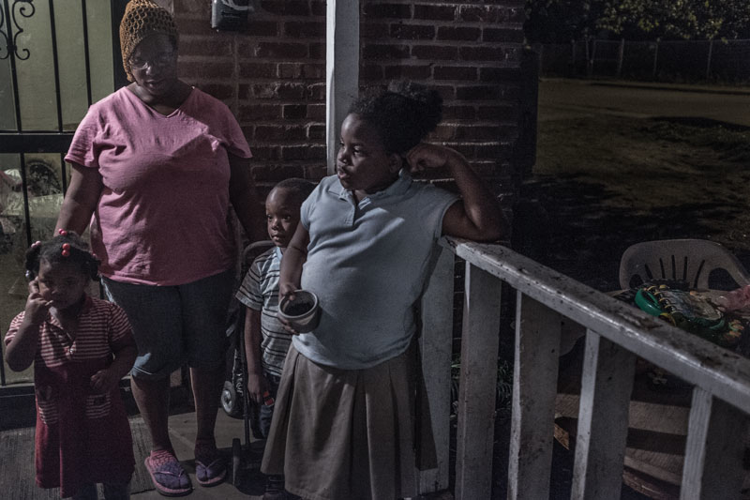
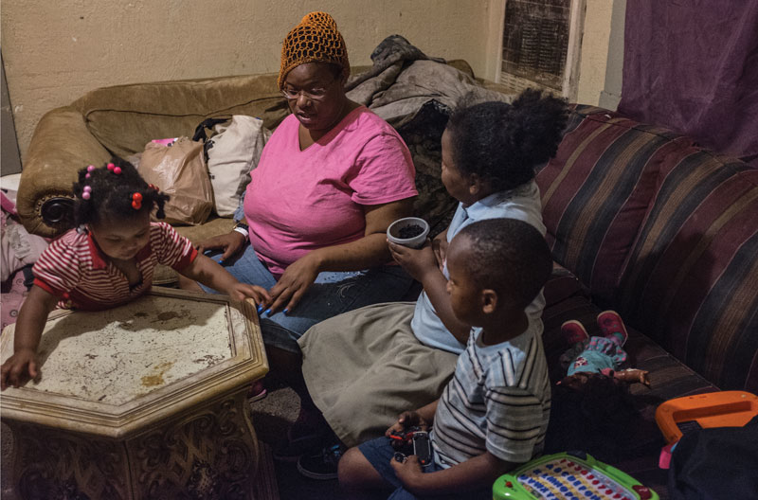
From left: JaNayia, Tracey, Joshua and Gabby
Family 1: Tracey and her kids Gabby (8), Joshua (5) and JaNayia (2)
Tracey and her three small children stood in line with other homeless or low-income Nashvillians waiting for dinner under the Jefferson Street Bridge. She was awaiting a wristband so members of Under the Bridge ministry would serve her a plate of food during the church service. The ministry team also provides take-home groceries to people — if they stay for church, of course — and sometimes gives out toiletries and clothes.
Over the past few years, Tracey and her kids Gabby, Joshua and JaNayia have stayed on and off at the Nashville Rescue Mission's campus for women. Tracey has lived on family members' couches, slept outside and spent some time in jail. Right now, she's staying in one unit of a dilapidated triplex with the father of her youngest child. But that never lasts long, she says.
"It's been on and off, and it's my youngest child's dad. I catch hell living here, and then sometimes he just boots me out, but I'm trying to just pray that I get my own place." She pushes her wire-framed glasses up the bridge of her nose. "Sometimes I can't even understand why I'm in this position. I question why is my life is the way it is — I'm 30 years old, I'm supposed to have something in this world."
Tracey's only financial support comes in the form of food stamps — because she has three children, she receives just over $700 a month in assistance. She has no other income.
"As soon as I don't have nothing to give, I'm out," Tracey says. "I've always known I wanted to be a mother — I thought I could provide more for mine than what was done for me."
Tracey attended White's Creek High School, but she dropped out and ran away from foster care at 17.
A former crack cocaine user, Tracey says she has been sober six years. Mental health issues have kept her from working, and her criminal record from her years abusing drugs keeps her from finding help in the form of public housing. If she did find work, she'd have nobody to watch her two youngest children. Occasionally, she gets a helping hand from her child's godmother Martha, who drives her to places like Under the Bridge or offers her parenting advice.
At a Tuesday night service, with the sounds of cement trucks and cars passing on the bridge above, Tracey lugged 2-year-old JaNayia on her right hip and a beige tote bag on her left. It was sticky hot outside, and JaNayia was out cold, snoozing through the come-to-Jesus-style service. They were there because Tracey's food stamps had run out, and she wouldn't get more until May 11.
Tracey recalled her childhood — her grandmother mostly raised her while her parents abused drugs and drank heavily. At 13, she began a journey from foster home to foster home — she says she felt safe living in only one of the homes. She says she wonders if her kids will end up just like her.
"I had a rough childhood, been in foster care in state's custody, dealing with and living with different family members," Tracey says. "I was sexually abused, physically abused. It was chaotic. At least I know I'm providing more than that."

JaNayia is held by her godmother Martha at the church service


Staci
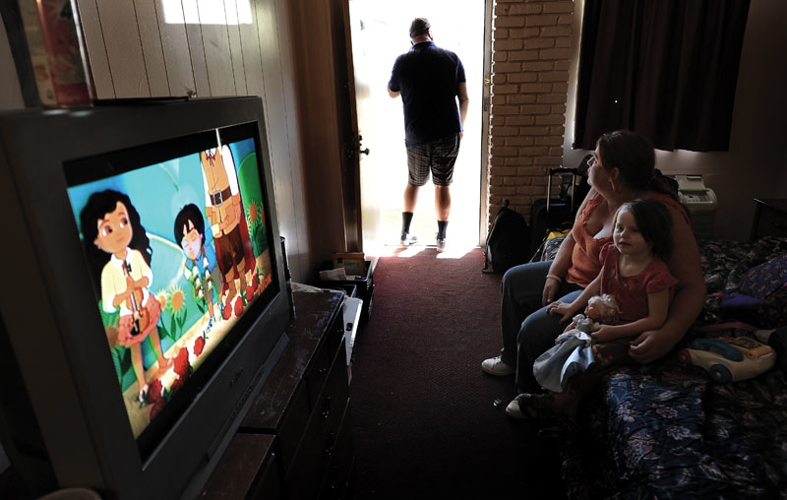
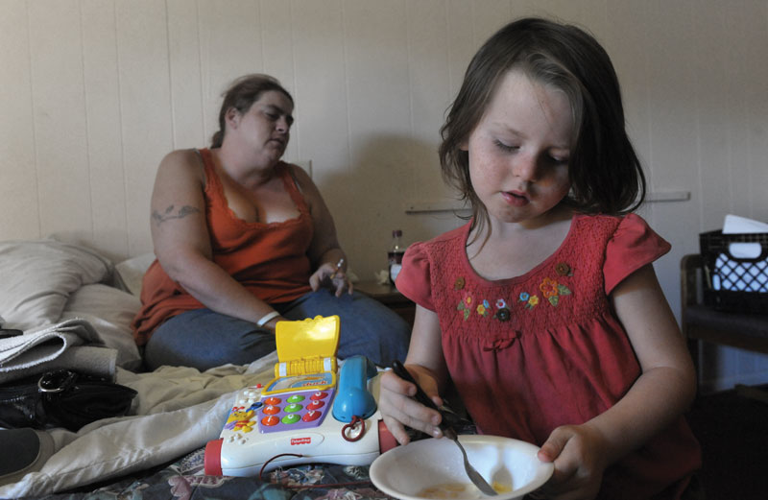
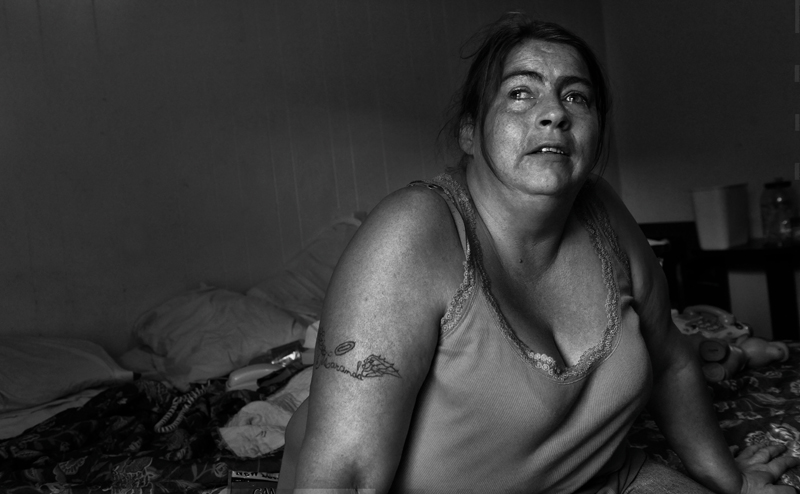
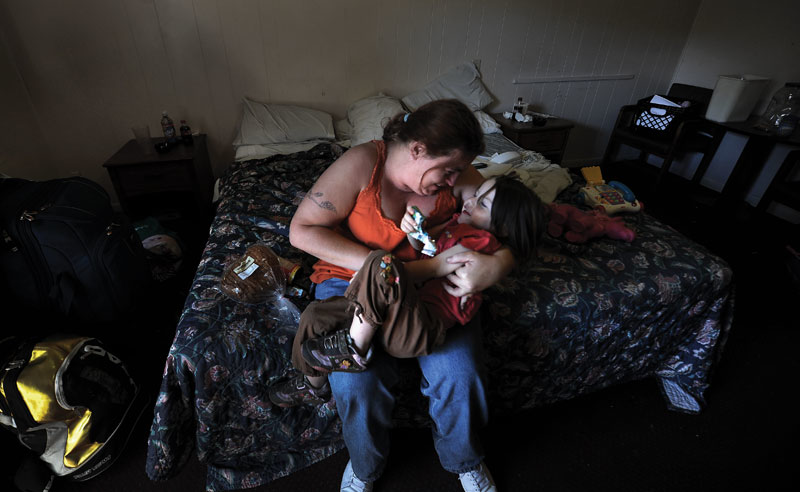
Family 2: Staci and her daughter Maranda (4)
Many families in deep poverty stay at nightly rate motels to keep off the streets, and the cost can become overwhelming. For Staci, a single mother raising her 4-year-old daughter Maranda, the $50-a-night rent cost had become unbearable. Fifty dollars might not seem like a lot, but multiplied by 30 days, it becomes $1,500 — a pretty hefty monthly cost with no income.
On a night in late March, Staci and Maranda were about to be kicked out of Madison Square Inn if they couldn't come up with the cash. Staci paced the small motel room in tears, sitting down to breathe when she became too stunned by the thought of what might happen to Maranda if they had to live outside.
"I just really don't know what I'll do," she told outreach workers.
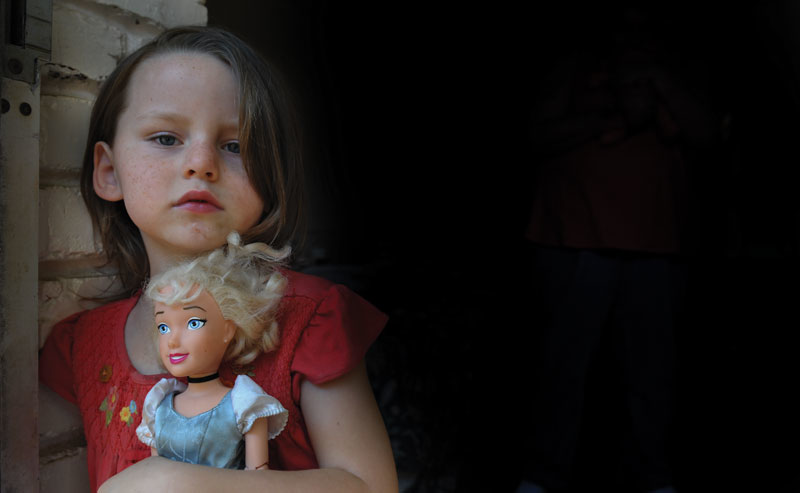
Staci had been working a manufacturing job before she was laid off, she says. She was worried that her daughter would "notice how upset" she was and become upset herself. Maranda seemed unaffected, playing with a bright-eyed Cinderella doll just feet away from her distraught mother.
By the end of the fraught day, an outreach worker scrounged up enough cash to keep the family indoors for the night. Staci tickled Maranda until they both fell into a fit of giggles, and the single mother seemed immediately relieved, but the next 24 hours loomed ahead.
Maranda


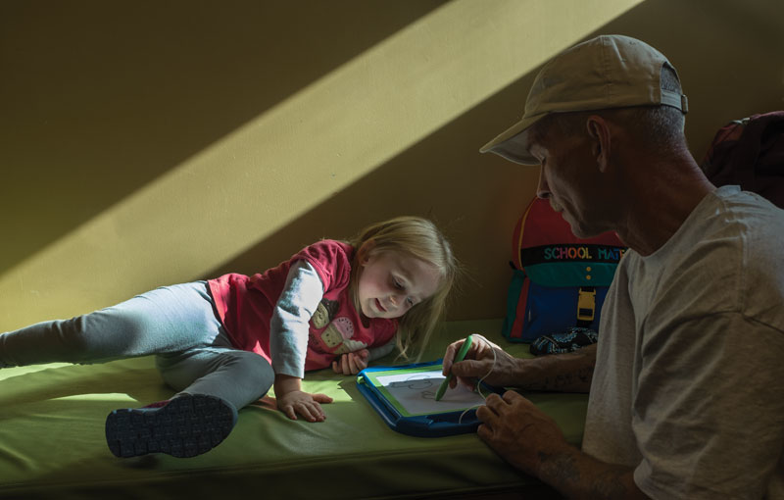
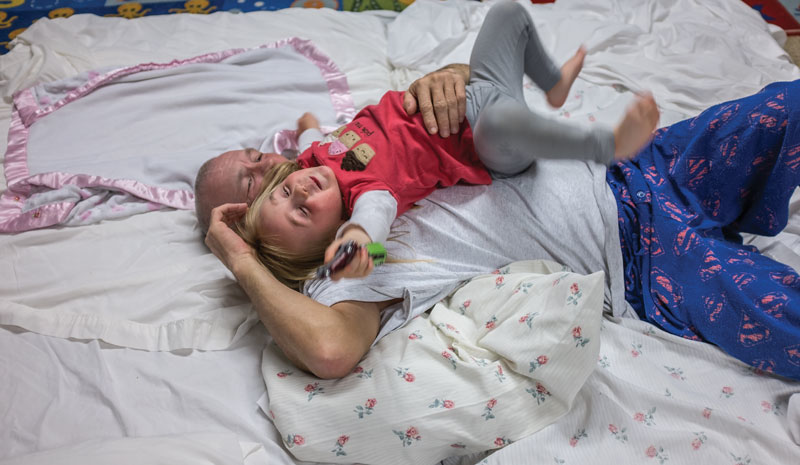
Family 3: Tammy, Chris and their daughter Destiny (4)
When Chris lost his job as a carpenter, he never thought his family would end up homeless, sleeping in different churches scattered across Nashville. He and his wife Tammy had owned a home, but got behind on payments and eventually lost the property.
That was more than a year ago.
Through Room In The Inn, one of the city's few options for families experiencing homelessness, Chris, Tammy and their daughter Destiny were able, at the very least, to stay together. Sleeping at the Nashville Rescue Mission isn't an option for their family — women and the kids go to one campus, and men must go to another. Splitting the family up just wasn't something Chris and Tammy were willing to do.
On mattresses laid out on the floor, the family spent the night together, but not alone. Chris, Tammy and Destiny shared a room in a church with three other families, stacking their few belongings into a small space and treading carefully as not to disturb the other struggling families.
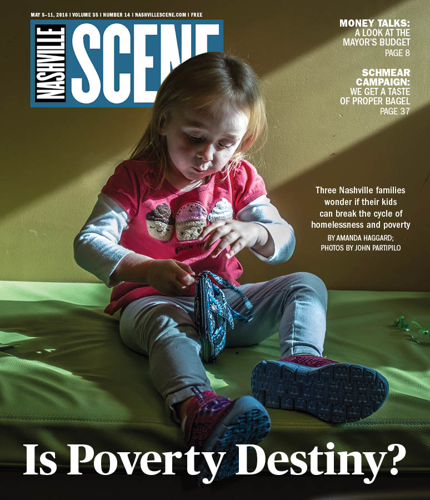
Tammy has since found a job working part time at Kroger, but Chris' luck has been harder. Their main concern is still Destiny, a playful 4-year old content to sit with her toys, forgetting the adults moving about the room. Her future is everything, but is poverty her destiny?

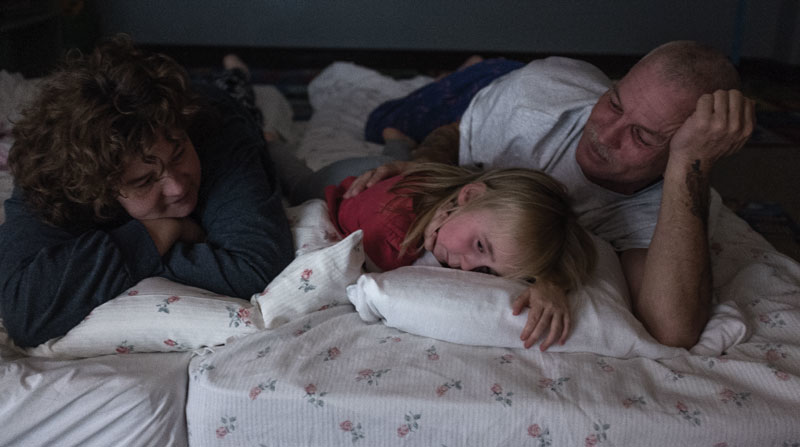
From left: Tammy, Destiny and Chris
Email editor@nashvillescene.com

Destiny