


If Oscar Micheaux had somehow survived till the summer of 2015 — let alone to this weekend's ninth International Black Film Festival of Nashville, taking place at Meharry Medical College — he might truly have felt like celebrating. The most prolific black cinematic figure of his (and arguably any) generation, Micheaux crafted more than 44 films covering every conceivable genre, while viewing his work as a testament to the struggle of blacks for justice and dignity. When he died in 1951, however, few beyond hardcore film devotees even noticed.
Fortunately, in subsequent decades, books and productions such as Bayer C. Mack's thorough documentary Oscar Micheaux: The Czar of Black Hollywood have helped bring him to light. Though Micheaux's movies were made long before chronicling commercial success became a vital part of the industry, he would no doubt have been proud and pleased to see projects featuring black actors and filmmakers top the box office for five consecutive weeks.
"It is only by presenting those portions of the race portrayed in my pictures in the light and background of their true state, that we can raise our people to greater heights," Micheaux said early in his career. That statement still resonates for African-Americans working in all the arts, especially film.
It's also a key reason why events like this weekend's International Black Film Festival of Nashville remain critical. Only those totally disillusioned with the nation's ongoing struggles for social justice would claim nothing has changed since the days Micheaux cajoled and pestered exhibitors across the country to show his films. At the same time, the industry remains predominantly white in terms of composition as well as outlook, and its preoccupation with the bottom line and youthful demographics always trumps everything else.
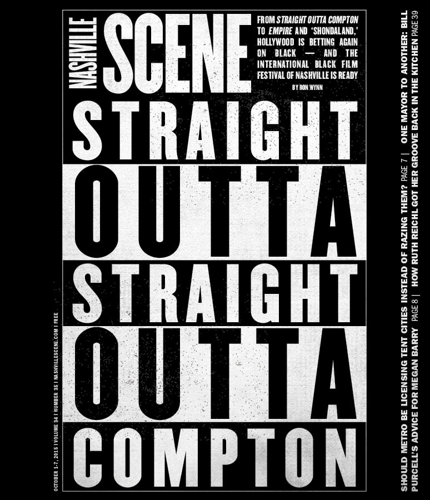
Those very concerns, however, may be opening new doors to black talents. When everything from a biopic on '90s gangsta-rap pioneers N.W.A. (Straight Outta Compton) to full-fledged cinematic evangelism fronted by novice black actors (War Room) draws overflow audiences, and black reboots of white-cast properties such as The Equalizer or The Magnificent Seven are routinely greenlit, it's clear there's renewed interest in black fare — and that it's crossing over to other audiences.
Whether things are at the same sort of peak as the height of the mid-'70s blaxploitation era can be debated. But as someone who virtually lived at the movies during that period, I don't recall many white fans watching Black Caesar or Shaft in the numbers that attended the Indianapolis cinema where I saw Dope or The Perfect Guy this year.
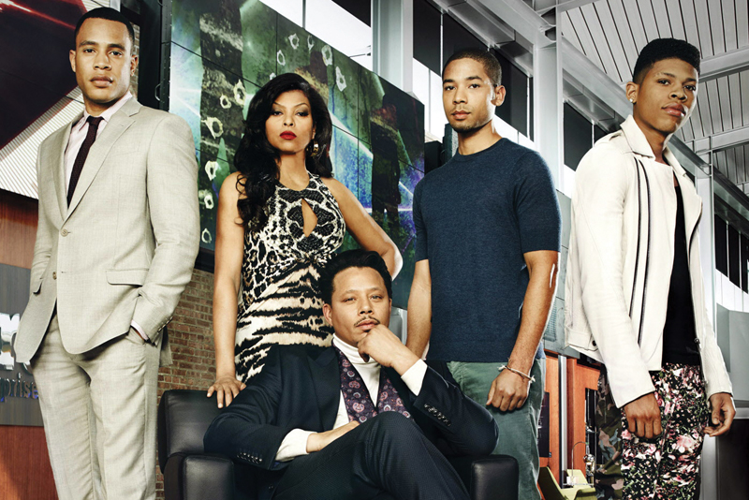
On TV, that has translated into hits such as Fox's Empire, ABC's Black-ish and its smash Thursday-night "Shondaland" lineup, given over to show runner Shonda Rhimes — shows whose popularity, not coincidentally, has triggered equal amounts of controversy. Yet few are ready to say the Promised Land has arrived. Indeed, the task faced by IBFFN and other festivals is figuring out what all this means.
IBFFN founder Hazel Joyner-Smith says these developments make it even more clear why the festival is important.
"There were and have been times over the years when I might look around and wonder why are we doing this," Joyner-Smith tells the Scene. "But now, I see clearly that we have had an impact. It has helped immeasurably in how our stories are being told. We're showing that we have a critical voice, one that is diverse and not monolithic.
"It has been our privilege and pleasure to bring to Nashville films and people that otherwise might not have had the opportunity to share their message, and to let people know the kinds of stories that we are capable of telling."
As for the ballooning recent success of films and TV shows with African-American casts and creators, Joyner-Smith says she's not surprised that it's happening. She's only surprised it has taken this long.
"What's happening today," Joyner-Smith says, "is we are having our faith confirmed that not only are there incredibly talented people around locally and nationally with great things to say, but that there's an audience out there that is willing to listen and hear what they have to say — indeed, is anxious to see it."
That said, not everyone's ready to label 2015 a boom year for black film. Gil Robertson, founder and president of the American American Film Critics Association — of which, full disclosure, I am also a member — has reservations regarding not only the current surge, but the state of things overall.
"This year has so far been OK, but not exceptional," Robertson says. "However, the last few years overall have been exceptional for the art form. The industry needs to demonstrate a consistent commitment to supporting black filmmakers who demonstrate the talent to tell great stories."
While lamenting that the industry places greater demands on black filmmakers to prove themselves, the veteran Atlanta-based critic said the filmmakers must be ready to meet the challenge.
"Black filmmakers must avoid cutting corners and be committed to doing the work and investment that's involved in making a film," Robertson says. "In spite of intense pressures, black filmmakers also need to maintain a positive attitude and remain focused on their goals for their projects."
Like others concerned with what they see as the narrow focus of much pop entertainment aimed at black audiences, Robertson urges more thematic diversity in black projects, saying his wish for the future is "a greater range of stories. Everything can't be Straight Outta Compton or Empire. Our community deserves projects that reflect the full range of our experiences."
He admits that on that front, the industry is less than encouraging. There was the snub of Selma director Ava DuVernay for a Best Director Oscar nomination, though the movie was up for Best Picture. Then came the flap over the news unearthed in the Sony hacking debacle that Idris Elba might be under consideration to play James Bond. The resulting backlash carried an ugly racial sting, with even former Bond Roger Moore tripping over his rhetoric at the prospect of a black man asking for his martini "shaken, not stirred."
Still, the fact that 12 Years a Slave and its co-star Lupita Nyong'o took recent Oscars — and that biopics are in the works for figures as disparate as Nat Turner, Miles Davis and Paul Robeson — indicates that more opportunities may be coming. Former Nashvillian Dee Rees was nominated for an Emmy last month for directing Queen Latifah's Bessie Smith biopic Bessie for HBO. That she ultimately didn't win was less important than the chance to work on award-caliber material — a concern Viola Davis echoed in her acceptance speech for her role on Rhimes' How to Get Away with Murder.
"This is a great time for black film projects from the standpoint that technological advances have lowered the cost of making films, and there are more options available today," says Nashville actor-filmmaker William Jenkins. "With digital technology available and the growing importance of the Internet, filmmakers can utilize a much wider range of choices and not be quite as reliant or dependent on money to make projects."
Jenkins has seen those options firsthand as a co-producer of "Brother's Keeper," a short directed by Nashville filmmaker Robert L. Poole. The production co-stars Marc John Jefferies, Brandon Hirsch and Kyle J. Williams and made its national television debut on the black-owned network Aspire Sept. 14. Now it can be viewed online at Jenkins' Facebook page, as social media gives self-producing black talents another potent means of spreading the word.
In addition, more previously online-only projects are finding their way onto cable, with Issa Rae's Awkward Black Woman series recently getting picked by HBO in a deal that has numerous other black filmmakers, writers and producers polishing their scripts and properties.
"The biggest challenge in the future for black cinema concerns training and preparation," Jenkins says. "The content in some ways hasn't kept up with the technology. We need more experienced people who in turn can mentor others who are interested in becoming filmmakers, writers, actors, directors, producers, even stage hands and technicians. We're still developing the support industry that is essential to keep what's happening going."
In this area, festivals like IBFFN, with its array of seminars and symposiums, is even more important. These events bring personalities and celebrities as well as key behind-the-scenes people to cities like Nashville, where both fans and aspiring performers can mingle and learn from their experiences. (See the listings here for visiting actors, filmmakers and industry professionals.)
"There is a lot of talent here in Nashville, so much so that when we started we really weren't aware how much is here," Joyner-Smith says. "But what's also really needed now is determination from those in power at the top that they want to put the same emphasis on making Nashville a great city where the arts are concerned, and that they are willing to share access to power and make room at the table for everyone. Our festival shows every year that the talent is there, and that people want to work and are willing to do what's necessary."



Post a comment as anonymous
Report
Watch this discussion.
(0) comments
Welcome to the discussion.
Log In
Welcome to the discussion.
Keep it clean. Please avoid obscene, vulgar, lewd, racist or otherwise abusive language. Comments featuring hate speech or threatening or violent content will not be tolerated.
PLEASE TURN OFF YOUR CAPS LOCK.
Be truthful. Don't knowingly lie or mislead.
Be proactive. Use the “report” link on any comment that violates our comment policy.
Share with us. We'd love to hear your feedback.