
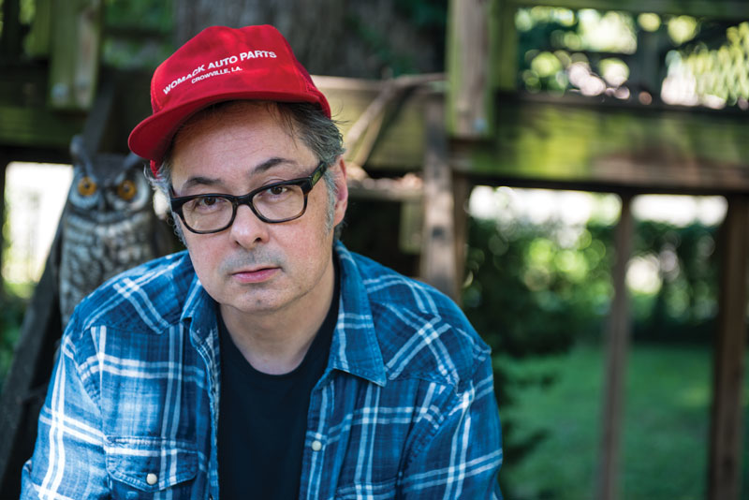



From the outside, singer-songwriter Kevin Gordon's house in East Nashville is a modest affair, no different really from the other white-shingle bungalows in his working-class neighborhood. On the inside, however, the house is overflowing with art: paintings, sculptures and quilts created by self-taught Southern artists whose powerful imaginations compensate for their lack of training.
On one wall hangs Mary T. Smith's black and blocky portrait of Christ on corrugated tin. Joe Light's painting of an orange-and-black seal flying over a dark-red desert hangs on another. Purvis Young's wavy-lined depiction of a prison chain gang, painted on discarded wall panel, is across the room.
The art is there for several reasons. The most basic is the sheer beauty of the work, the way it reflects subjects from our own world and transforms them into images from another, better world, as yet unrealized anywhere but in our minds — daring us to consider the gulf between those two spheres. That beauty is evidence enough that one can work outside academia, outside the world of art galleries and museums, outside the mainstream music industry, and still create art of real value. One might even turn one's back on a master's degree in creative writing from the University of Iowa Writers' Workshop, as Gordon did, to become an Americana singer-songwriter.
There's another reason for all the art in Gordon's home. He doesn't make enough money from his music to support his wife and two kids, so he needs a second job. Running an outsider-art gallery sure beats working as one of Tennessee's oldest baristas. But it says something disheartening about our culture that one of America's best songwriters is still scrambling to pay the bills.
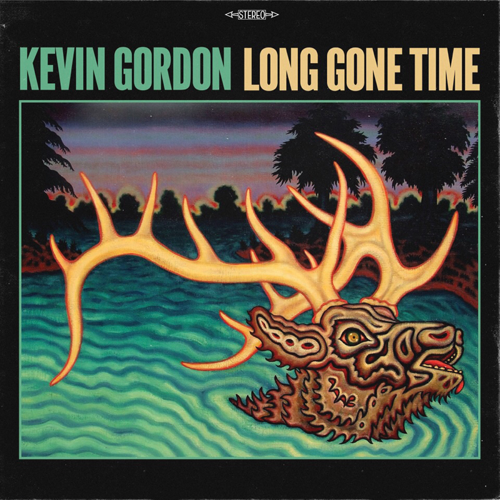
And Gordon, now 51, definitely deserves that title. His brand-new album, Long Gone Time, is a masterful example of how to put stories to music. The songwriter doesn't have the prose writer's luxury of descriptive catalogs; the lyricist has to find the few telling images that can evoke a time and place and introduce the tale's leading characters. This Gordon does with rare vividness and economy. The songwriter then has to allow his opposing forces to collide and ricochet where they will, resisting the all-too-human temptation to impose a happy or exciting ending. This too Gordon does better than almost anyone.
When he was working on his best-known song, "Colfax/Step in Time," for example, the confrontation between his African-American junior-high band director and the Louisiana Ku Klux Klan seemed to beg for "something dramatic, something Hollywood to happen at the end," Gordon admits, "but that wouldn't be true to what actually happened." What did happen was that the music teacher kept leading his students right down the street "like there was somewhere better he was going, but this was the only goddamned way to get there."
"The subtlety of that reaction," Gordon now says, "is what made it so great and so interesting and ambiguous."
I'm not the only one who believes Gordon is one of our top songwriters. "We'll empty your spit-valve for life if you find us anything more stunning than 'Colfax,' " wrote The Tennessean's Peter Cooper, "an undeniably superb song that could only have come from one mind, and from one person's experience." Gordon's songs, Buddy Miller has said, "remind me of why I love music. I get transported to a beautiful, strange, familiar place."
"Think of John Lee Hooker tied to the hard, imagistic poetry of William Carlos Williams," music historian and critic Peter Guralnick has said, "and you get a little bit of the picture." Gordon's songs have been recorded by Lucinda Williams, Keith Richards, Levon Helm, Irma Thomas and, on the fine forthcoming album The Cardinal, by Julie Christensen's Nashville band Stone Cupid.
But as the saying goes, a good review and four dollars will get you a frappuccino at Starbucks. Pursuing a music career has been an ongoing struggle for Gordon, who has never been on a major label and has released his three latest albums on his own Crowville label. When our most recent interview began, he apologized for sounding distracted. He had been packaging and addressing CDs for the fans who contributed to the crowd-sourced funding for Long Gone Time.
"This reminds me that 'music business' is two words," he says, "and I've been spending a lot of time on the one that has nothing to do with music."
That struggle is nothing new. Once we settle down to talk, Gordon adds, "There was a period there when I was held at bay more than once by my wife's family about my career and supporting my family. One time they were here over the holidays, and I had just flown back from a gig opening for Southside Johnny in Red Bank, N.J., on New Year's Eve. I had a big check in my pocket and was feeling pretty good. But I still had to face a dinner-table inquisition: 'How much longer are you going to be doing this?'
"I felt like I didn't have a choice. I had had enough success that I felt I had to keep going. I wrote a letter to my father-in-law and likened my songwriting to a religious calling; it's a compulsion that's beyond choice. After that, things got calmer. They had always been supportive of the music, but they were concerned about their daughter's welfare, and as a parent now, I totally get that."
That's one more reason all that outsider art is crammed inside Gordon's house. Almost all these artists worked for years in poverty and obscurity before they were discovered by collectors such as Gordon. But they kept painting, sculpting and quilting nonetheless. Many have described it as a sensation that something is inside that needs to come out. When Gordon has a similar impulse, all he has to do is look at his walls to find examples of great artists who followed that feeling.
Some outsider-art enthusiasts view the creators as quaint eccentrics or lovable crackpots. Not Gordon. He views them as colleagues. If they could do it, why not he?
"Mary T. Smith didn't start painting Jesus because she thought she could make a couple of bucks from folks passing by on the highway," he argues. "She did it as a kind of declaration of herself. It was like a fierce habit. I've always seen that as a kind of positive example. Brownie Ford the same way; he didn't see much attention till he was an old man and played the Smithsonian Folk Festival on the Washington Mall. That kind of authenticity means more and more to me with the passing of time."
Brownie Ford was a real-life Louisiana cowboy — half-Comanche, half-Anglo — who made his own bridles and cinches and was a noted storyteller and balladeer. Like Lead Belly and Mance Lipscomb, Ford was a songster, a rural musician who knew songs in every style, from blues to Tin Pan Alley, from hillbilly to children's songs. He released only one album, 1990's Stories From Mountains, Swamps and Honky-Tonks, but he used to perform occasionally in northern Louisiana where he and Gordon resided. The two men only met once, also in 1990 at Enoch's Cafe in Monroe, La., when Ford was 86 and Gordon was 26.
"He wasn't much of a singer by that time," Gordon admits, "and he didn't play that much guitar. What mattered was the force of his personality. He's a great storyteller. He carried a lot of history with him. He was one of the last guys from the generation between my great-grandparents and my grandparents, one of those people who didn't own the land they worked.
"He was an example of the music being an extension of the life being lived. He was a marker for me in terms of character, in terms of being distrustful of the music business. When I told him I was moving to Nashville, he said, 'Those people up there don't know what the fuck they're doing. Don't let them mess with what you're doing.' "
Ford makes two appearances on Gordon's new album. "Goodnight Brownie Ford" is a snapshot of that evening at Enoch's Cafe, describing how the inhalation of his cigarette lit up the "map of scars" on Ford's face below a "straw Stetson brim." And the eyes set deep in that face stared into those of a 20-something kid as if to dare the latter to stick at it as long as the old cowboy had. On "Letter to Shreveport," Gordon lists the things that keep drawing him back to Louisiana long after he thought he had left it behind: "coffee in a tin percolator, drop biscuits on the stove, Johnny Horton on the radio" and "talking to Brownie Ford."
Gordon introduced several of the songs on Long Gone Time at the Broken Spoke Dance Hall in Austin in March. Performing alone in a blue-plaid snap-button shirt, Buddy Holly black-frame glasses and his salt-and-pepper hair combed straight back, Gordon was able to conjure up a different corner of Louisiana in each one.
"GTO," for example, was a revved-up rockabilly car song about a man with a plastic pocket-protector on his shirt driving a muscle car "quiet as a switchblade knife." When the car is stolen and dragged from a lake, the sheriff proclaims, "Two black boys done it and we got 'em in the jail," but the young boy narrating the song says, "I never knew why it mattered they were black. The GTO was gone; it wasn't ever coming back." In the next song, a midtempo hillbilly number, an old white farmer, forced to move into a rough section of Shreveport, keeps a "Shotgun by the Door," for fear of what might come busting through it from the siren-filled streets.
"In those songs," Gordon says, "I was trying to get at that racial thing that I heard all the time I was growing up — and I still hear sometimes today. Not only was the car stolen, but it was important that everyone know the race of the people who stole it. That just struck me as strange. It still does. It's hard to write about race. I can't do it if I'm thinking about it consciously. That's why having those stories are so important, because they give you a way into the issue without writing a lot of platitudes."
Most of the songs on Long Gone Time are set in Louisiana, where Gordon lived till he went away to grad school at age 23 in 1987. In a sense, the album is an extended investigation of the conundrum that the South presents for American society. On the one hand, the region boasts the best music, the best food, the best outsider art. On the other hand, it also contains the nation's worst politics, worst schools, worst infrastructure and worst poverty. Can one disentangle the positives from the negatives — or are they too tightly knotted together?
"I'm not sure all the contradictions can be reconciled," Gordon concedes. "It's the beautiful mess that it is. It's things like that keep me asking questions about the place. How Bobby Jindal can be elected governor amazes me. A lot of people get all their news from one source and don't realize they're getting played. At the same time, Mary T. Smith and Brownie Ford represent the South as much as Bobby Jindal."
The linchpin song for this new album, Gordon says, is "Walking on the Levee," inspired by a visit to his old hometown of Monroe, La. On the vinyl version, the album is divided into two discs, the first devoted to acoustic swamp-country songs, the second to electrified swamp-blues. This song kicks off the first.
"I had played a house concert the night before," he recalls, "and I went out for a run on the levee on the Ouachita River that separates Monroe from West Monroe. The backside of the levee, closer to the water, is where a lot of things happened in high school. My friend Karen's father had a houseboat, and she and I had a romantic encounter there. Years later she was struck and killed by lightning. When I was out running, I passed the old pump station where someone had spray-painted some graffiti: 'Did you ever have a dream you're sure was real?'"
Over an unresolved acoustic-guitar arpeggio that resembles one of Richard Thompson's Anglo-Sufi licks, Gordon describes himself running "a little farther, past the part I know." He describes the passing scenery in imagery reminiscent of James Wright, a favorite poet: "wasp on the grass, a floating red thorn ... the sound of dogs barking at a man." He keeps running past the old houseboat dock and the pump station and soon Karen's ghost is striding beside him. "I grew up down the road, it's been 40 years," he sings. "Walking on the levee now, I'm a stranger here."
"That sense of being an outsider in the place you grew up," he explains, "is a great place to be when you're writing. When I'm playing at Enoch's, which I still do three or four times a year, I'll try to get there early and sit at the bar so I can listen to people talk as they get off work and drink while they're watching the TV news. Most people don't know who I am, so I hear a lot of things. It's that gap between familiarity and outsiderness that produces the best songs."
Gordon wrote poetry before he wrote songs. After his parents split up, his mom married Kevin's ninth-grade English teacher, who taught right across the hall from her. The new stepdad was a great instructor, Kevin now says, and inspired him to try to give shape to his sloppy adolescent feelings in verse. Soon after, Kevin's girlfriend's mother bought him a plastic-body guitar from a thrift shop. He was soon teaching himself the chords from X's Wild Gift and Freddie King's Let's Hide Away and Dance Away.
When he attended Northeast Louisiana University (now known as the University of Louisiana at Monroe), he joined several bands, including Fragment 36, named after a work by the poet H.D. These bands were imitating X, with Gordon as lead singer and lyricist. When poet Jorie Graham, soon to be a Pulitzer Prize winner, was writer-in-residence at Gordon's school, she encouraged him to apply to the Iowa Writer's Workshop where she taught. He soon found himself leading a double life: poetry grad student by day and roots-rocker by night, playing in a band led by Bo Ramsey, the Iowa legend best known for being Greg Brown's guitarist/producer.
"Bo was a great mentor to me when I really needed one," Gordon says. "That's another person who changed me just by being who he was. At times it was incredibly awkward. Dedicating a song to John Berryman in a tavern in the middle of nowhere at 1 in the morning. It was like living two different lives. I was in the workshop bubble during the week, then on the weekends, we'd go play, which reconnected me in a weird way with the South, playing live music for people who danced.
"That's when I started writing songs that more closely resemble what I'm doing now. The first song that I took to Bo and the band was about Eastern Iowa factory workers who would go across the river on Friday nights to Illinois, where the bars stayed open much later. Rivers were important to James Wright's poetry, and he influenced some of those early lyrics. The poems were so much freer, because I didn't have to rhyme on the second and fourth lines, and so were very different animals from the songs. With the music I'm more concerned with tradition — or, more accurately, a mess of traditions. Writing a song lyric and giving it a John Lee Hooker groove, that felt right to me."
When you get a master's from a creative writing program, there's really only one realistic career path: teaching. But Gordon didn't want to teach; the little he'd done of it had made him uncomfortable. He kept playing music in Iowa and decided to move to Nashville. He got a Music Row publishing deal, but he calls the experience of trying to write hits for country radio "the worst creative year of my life." He lost his deal and started writing songs with Nashville's Gwil Owen.
"That's when things started making sense," he says.
One can draw obvious parallels between Gordon's past two albums and Jason Isbell's. Their 2012/2013 albums (Gordon's Gloryland and Isbell's Southeastern) both received great press, thanks in large part to one unforgettable song (Gordon's "Colfax/Step in Time" and Isbell's "Elephant").
Their 2015 albums (Long Gone Time and Isbell's Something More Than Free) lack the one standout track, but they're more consistent overall and display a new songwriting maturity by being less autobiographical and more character-driven. These indelible characters may be male or female, black or white, but they are all Southern, and these songs provide perhaps our best portrait of the South at this juncture. But Gordon has yet to match Isbell's new-won visibility. And time is running out.
"As I've gotten older," he admits, "I'm at once more competent but a little more freaked out about mortality. That's why folk art is such a personal thing for me. People like Brownie or Mary T. are examples of well-lived lives in ways that maybe the mainstream culture will never understand, independent spirits who didn't give a damn what anybody thought, perhaps the middle-aged version of punk rock. I know that for a lot of people, outsider art is hard to get, but it's been such a positive influence on me and my work.
"If this stuff is so simple, why is it so hard to fake? If Mary T. Smith's work is so crude, as some people say, why can I spot a fake in five seconds? If that's true, what creates an artist's style? It's not me saying Mary T. is better than Picasso, it's just me saying that art history has been incredibly selective, shall we say, in what they include. All I'm saying is that the best of this stuff deserves to be included in the canon."
And so does Kevin Gordon's music.



Post a comment as anonymous
Report
Watch this discussion.
(0) comments
Welcome to the discussion.
Log In
Welcome to the discussion.
Keep it clean. Please avoid obscene, vulgar, lewd, racist or otherwise abusive language. Comments featuring hate speech or threatening or violent content will not be tolerated.
PLEASE TURN OFF YOUR CAPS LOCK.
Be truthful. Don't knowingly lie or mislead.
Be proactive. Use the “report” link on any comment that violates our comment policy.
Share with us. We'd love to hear your feedback.