
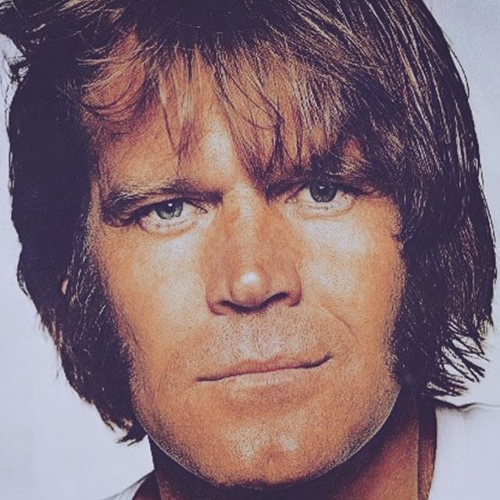
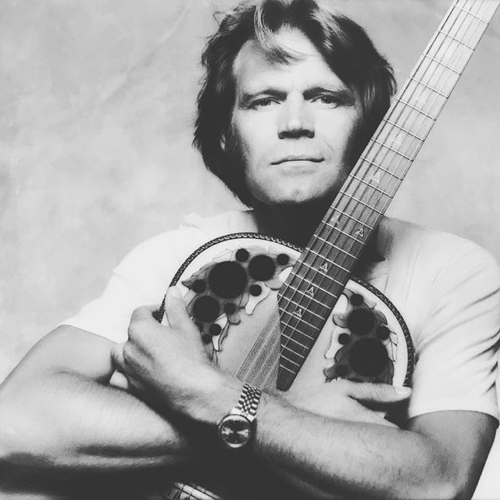

Glen Campbell, who died on Tuesday in Nashville at age 81, gained immense fame as an interpretive singer and gifted guitarist comfortable with virtually every kind of American music. Campbell’s rise in status during the 1960s from session ace to purveyor of some of that decade’s richest pop and country songs parallels the similar ambitions of Nashville’s country music industry, which had long sought the crossover success Campbell achieved with such ease.
Campbell’s 1967 recording of an innovative folk-country song, John Hartford’s “Gentle on My Mind,” is a watershed in the history of country music, and Campbell went on to record versions of three Jim Webb songs that helped define country as pop in an era that was dominated by rock. Campbell was a pure musician who recast the songs he covered in ways that emphasized their stylistic fluidity, but he was also a pop star whose reassuring presence on his late-’60s and early-’70s television show, The Glen Campbell Goodtime Hour, helped make country’s ultimate crossover seem preordained. In later years, Campbell overcame drug and alcohol problems and bravely responded to a 2011 diagnosis of Alzheimer’s by performing a series of remarkable shows that gave audiences a chance to see, one last time, a master at work.
Glen Travis Campbell was born on April 22, 1936, in Billstown, Ark., a community near the town of Delight, about 80 miles southwest of Little Rock. His father sharecropped cotton, and Campbell began playing guitar at an early age. By the time he was six, he was appearing on local radio shows. In 1950, Campbell moved to Albuquerque, N.M., where he played in a band led by his father's brother-in-law. In 1960, he relocated to Los Angeles, where he did a stint in a rock ‘n’ roll group, The Champs, which had charted two years earlier with the instrumental “Tequila.”
Although he couldn’t read music, Campbell became an in-demand session musician, playing on hit recordings by Frank Sinatra, The Byrds and The Beach Boys. He joined a circle of studio players that included bassist Carol Kaye, keyboardist Leon Russell and drummer Hal Blaine, who would later dub the informal group “The Wrecking Crew.” His work on The Byrds’ records helped define ’60s pop — Campbell stood on the ground floor of the folk-pop-rock edifice that Los Angeles and Nashville would later renovate.
Campbell also played on such Everly Brothers recordings as 1967's “Bowling Green,” a song that predicted the direction country would take in the wake of Campbell’s recording of Hartford’s “Gentle on My Mind.” In fact, “Gentle on My Mind” had been discovered by Chuck Glaser of Nashville country-folk trio The Glaser Brothers, who scooped up the song for their publishing company. Originally released in 1967, Campbell’s recording of “Gentle on My Mind” was reissued a year later to capitalize on the success of his renditions of Webb’s “By the Time I Get to Phoenix” and Chris Gantry’s “Dreams of the Everyday Housewife.”
Campbell’s version of “Gentle on My Mind” stands as a turning point in country’s history. It popularized Hartford’s tune, which dispensed with country’s three-chord approach in favor of something looser and more harmonically evolved. Like Webb and such tunesmiths as Gantry and Fred Neil, Hartford set the wistful tone of the late ’60s, during which country music and the notion of the purity of rural life came into conflict with the prevailing mood of a country at war with itself over the very idea of purity.
Campbell’s ’60s recordings show off his deep-toned guitar licks alongside his tenor vocals, which reveal country influence in their diction and phrasing. A stylistic chameleon, he cut what may be his greatest performance in his 1968 recording of Webb’s “Wichita Lineman.” A country vocal performance disguised as pop singing, “Wichita Lineman” is notable for the way Campbell employs subtle melisma on the word “still” in the song’s chorus.
Campbell battled drug and alcohol problems in the ’70s, and he endured public scrutiny of his tumultuous 1980 relationship with country singer Tanya Tucker. His versions of Allen Toussaint’s “Southern Nights,” Larry Weiss’ “Rhinestone Cowboy” and Dennis Lambert and Brian Potter’s “Country Boy (You Got Your Feet in L.A.)” defined mid-’70s country crossover. Like all of his best work, which includes his 1968 version of Webb’s “Galveston” and his 2011 Julian Raymond-produced collection Ghost on the Canvas, Campbell’s ’70s music combines pop and country aesthetics.
Such philosophical notions may seem unnecessary in the case of Campbell, whose artistic ambitions were linked to his commercial aspirations. Never mind, he’s a great artist, as I saw during the one Campbell show I caught. Playing Nashville’s Ryman Auditorium in January 2012, he performed heroically in the face of the Alzheimer’s he’d gone public with the year before. (The show was filmed for inclusion in director James Keach’s documentary film about the tour and Campbell’s struggles with Alzheimer’s, 2014's Glen Campbell: I’ll Be Me.) He missed some licks but nailed the rest, and he sang superbly. Watching the show, I realized that Campbell’s art exemplifies the freedom of expression that he’d found in popular music.
As Campbell told writer Gary James in 1999, musical categories were there to be discarded.
“I was ready when I was called to do something," Campbell said. "I could do it musically. I didn't limit my talent by pursuing one particular kind of music. I didn't limit it by pursuing jazz or pursuing country or pursuing pop. Music was my world before they started putting a label on it.”
Campbell released his final album, Adiós, earlier this year. Recorded in 2012 after his final tour, it opens with a version of Fred Neil’s “Everybody’s Talkin’.” He is survived by his wife, Kimberly, eight children and many grandchildren, great-grandchildren and great-great-grandchildren.



