

My dad's cigar-chomping friend Larry is obsessed with projecting masculinity. He's in his 60s but still packs his horsehair-cushion of a chest into revealing V-neck sweaters and brags about his bench press. He has a turgid interest in Harleys that would delight any Freudian analyst, and his idea of a compliment toward a woman — a "broad," I mean — would be, "Those real?"
Once I made the mistake of asking him why he doesn't drink riesling. Because it's for girls, he told me with a peremptory sneer, like I'd asked about a Luna bar or a Train album. I guess according to Larry, guys should stick to wines as dark and opaque as spent motor oil and leave the effervescent, the sleek — and most certainly the sweet — to the broads.
It's not just the macho who hear "riesling" and automatically think "sweet." It's this association that causes some drinkers of any gender to avoid the grape altogether and makes guys like Larry flee from it like it's a rainbow-colored feather boa.
This is where I am supposed to tell you that you've all been misled. Hoodwinked. Bamboozled. Rieslings aren't all sweet, I'm supposed to tell you. That's all true. Riesling is just another grape, and a grape is just another fruit that ripens. When its juice is fermented, alcohol goes up and sugar goes down. When fermentation is arrested before all the sugar is gone, you've got residual sugar, or RS — a sweet wine, in other words. When the wine is fermented until all the sugar is gone and the natural alcohol is as high as it can be, you've got a dry wine. Cabernet or malbec or riesling, this process is the same — there are no "sweet" or "dry" grapes.
If you think you don't like riesling because you don't like sweet, please — try a dry one. You'll likely experience a citrusy, chalky, aromatic zinger of a wine that will be great with seafood and dishes with strong vegetal components.
A dry riesling will disabuse you of the sweetness myth with haste and leave your mouth watering, if not downright puckered. This is because of riesling's high acid content, which is further elevated by the cool growing conditions in which the grape thrives. Dry rieslings from Anglophone countries are often identified as such; look for the word trocken on rieslings from the grape's German motherland. Wines from Alsace in eastern France often include a consumer-friendly sweetness index on the back label.
But if my argument in favor of riesling is that it isn't always sweet, am I not just tacitly apologizing for sweet riesling and feeding into the mistaken perception that dry is good and sweet is bad? I have seven bottles open in front of me at this very moment, and guess what: The ones that make me want to close my eyes in reverent reflection are the ones that leave my tongue coated with a silky sweetness that gives way to a crisp bite of acidity. These are not the ones that say "trocken" on the label in humorless Teutonic type, but the ones that have what my tasting group might call "perceptible RS" — the wines are sweet, but they finish with a finality that belies their sugar content.
Germany has a very specific system of categorization for riesling. The trocken (as well as half-dry halbtrocken, and slightly sweeter feinherb) wines can be made with grapes that have not fully ripened. To make this possible, the addition of sugar is allowed, whether it stays in the wine as sugar or becomes alcohol.
Kabinett wines are made from fully ripened grapes, and adding sugar is not allowed. These wines can be fermented to dryness, but often retain some sugar. Fully dry, the alcohol content tops out at about 12 percent; with sugar remaining in the wine, it can be as low as 7 percent. A Kabinett riesling with palate-pleasing sweetness and single-digit alcohol content is built for al fresco consumption in the sweaty Tennessee summer.
Spätlese grapes are harvested at least a week after Kabinett grapes, which allows for fuller ripeness but invites the possibility of some meteorological downturn to threaten the crop. Since Spätlese wines have more sugar to work with, they can be higher in both alcohol and RS than Kabinett wines. There are several levels of ripeness beyond Spätlese, but that's where we cross into dessert wine territory.
While many people believe winemakers employ sweetness merely to pull in novice drinkers or mask sloppy winemaking, sweetness in these wines represents care, patience and the merciful cooperation of nature. The resulting wines are supple and round, and even when they are undeniably sweet, boast balance, which is a must in any style of wine.
Lean and high-acid wines are popular right now, from stubbornly unoaked chardonnays to bone-dry rieslings. Having some acid is essential — without it, wines would be jelly-like and dull — but unchecked, it can be just as off-putting as runaway sweetness. One Austrian riesling we tried in a recent tasting was described as "almost painful" in the mouth, it was so buzzing with acid. Generous acidity is often pitched to potential drinkers as tempering the sweetness of a wine, but it's a two-way street: Acid doesn't just balance sweetness — sweetness balances acid, too.
With limited space and much to cover, I asked my tasting group what must be conveyed in a column about riesling, and the grape's versatility with food was the nearly unanimous response. I heard a story of riesling complementing a fatty ribeye and upstaging the hearty red wine that was the much more intuitive pairing.
Sweet rieslings shine with foods that other wines dare not approach, and I began to take them seriously when I had a Maximin Grunhauser with a dish of tapioca, sea urchin and an oozing egg yolk. They are also ideal with Thai and Indian food, and deserve a shot with anything spicy. Given the collective nationwide drool-a-thon over Nashville's humble native hot chicken, this is a town where riesling ... even sweet riesling ... especially sweet riesling ... should be celebrated, not shunned.
Wines:
Forge Cellars' Les Alliés; Finger Lakes, USA 2013; The Wine Shoppe at Green Hills, $29.99
Fermented dry, and with a hint of spice from time in neutral oak barrels.
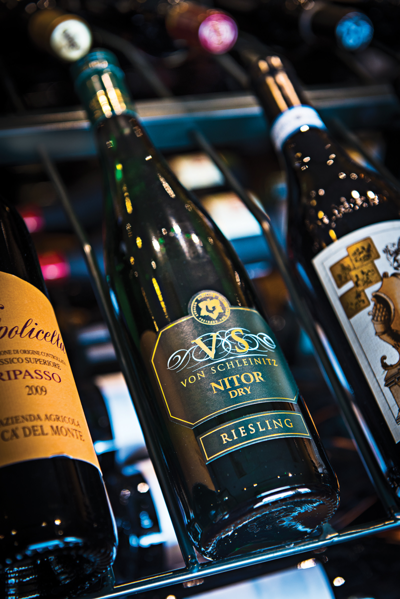
Von Schleinitz's Nitor Dry; Mosel, Germany 2013; Grand Cru, $19.99
Lean, with lemon and petroleum on the nose. Zippy energy and a touch of bitterness.
Dr. F. Weins-Prum's Estate Riesling; Mosel, Germany 2014; Midtown Wine & Spirits, $16.99
There is just enough sugar to fill out the body of this crisp wine. Great value.
Mönchof's Ürzig Würzgarten — Kabinett; Mosel, Germany 2014; Midtown Wine & Spirits, $23.99
Generous residual sugar and a mere 8 percent alcohol make this golden-hued wine excellent for spicy dishes and outdoor sipping.
Thomas Schmitt's Piesporter Goldtröpfchen — Spätlese; Mosel-Saar-Ruwer, Germany 2005; Midtown Wine & Spirits, $24.99
Because of its high acid, riesling is an excellent candidate for aging. After 11 years, this gem bursts with aromas of dried apricot and honey, and brings out the best in Hattie B's.
Email Arts@nashvillescene.com



Post a comment as anonymous
Report
Watch this discussion.
(0) comments
Welcome to the discussion.
Log In
Welcome to the discussion.
Keep it clean. Please avoid obscene, vulgar, lewd, racist or otherwise abusive language. Comments featuring hate speech or threatening or violent content will not be tolerated.
PLEASE TURN OFF YOUR CAPS LOCK.
Be truthful. Don't knowingly lie or mislead.
Be proactive. Use the “report” link on any comment that violates our comment policy.
Share with us. We'd love to hear your feedback.