
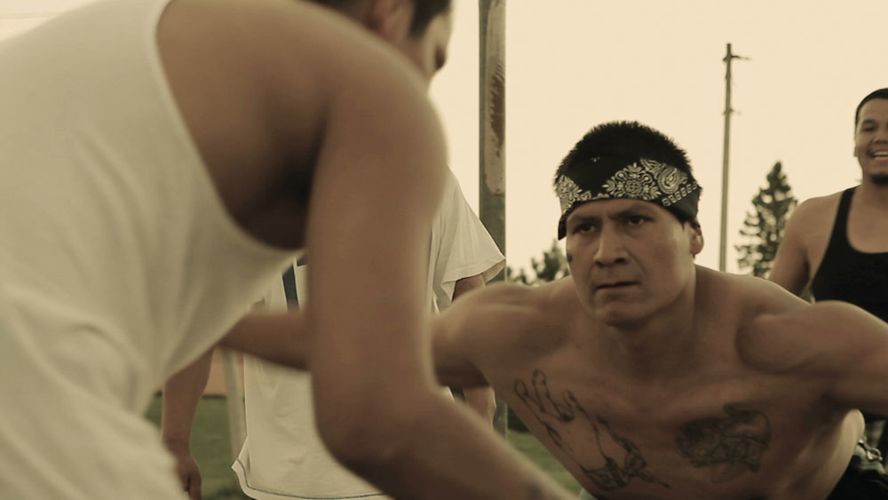


It’s unlikely you’ve ever seen a place like Pine Point, Minn. It’s where you’ll find majestic woodlands, resplendent beauty writ large across the skies, and the White Earth Reservation, a mostly Ojibwe community where an epidemic of addiction and hopelessness has paralyzed entire generations of First Nation youth. It’s where director Jack Pettibone Riccobono spent three years filming The Seventh Fire, a documentary focusing on this community that pulls no punches whatsoever. Its subjects are Rob Brown, a 40-something drug dealer and intermittent criminal facing yet another prison sentence, and Kevin, his teenage would-be protégé, who is already heading down that same path.
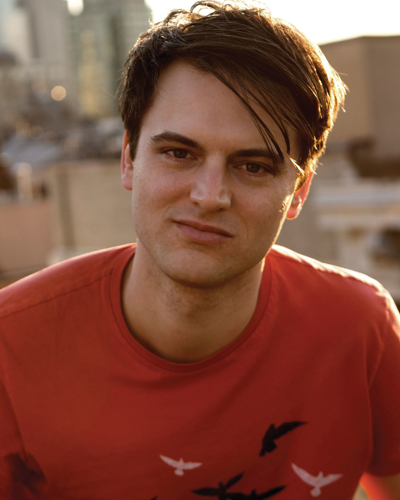
Riccobono’s film is wrenching and austere, a marvel to look at and impossible to forget. It’s meant to open eyes and create awareness, and while doing so it also exhibits a disciplined artistry that never overwhelms the lives of its subjects, instead casting the death of hope as a drama on a cosmic scale. It’s a gutsy and devastating film, and one that will cause no end of reflection on the continuing malign legacy of American colonialism. Riccobono spoke with the Scene in advance of The Seventh Fire’s upcoming screening at The Light and Sound Machine.
How did you first hear of the people of Pine Point?
I first heard of the White Earth Reservation in 2006 when I made a short documentary about the wild rice that they consider to be a sacred gift from the creator. Several years later, my producing partner read an article about how gang culture was migrating from prisons and inner cities out to remote Native communities, and so we started to look into it. There was very little information on the topic, and so I decided to return to White Earth and see if gang culture had reached this community and if people would talk to me about it. I met Rob Brown, who would become our main subject, on that first research trip in October of 2010 at the tribal college. Pine Point was the place of his childhood, so he brought me there.
Were there limitations placed upon you by Robert’s and Kevin’s families, or by the Ojibwe tribal authority?
There are always limitations, but they are not always explicitly stated. Rob and Kevin were our collaborators in making the film, and so it was a relationship of trust and respect that was created over many months and years. Rob’s adopted father made it clear early on that he did not want to be filmed because it was against his religious beliefs, and so we of course respected his wishes, and you do not see him appear in the film. In terms of the Ojibwe tribal authority, we never had any restrictions put on filming. We interviewed many officials, including the current tribal council chairman and the chief of police, and I think we were able to communicate our intentions to bring awareness to issues that are out of sight and out of mind for many Americans.
How often did you film during a usual week?
We completed 14 shoots over about three years. Each shoot usually lasted 10 to 14 days. There was always a time pressure, because we had very limited resources — so you are trying to make the most out of every day in the field. Our subjects had burner phones, and their numbers and whereabouts were constantly changing, so each shoot was pretty much a leap into the unknown. It’s not like you could say, “Meet me at 10 a.m. on Tuesday.” We had to basically track them down.
How concerned were the subjects (as well as the tangential individuals who also take part in illegal activity on camera) about legal repercussions?
Rob was especially savvy about the legal system, and we were not privy to all activities. But we weren’t trying to do an exposé or glorify illegal behavior. The only times we included drug use or illegal behavior was when it related to a crucial story point. Because those moments are a part of everyday life in this community, to exclude them would not have been an honest representation. But I also think people are familiar with many aspects of the drug trade at this point, so that was not my main focus. The issues of identity, the emotional layers and the impact of failed institutions are more complex, and that’s what we were looking to explore in the film.

Jack Pettibone Riccobono
The contrasts between the staggering footage you shot of the skies and landscapes and the manmade structures (houses, municipal buildings, etc.) are profoundly moving; was this a dialectic that shaped the footage you were shooting, or one that emerged when you were going back and taking stock of what all material you had?
Part of what drew me to this story and this place was the surreal combination of the beauty of the landscape and the harshness of the lived reality. We wanted to draw that out during production, and I went to great lengths to capture the natural environment, including hanging out the window of a small plane to shoot the aerial footage. But in the edit, you’re also able to add layers of meaning and to turn footage of a thunderstorm into a visual expression of the emotional subtext of the film. So it was both.
What has the response of the First Nation (in general) and Pine Point (specifically) communities been to the film?
We’ve had a lot of positive reactions from Native communities in the U.S. and Canada, and from many of the individuals who participated in the filming. Even though the film is focused primarily on Rob and Kevin, their personal journeys and the issues they’re facing speak to broader trends affecting Native communities across Indian Country.
How exactly did Terrence Malick and Natalie Portman become involved with the project?
Natalie Portman came on board when we were about halfway through production. She had heard about the project, and I was able to share a sample of the footage with her. I think like a lot of Americans, this was a world she didn’t know too much about. And she wanted to help us bring this story out into the world. Natalie had worked with Terrence Malick on several films and thought that he would respond to the filmmaking style and the subject matter, so we reached out to him when we were in the early stages of post-production. Mr. Malick has been a major influence, and we thought his involvement would help broaden the audience for the film and communicate something about our style and approach. We were very fortunate to have them as members of our team, and they both watched multiple cuts of the film and gave us creative feedback.
Email arts@nashvillescene.com



Post a comment as anonymous
Report
Watch this discussion.
(0) comments
Welcome to the discussion.
Log In
Welcome to the discussion.
Keep it clean. Please avoid obscene, vulgar, lewd, racist or otherwise abusive language. Comments featuring hate speech or threatening or violent content will not be tolerated.
PLEASE TURN OFF YOUR CAPS LOCK.
Be truthful. Don't knowingly lie or mislead.
Be proactive. Use the “report” link on any comment that violates our comment policy.
Share with us. We'd love to hear your feedback.