
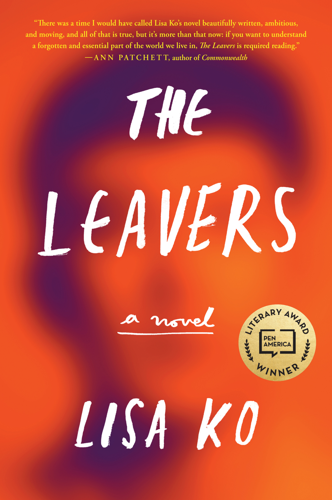


In the first pages of Lisa Ko’s richly imagined debut novel, The Leavers, 11-year-old Deming Guo is walking down a slushy New York City street with his mother. She’s telling him that she’s found a new job, and they’re about to move to Florida. He doesn’t want to go. Deming likes their neighborhood, the small apartment they share with his mother’s boyfriend Leon, Leon’s sister Vivian, and Vivian’s son Michael.
In this moment, right before everything changes, the two talk about what has already happened to bring them to this point. After years of separation, they’re finally together again. “You’re my home now,” Deming’s mother tells him. But the first sentence of the chapter has set up a cruel irony: This, we’ve already been told, is “the day before Deming Guo saw his mother for the last time.”
In its brisk first section, “Another Boy, Another Planet,” The Leavers zips forward and backward in time, building out the framework of Deming’s life in an onrush of movement and sensation. It is exceedingly difficult to discuss this section — or, really, the novel as a whole — without at least hinting at important plot points, so a standard disclaimer about spoilers applies.

Even so, what might pass for big reveals in another book serve here as the turns by which other, more intimate discoveries are made. Just as we know from the very beginning that Deming and his mother will be separated again, we know by the second chapter that Deming Guo eventually becomes someone named Daniel Wilkinson, adopted by a white couple from Upstate New York, now trying his hand at the indie-rock underworld of Brooklyn as a hard-drinking, guitar-wielding 21-year-old.
As an international adoptee, I’m often nervous about reading the work of non-adoptees who explore this territory (even Asian-American writers). But when Ko tells the story of Deming’s adoption, she does so with obvious care and empathy. Not only does his experience ring true, it also stands out in stark relief from the experiences of others. At a camp for Chinese-American adoptees, Daniel feels out of place, and the adult counselors are so emotional he feels embarrassed for them. This is partly because their grief is amorphous and vast, while Daniel’s pain has already hardened into a recognizable shape. He can remember his mother’s face. He knows the address of the apartment they shared in the Bronx.
The Leavers, which is based on real events, resonates with particular urgency in the America of 2017. The novel takes us through the harrowing experience of a person disappeared by the United States government, with little to no legal recourse, because of their immigration status. They are punished for even a mild protest of conditions, and then deported after speaking out of turn in a sham court proceeding. We see the repercussions: the cleaving of family, the forced abandonment, the lives derailed and scattered. The book doesn’t so much engage in “the immigration debate” as illustrate its lived consequences.
There are many questions The Leavers wants us to consider. How do we reconcile the people we were born as with the people we hope to become? How do people who are torn from each other ever find each other again? And how do they answer for the choices they’ve made if they do? How much do the engines of commerce rely on exploited labor for their fuel, and how easily are those lives discarded?
The Leavers offers no easy answers, but at every turn it is skillfully observed and written, sidestepping convenient explanations on the way to nuanced moments of tremendous grace. In some ways, the book is about inventing a better self and the heartbreaks one must endure to become that person. Some names you can never leave behind. Some names you can never really get back. But the book is about so much more, both timelessly human and squarely of this anxious, fearful moment. It is also a paean to the American Dream — one that contains a warning of the menace coiled inside. It is an essential document.
To read an uncut version of this review — and more local book coverage — please visit Chapter16.org, an online publication of Humanities Tennessee.
Email arts@nashvillescene.com



Post a comment as anonymous
Report
Watch this discussion.
(0) comments
Welcome to the discussion.
Log In
Welcome to the discussion.
Keep it clean. Please avoid obscene, vulgar, lewd, racist or otherwise abusive language. Comments featuring hate speech or threatening or violent content will not be tolerated.
PLEASE TURN OFF YOUR CAPS LOCK.
Be truthful. Don't knowingly lie or mislead.
Be proactive. Use the “report” link on any comment that violates our comment policy.
Share with us. We'd love to hear your feedback.